 listicle
Affordable Alternatives to High End Tennis Apparel
Table of Contents
- Why Affordable Tennis Apparel Beats High End Labels on Court
- Quick Comparison: Affordable Tennis Apparel Options
- What to Look For in Moisture-Wicking Tennis Apparel for Women
- How to Choose Tennis Clothing That Lasts Beyond One Season
- Durable Padel Tennis Gear: Where Value Meets Performance
- Budget-Friendly Shopping Tips and Cost-Per-Wear
- Frequently Asked Questions
Last Updated: September 15, 2026
Why Affordable Tennis Apparel Beats High End Labels on Court
Affordable alternatives to high end tennis apparel have closed the performance gap that once justified premium price tags.
Affordable alternatives to high end tennis apparel are garments that use the same core technical fabrics as premium labels, moisture-wicking synthetics, four-way stretch blends and odour-resistant finishes, at mid-market or budget prices. The performance difference comes down to fabric composition and construction, not the logo stitched on the chest.
Here's what most buyers get wrong: they shop by brand reputation instead of reading the care label. A quick-dry polyester-spandex blend is a quick-dry polyester-spandex blend, whether it costs £20 or £120.
Below, we break down which affordable options actually hold up, where to spend and where to save, and how to judge garment longevity before you buy.
Quick Comparison: Affordable Tennis Apparel Options
The best value in tennis clothing sits in the £12 to £35 range, where technical fabrics and durable construction are widely available (Retail industry). Here's how the main affordable options compare.
| Brand | Starting Price | Key Strength | Best For | Watch Out For |
|---|---|---|---|---|
| REVIVE Activewear and Apparel | Quote on request | Padel-specific tech design, bulk orders | Padel players, teams, studios | Pricing depends on quantity and delivery |
| Uniqlo | £14.90 | DRY-EX and AIRism fabrics | Court-to-street versatility | Few traditional tennis silhouettes |
| Fila | £25.00 | Heritage tennis collections | Classic court aesthetics | Fit varies between collections |
| New Balance | £30.00 | NB DRY, athletic cuts | Performance-focused players | Fewer lifestyle designs |
| Amazon Essentials | £12.00 | Low-cost basics | Beginners, casual sessions | Limited advanced features |
| tasc Performance | £35.00 | Bamboo blends, natural UPF 50+ | Sensitive skin, sustainable preference | Higher price than synthetics |
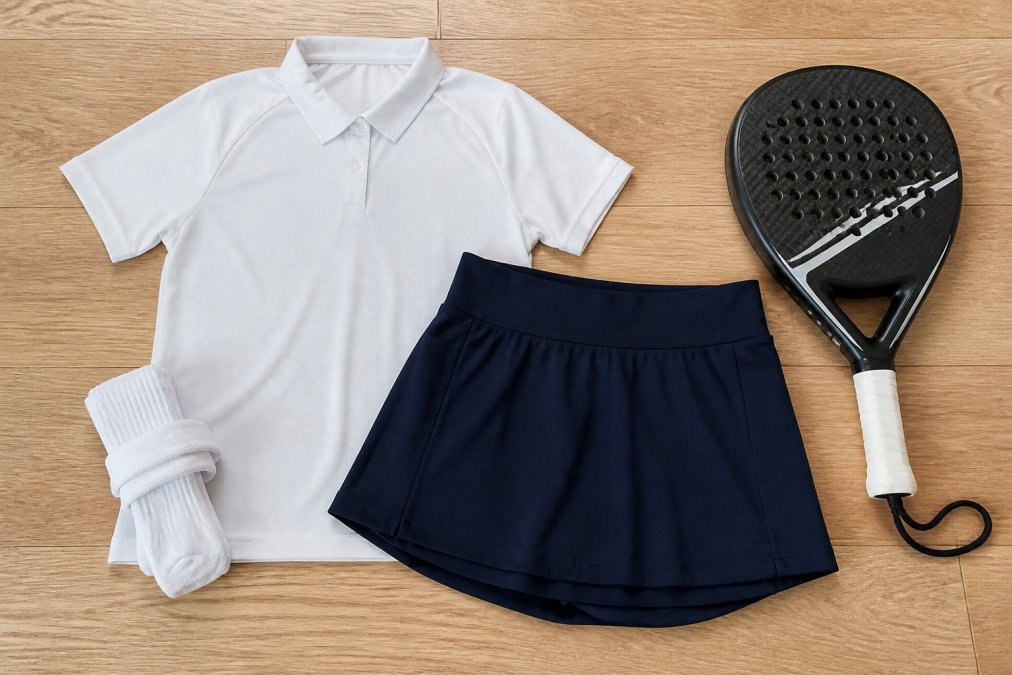
REVIVE Activewear and Apparel builds specifically for Padel, handles orders from a single item to full team kits, and offers standard or express delivery with direct support. If you want a pure budget entry point, Uniqlo and Amazon Essentials cover the basics well.
What to Look For in Moisture-Wicking Tennis Apparel for Women
Moisture-wicking tennis apparel for women should move sweat away from the skin within seconds, not minutes. The problem is that most shoppers judge this by feel in a fitting room, where every synthetic blend feels cool and dry. The reliable way to judge wicking performance is to read the care label before you look at the price tag, and the label tells you more than the brand ever will.
Read the fabric composition, not the marketing name
Every performance fabric on the market is a variation on the same handful of fibres. Once you know what the percentages mean, you can identify quality without recognising the logo.
- Polyester (80-90%), the workhorse. It transports moisture, dries fast and holds colour. Below roughly 75% polyester, expect slower drying and more cling.
- Elastane / spandex (10-20%), provides the four-way stretch. Under 8% and the garment will lose shape at the shoulders and waistband; over 25% and it feels restrictive and degrades faster in the wash.
- Nylon, softer hand-feel than polyester and good for bottoms, but it holds odour more readily unless treated.
- Cotton, fine for warm-ups and court-to-street layers, but on court it soaks, clings and cools you down when you stop moving. Avoid it in a base layer.
- Tencel / lyocell and bamboo blends, increasingly common in mid-market women's ranges. They feel cooler against the skin and suit players with sensitive skin, but they pill faster under abrasion than polyester.
The label markers that actually predict performance
- GSM (grams per square metre), the fabric weight. Lightweight knits around 130-160 GSM suit hot-weather singles; 170-200 GSM gives more opacity and durability for skirts and shorts. Very light fabrics feel lovely but go sheer when stretched.
- UPF rating, a stated UPF 30 or 50+ on outdoor pieces is a genuine differentiator. If the label doesn't state it, don't assume it.
- Antimicrobial or odour-control finish, worth paying a small premium for if you play twice a week or more, because synthetic fibres trap body oils that ordinary washing doesn't fully remove.
- Mesh ventilation placement, under the arms and down the centre back are the two zones that matter. Decorative mesh elsewhere is styling, not engineering.
- Flatlock seams, flat, interlocked stitching that sits against the skin without a ridge. These prevent chafing on long rallies.
Fit for the movements tennis actually demands
Women's tennis apparel fails most often at the fit stage, not the fabric stage. A garment that rides up during a serve or twists during a lunge gets worn less, which raises its real cost per wear regardless of price.
- Tops: check that the hem stays put when you raise both arms overhead. If it lifts above the waistband, size up or look for a longer cut.
- Skirts and skorts: the built-in short is the performance component. Look for compression shorts with a flat waistband and at least one pocket deep enough for a spare ball. A skirt with loose, non-compressive inner shorts is a lifestyle piece, not a playing piece.
- Sports bras: for tennis, look for medium-to-high support with adjustable straps and a band that doesn't roll. Encapsulation styles suit larger cup sizes better than compression styles.
- Bottoms: four-way stretch matters more than thickness. Test by squatting, if the fabric pulls tight across the thigh or goes sheer, it will do the same on court.
A common mistake is buying a tennis skirt purely on style and then discovering the built-in shorts have no compression and no pocket. For Padel, where you're lunging and twisting constantly, that matters even more than it does in tennis.
How to Choose Tennis Clothing That Lasts Beyond One Season
Garment longevity comes down to three things: fabric weight, seam construction and how you wash it. Most tennis clothing doesn't wear out on court, it wears out in the machine.
The single biggest killer of activewear is heat. Hot washes and tumble drying break down elastane fibres, which is why a top that felt snug in March feels stretched and shapeless by August (the NHS).
Follow this routine to extend lifespan:
- Wash at 30°C or lower on a gentle cycle (energysavingtrust.org.uk)
- Skip fabric softener entirely, it clogs wicking fibres
- Air dry flat or hang; never tumble dry elastane blends
- Turn garments inside out to protect prints and panels
- Wash synthetic blends separately from cotton and towels
Cost-per-wear is the honest metric. A £30 top worn twice a week for two years costs you around 30p per wear. A £90 top that pills after six months costs far more. That calculation, not the shelf price, is what separates good value from expensive.
Durable Padel Tennis Gear: Where Value Meets Performance
Durable Padel tennis gear needs reinforced stitching at the shoulders and hips, since the sport demands more rotational movement than standard tennis.
REVIVE Activewear and Apparel focuses on Padel tech design, which is why we build for that movement pattern rather than adapting generic tennis patterns. The brand also scales orders from one item to thousands, which suits team managers and studio owners equipping a full squad, with standard or express delivery and a support team on hand.
For individual players, the practical advice is simple: prioritise ergonomic design and reinforced construction over brand prestige.
Budget-Friendly Shopping Tips and Cost-Per-Wear
Budget-friendly shopping means buying at the right time and judging cost-per-wear, not chasing the lowest sticker price.
The cost-per-wear calculation, done properly
Build a five-piece capsule instead of a ten-piece wardrobe
Where to spend and where to save
Sizing: measure once, buy confidently
Frequently Asked Questions
Are cheaper tennis clothes as durable as high-end brands?
Not always, but the gap is narrower than most players assume. Durability comes down to fabric weight, stitching quality and how you wash the garment. Affordable tennis apparel from brands like New Balance and Uniqlo uses similar polyester-spandex blends to premium labels. The main difference is often finishing details rather than core performance. Check seams, look for reinforced stitching and follow care labels, and a cheaper piece can easily last two or three seasons of regular play.
What features should I look for in affordable tennis apparel?
Prioritise moisture-wicking fabric, four-way stretch and breathable construction over logos. Look for flatlock seams that reduce chafing, a hem that stays put during serves, and quick-dry properties so the garment does not stay damp between games. Odour-resistant finishes are a bonus if you play several times a week. Anything under £30 that ticks these boxes is genuinely good value, regardless of the brand name on the label.
Do affordable tennis brands offer the same moisture-wicking technology?
Many do. Moisture-wicking works by pulling sweat away from the skin to the fabric surface, where it evaporates. Uniqlo's DRY-EX and New Balance's NB DRY perform this function at lower price points than luxury labels. The technology is not proprietary to high end brands. What you pay extra for at the top end is often design, sponsorship and retail markup, not a fundamentally different fabric science. Check the label for polyester or polyester-spandex blends.
Is it worth investing in premium tennis gear for casual play?
For casual play, no. Premium tennis apparel makes sense if you are on court four or more times a week and need maximum durability and fit consistency. For once-a-week social tennis or padel, affordable alternatives deliver everything you need: moisture management, freedom of movement and a fit that looks sharp. Put the saved money towards court time, coaching or a better racket instead.
Are there sustainable options for budget-friendly tennis wear?
Yes. Bamboo-blend fabrics, like those used by tasc Performance, offer natural moisture-wicking and odour resistance without a premium synthetic price tag. Some brands also use recycled polyester in their budget ranges. Sustainability and affordability are not mutually exclusive, though bamboo blends do sit slightly higher than basic synthetic options. Compare cost-per-wear rather than upfront price to judge real value.