 listicle
Best Activewear for Broad Shoulders: 2026 Guide
Table of Contents
- Understanding Your Body Shape and Activewear Needs
- Flattering Gym Tops for Broad Shoulders
- Sports Bras for Wide Shoulders
- High-Quality Workout Gear for Women
- Creating a Balanced Silhouette
- How to Choose the Right Fit
- Conclusion
Last Updated: August 24, 2026
When you've got broad shoulders, finding activewear that actually fits properly feels like a minor miracle. Most gym tops gape at the neckline, straps slip down mid-workout, and sports bras either dig into your shoulders or leave you unsupported. The problem isn't your body, it's that most activewear is designed for average proportions, not athletic builds. This guide covers everything you need to know about choosing activewear for broad shoulders, from neckline styles to strap configurations that won't drive you mad during your next session.
At REVIVE Activewear and Apparel, we've worked with athletes across every fitness discipline, from Padel tennis to CrossFit to yoga, and the feedback is consistent: broad shoulders demand thoughtful design choices. The right activewear doesn't just fit better; it performs better.
Understanding Your Body Shape and Activewear Needs
How Broad Shoulders Affect Fit
Broad shoulders change everything about how activewear sits on your body. When your shoulder width extends beyond your hip width, standard sizing creates immediate problems: excess fabric bunches at the sides, armholes sit too far back, and straps migrate toward your neck rather than staying centred on your shoulders. Compression fabrics designed for narrower frames create visible pulling across the back and chest.
This isn't a flaw in your proportions; it's a mismatch between your bone structure and conventional pattern grading. Most brands grade sizes proportionally, a medium is simply a bigger small everywhere equally. When straps sit incorrectly, they restrict your range of motion in the shoulders and upper back, creating tension during overhead movements and limiting how far you can move comfortably.
Key Measurements to Know
Before shopping, measure three key areas: shoulder width (across your back from peak to peak), chest circumference (around the fullest part of your bust), and torso length (from the base of your neck to your natural waist). Most brands don't publish shoulder width in their size guides, they focus on chest measurement and dress size, which catches broad-shouldered athletes off guard.
Always check customer reviews from people with similar builds. Look for comments about strap placement, shoulder fit, and whether the top pulls across the back. Real customer photos showing how pieces fit on different body types reveal fit patterns that official size charts hide.
Flattering Gym Tops for Broad Shoulders
Neckline Styles That Work
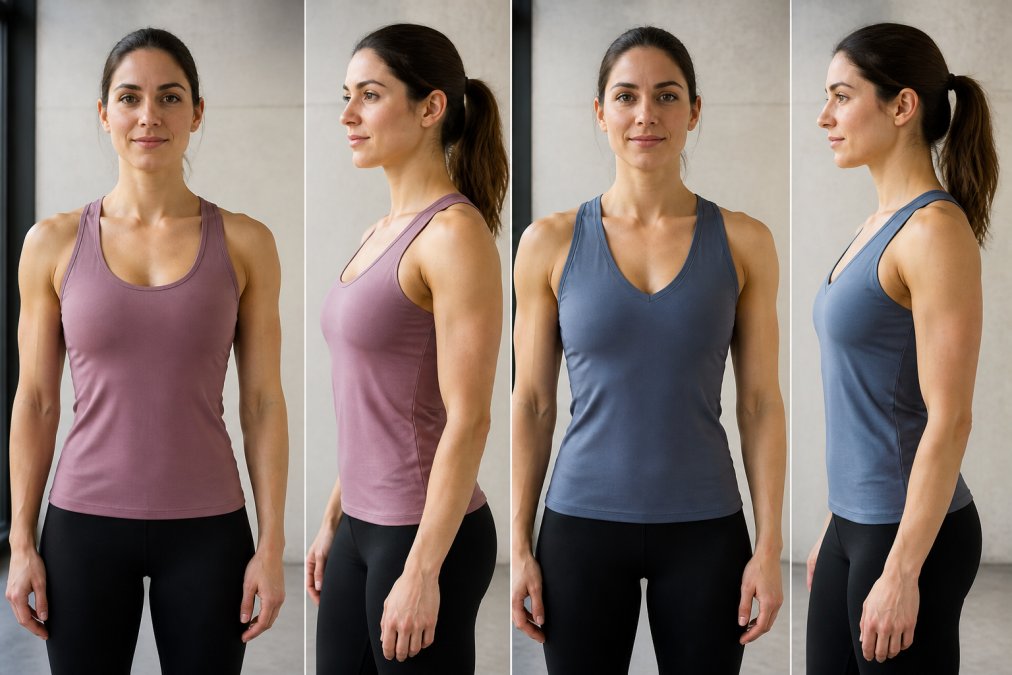
The neckline you choose dramatically affects how your shoulders appear and how comfortable you feel during movement. A scoop neck sits horizontally across your chest and creates visual width at the neckline itself, balancing broad shoulders by drawing the eye inward. Scoop necks don't restrict shoulder movement during overhead exercises, and straps stay in place without digging in.
V-necks create vertical lines that draw the eye downward, visually lengthening your torso and making shoulders appear less dominant. Halter necks and racerback styles address strap placement directly by converging straps at the back of your neck or upper back, keeping straps centred and preventing outward migration. Racerbacks are superior for high-impact sports and gym work because they distribute support across more of your upper back.
Avoid crew necks and high round necklines if you have broad shoulders. These styles sit tight across the shoulders, restrict movement, and can dig into your shoulder joints during dynamic exercises.
Strap Width and Armhole Design
Strap width matters more than most people realise. Narrow straps (under 2.5 centimetres) dig into your shoulders during weighted exercises, while wider straps (3.8 centimetres or more) distribute pressure across a larger surface area. The ideal strap width for broad shoulders is 3.2 to 4.4 centimetres, providing enough surface area to prevent digging without looking oversized.
Armhole design is where many brands fail broad-shouldered athletes. The armhole should sit at the side of your body, not wrap around toward the front or back. When positioned too far back, armholes restrict your range of motion and create pulling across your chest during overhead movements. Look for armholes cut slightly deeper than standard sizing to provide more room for your shoulder joint to move through its full range of motion. REVIVE Activewear and Apparel designs armholes specifically to accommodate broader shoulders without sacrificing support or coverage.
Sports Bras for Wide Shoulders
Racerback vs. Standard Straps
This choice defines your comfort and support during high-impact activities. Standard straps run vertically down the outside of your shoulders and migrate outward on broad shoulders, creating constant adjustment needs and uneven support.
Racerback designs converge straps at the upper back, typically between your shoulder blades, keeping straps centred and preventing outward migration. The biomechanics work in your favour: straps pull inward and downward rather than outward, maintaining consistent support throughout your range of motion. Racerbacks are particularly valuable during dynamic movements like running, jumping, CrossFit, and Padel tennis. A well-designed racerback converges low enough (around your mid-back) that it doesn't interfere with shoulder movement.
Support Levels and Cup Sizing
Sports bra support levels range from light (yoga and Pilates) to medium (running and gym strength training) to high-impact (jumping, plyometrics, and sports like Padel tennis). Cup sizing affects how the straps sit on your shoulders. For broad shoulders with a fuller bust, encapsulation designs (where each breast is supported individually) outperform compression designs. Many broad-shouldered athletes discover they need a larger band size than expected, as a medium band might sit too tight across your upper back and restrict movement.
High-Quality Workout Gear for Women
Fabric and Performance Features
Moisture-wicking synthetic blends (polyester, nylon, spandex combinations) move sweat away from your skin, keeping you dry. Most quality activewear uses 80-90% synthetic fibre with 10-20% spandex for stretch and recovery. Four-way stretch (fabric stretches in all directions) provides better range of motion during dynamic movements and maintains support as you move.
Lighter-weight fabrics (under 200 grams per square metre) work best for high-intensity activities. Compression fabrics provide graduated pressure that improves blood flow and reduces muscle vibration. For broad-shouldered athletes, compression is particularly valuable for shoulder stability without bulk. REVIVE Activewear and Apparel uses compression strategically in key areas rather than full compression, balancing support with freedom of movement.
Durability and Longevity
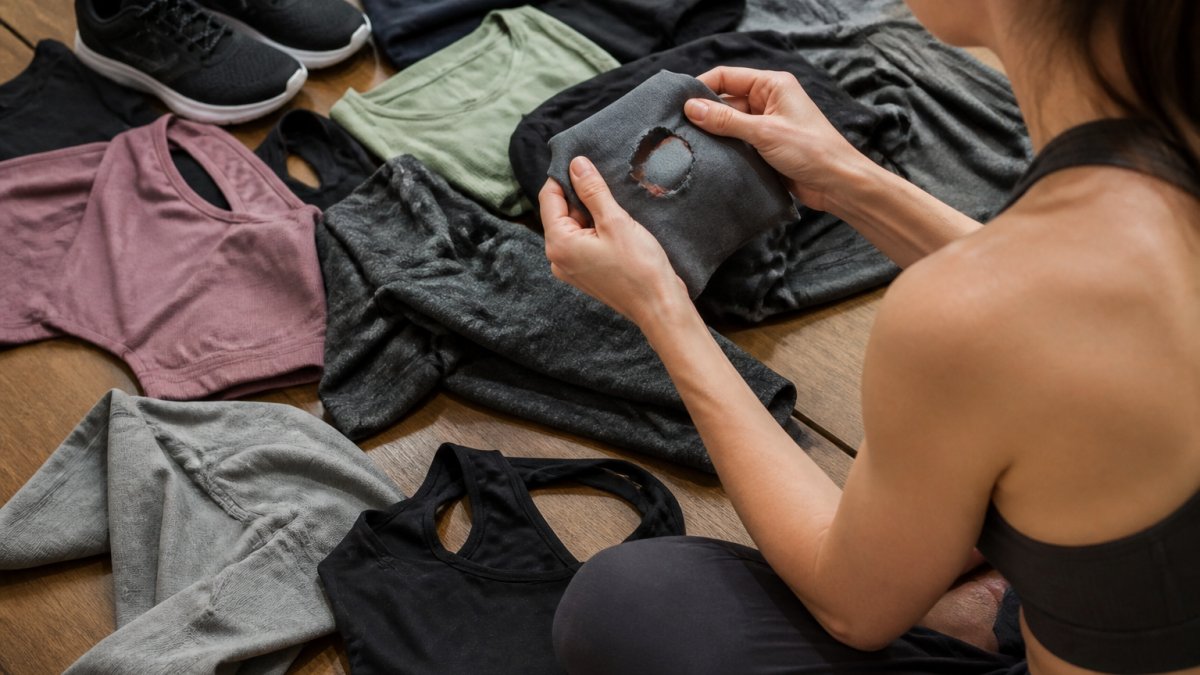
Quality activewear should withstand regular washing and maintain its shape for at least 100-150 wears (roughly 2-3 years of regular use). Flat-lock seams (stitched flat rather than overlapped) are stronger and more comfortable than standard seams. The elastic used in waistbands, armholes, and necklines determines how long the piece maintains its shape. High-quality elastic maintains its recovery even after repeated stretching and washing.
Creating a Balanced Silhouette
Visual Balance Techniques
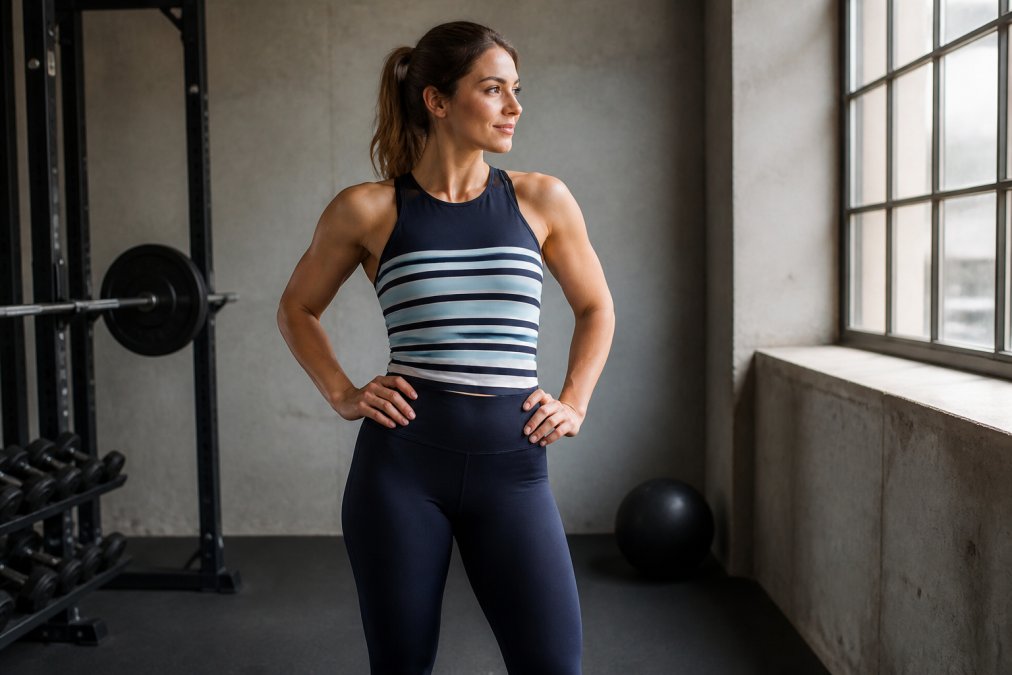
Visual balance is about creating proportion through colour, pattern, and fit rather than changing your actual body. Horizontal stripes across the torso (not the shoulders) visually widen your middle, balancing broader shoulders. Darker colours on the shoulders and lighter colours on the torso create visual depth and make shoulders appear less prominent.
Peplum hems and flared designs at the hip add visual width to your lower body, proportionally balancing broader shoulders. A fitted top that flares at the hip creates a defined waist and balanced silhouette. Layering creates visual interest and breaks up shoulder width.
Styling Tips for Athletic Builds
Avoid sleeveless styles exclusively. Mixing sleeveless tops with sleeved options creates visual variety that's more flattering. Short sleeves or cap sleeves provide shoulder coverage that balances broad shoulders without restricting movement.
The fit of your leggings matters as much as your top. Leggings with a tapered fit at the ankle create visual narrowing through your legs, balancing broader shoulders. High-waisted leggings with a defined waistband create a proportional silhouette by emphasising your waist and hip width.
How to Choose the Right Fit
Sizing Guide and Fit Checks
Start by measuring yourself accurately: shoulder width, chest circumference, and torso length. Cross-reference these measurements against multiple brand size charts rather than relying on a single brand's sizing. Read customer reviews specifically for fit feedback from people with similar measurements or body types. Verified purchaser photos show exactly how the piece fits on a real body.
When you receive the piece, do a fit check before your first workout. The fit should feel snug but not tight. You should be able to fit one finger under straps and waistbands without them being loose. If you can fit more than one finger, the piece is too loose. If you can't fit a finger at all, it's too tight and will restrict movement.
Testing Range of Motion
Before committing to any activewear, test your full range of motion. For gym tops, raise your arms overhead, do lateral raises, and reach across your body. The top should move with you without pulling, gaping, or riding up. For sports bras, jump up and down, run in place, and do lateral movements. The bra should feel supportive without excessive bounce or shifting.
Do a complete workout simulation with your full outfit. If you're a runner, do a 10-minute run. If you're a gym-goer, do your typical routine. If you're a Padel player, do court-specific movements. Activewear should feel better during movement than standing still.
Conclusion
Finding activewear for broad shoulders requires understanding your measurements, prioritising fit over size labels, and testing pieces through your actual movements before committing. The right neckline, strap width, and armhole design transform how activewear performs on your body. Quality fabrics, durable construction, and thoughtful design choices mean your gear lasts longer and supports you better through hundreds of workouts.
REVIVE Activewear and Apparel understands these needs because we've worked with athletes across every discipline, from gym workouts to Padel tennis to yoga. Our activewear is designed with broad shoulders in mind, featuring wider straps, thoughtful armhole placement, and fabrics that support your movement without restriction. Start your search today and experience activewear that actually works for your body.
Frequently Asked Questions
What necklines are most flattering for broad shoulders in activewear?
Scoop necks, v-necks, and halter necklines work well for broad shoulders because they create vertical lines that draw the eye downward, balancing shoulder width. Avoid high, tight necklines that sit directly on the shoulder point, these emphasise width. Racerback designs with wider, cushioned straps distribute support evenly without adding bulk. Look for armhole designs that sit slightly back rather than directly on the deltoid, which prevents pulling and creates a cleaner line across the shoulders.
How should a sports bra fit if you have broad shoulders?
A properly fitting sports bra should have straps positioned toward the back of your shoulders rather than the very edge, preventing them from slipping during movement. The band should sit level all around your torso without riding up in the back. For broad shoulders, look for wider, cushioned straps that distribute pressure evenly and reduce shoulder strain. The cup should provide full encapsulation rather than compression, especially if you have a fuller bust. Test the fit by raising your arms overhead, there should be no gapping, pinching, or migration of the band or straps.
What fabric features should I prioritise in activewear for an athletic build?
Seek out moisture-wicking fabrics that move sweat away from your skin, keeping you dry during intense workouts. Stretch fabrics with adequate recovery ensure the top returns to its original shape after washing and repeated wear. Seamless construction or strategically placed seams prevent chafing across the shoulders and chest. Four-way stretch materials allow full range of motion without restriction, which is essential if you're doing CrossFit, yoga, or Padel tennis. Quality fabrics maintain their shape and colour through multiple washes, so check product reviews for longevity feedback.
Are racerback tops good for broad shoulders?
Yes, racerback designs are excellent for broad shoulders because they pull the straps inward and downward, preventing them from slipping and reducing pressure on the shoulder joints. This design also provides excellent range of motion for overhead movements and lateral exercises. However, the fit depends on strap width and positioning, wider, cushioned straps are more comfortable than thin straps for extended wear. Racerbacks work particularly well for high-impact activities like running or gym training, though some people prefer standard straps for lower-impact activities like yoga. Test both styles to see which feels most secure and comfortable for your specific activities.
How can I balance my proportions visually with activewear choices?
Create visual balance by drawing attention away from broad shoulders toward other areas of your body. Vertical lines on the chest and torso elongate the silhouette and narrow the appearance of the shoulders. Colour blocking that's darker on the shoulders and lighter on the waist and hips creates a slimming effect. Fitted tops with defined waists emphasise your natural proportions rather than loose, boxy cuts that add bulk. Tapered leggings or fitted bottoms balance wider shoulders by creating a cohesive line from top to bottom. Avoid horizontal stripes across the chest and shoulders, as these emphasise width.
This article was written using GrandRanker