 listicle
Common Flaws in Modern Fitness Clothing: 7 Fixes
Table of Contents
- Why Modern Fitness Clothing So Often Disappoints
- Flaw 1: Fit That Is Too Tight or Too Loose
- Flaw 2: Fabrics That Trap Sweat Instead of Managing It
- Flaw 3: Seams, Chafing and Skin Irritation
- Flaw 4: Poor Coverage and Unwanted Exposure
- Flaw 5: Sports Bra Fit and Support That Falls Short
- How to Choose Workout Clothes That Avoid These Flaws
- Your Activewear Quality Checklist Before You Buy
- Frequently Asked Questions
Last Updated: October 17, 2026
Why Modern Fitness Clothing So Often Disappoints
Most workout wardrobes fail on the same handful of design decisions, and they fail quietly. A top feels fine on the hanger, then rides up mid-session. A seam that looks neat against a flat lay starts rubbing after twenty minutes of repeated movement. The pattern is consistent: common flaws in modern fitness clothing rarely come from cheap materials alone. They come from fit, fabric choice, seam construction and coverage being treated as afterthoughts rather than the whole point. Below, we break down the seven flaws that matter most, plus the fixes that actually solve them.
Flaw 1: Fit That Is Too Tight or Too Loose
Fit is the most common failure point, and it usually goes one of two ways. Too tight restricts range of motion and digs in at the waist and shoulders. Too loose shifts during movement, which forces you to adjust constantly and creates friction where fabric bunches. Neither is a sizing accident so much as a design problem: garments cut for a generic body shape rarely suit broad shoulders, longer torsos or fuller hips.
What a Good Fit Actually Feels Like
A well-fitted garment moves with you and stays put. You should be able to raise your arms overhead without the hem lifting past your waistband, squat without the fabric pulling tight across the seat, and rotate your torso without the shoulder seams dragging. Look for four-way stretch, gusseted crotches on shorts and leggings, and adjustable waistbands. If a piece needs constant tugging in the fitting room, it will need constant tugging on the court.
Flaw 2: Fabrics That Trap Sweat Instead of Managing It
Sweat management separates functional fitness clothing from fashion activewear, but most advice stops at "avoid cotton, choose wicking synthetics." That is not enough to judge a garment in the shop or online. Cotton absorbs moisture and holds it against the skin, which is why a cotton tee feels heavy and cold halfway through a session.
The real problem is that "moisture-wicking" is a marketing claim, not a measurable standard. Two polyester-elastane tops can behave completely differently depending on fibre denier, knit structure, fabric weight and any topical finish. Rather than trusting the label, assess five practical criteria.
Five Fabric Criteria That Actually Predict Performance
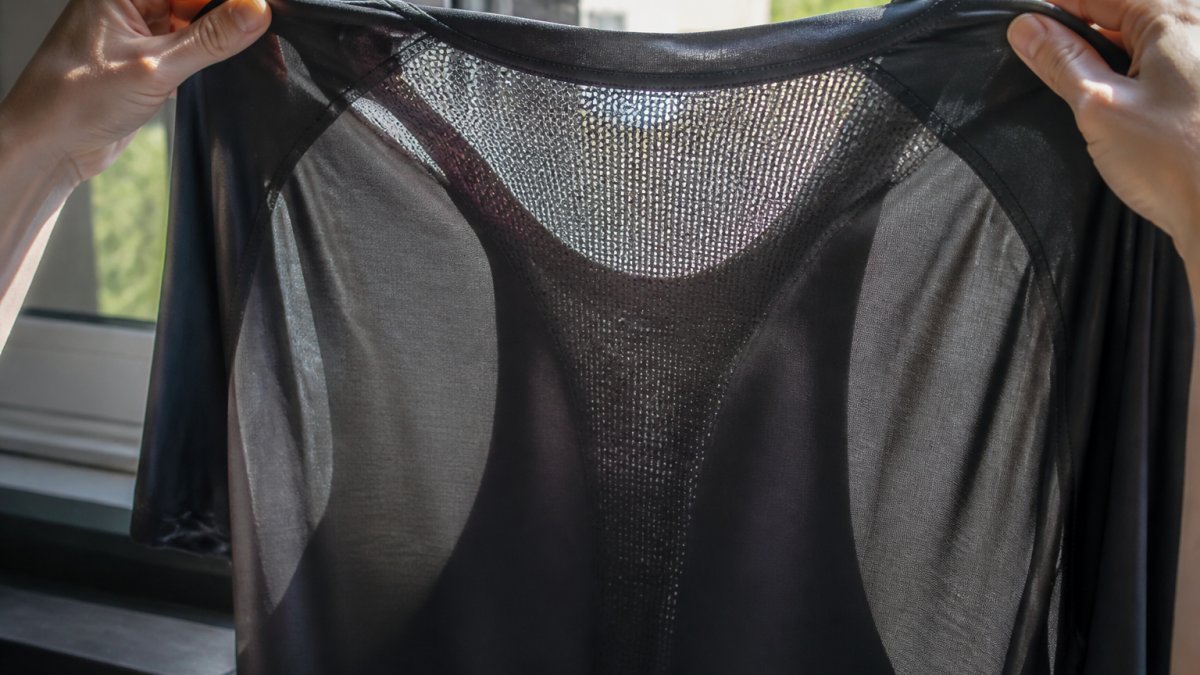
Breathability. Hold the fabric up to a light source and look through it.
Drying time. Wicking only helps if moisture then evaporates. A fabric that moves sweat to the surface but dries slowly will stay clammy.
Odour retention. Polyester is oleophilic, meaning it attracts oils from skin and holds odour-causing bacteria. This is why some gym tops smell fine after one wash and rank after three.
Stretch recovery. Elastane gives stretch, but recovery is what stops leggings going baggy at the knee and waist.
Fabric weight. Measured in grams per square metre (GSM), weight predicts how a garment behaves.
The Best Fabric for Gym Clothes and What to Avoid
The best fabric for gym clothes is a synthetic blend, typically polyester or nylon mixed with elastane for stretch, engineered to move moisture to the surface where it evaporates. Look for mesh panels in high-heat zones, and check whether the label mentions moisture-wicking or quick-dry performance rather than just "breathable." Avoid pure cotton for high-sweat sessions, and be wary of very thin single-layer synthetics that cling and show every contour. Also avoid garments with a high proportion of cotton in the gusset or underarm, where moisture lingers longest.
Flaw 3: Seams, Chafing and Skin Irritation
Seams cause more discomfort than almost any other feature, and the fix is construction, not cream. Overlocked seams create a raised ridge that rubs against skin during repetitive movement, which is why inner thighs, underarms and shoulder lines are the usual trouble spots. Placement matters too: a seam running directly under a sports bra strap or across the shoulder blade will irritate during overhead movement regardless of how well it is stitched.
Flaw 4: Poor Coverage and Unwanted Exposure
Coverage failures show up in two ways: fabric that turns translucent when stretched or wet, and cuts that shift during movement. A light-coloured legging that looks opaque on the hanger can go sheer across the seat the moment you squat. Low-rise waistbands and loose necklines create the same problem during burpees, rows or any exercise that takes you upside down. The fix is straightforward: check opacity by stretching the fabric against a light source, and choose higher-rise waistbands and secure necklines for high-intensity work.
Flaw 5: Sports Bra Fit and Support That Falls Short
Sports bra fit and support is where sizing errors cause the most real discomfort, and the problem is compounded by the fact that most bras are sold in a narrow band-and-cup matrix that does not reflect how bodies actually vary. A band that rides up means the support is coming from the straps rather than the ribcage, which leads to shoulder strain and bounce. Too loose and the bra offers no real hold during running or jumping. Too tight and it restricts breathing and irritates the ribcage and underband area.
Support Mechanics: Encapsulation Versus Compression
There are two main support constructions, and they suit different bodies and activities. Compression bras flatten the bust against the chest to limit movement; they work well for smaller cup sizes and low-to-moderate impact, but can feel restrictive and cause cleavage pressure in larger sizes. Encapsulation bras use separate cups to support each breast individually, which gives better shape and load distribution for larger cup sizes and high-impact activity.
Match the support level to the activity: low-impact styles suit yoga and pilates, while running and high-intensity exercise need a firmer, encapsulated design. For court sports and any session involving jumping or rapid direction change, a high-support encapsulated bra with wide, padded straps and a reinforced underband is the practical choice.
Fit Testing Beyond the Band
Always fit the band snugly on the loosest hook, and check that the underband sits level all the way around. Then test the following:
- Raise both arms overhead. The band should stay in place; if it lifts, the band is too loose or the straps are doing the work.
- Bend forward and shake gently. The bra should contain the bust without spillage at the neckline or sides.
- Rotate your torso and reach across. Straps should not dig into the shoulders or slip off.
- Breathe deeply. You should be able to fill your lungs without the band cutting in.
Sizing variation matters here more than anywhere else in activewear. The same labelled size can fit very differently across brands, and cup volume is often not proportionate to band size. If you are between sizes, size up in the band and down in the cup where possible, and prioritise bras with adjustable straps and multiple hook positions.
Skin Health and Irritation
Underband friction, strap pressure and moisture trapped against the skin make the chest and ribcage a common site for chafing and irritation. Look for flat seams or bonded edges at the underband, soft-covered elastics and moisture-wicking cup linings. Wash bras after every wear, use a mesh bag to protect structure, and avoid fabric softener, which coats wicking fibres. If you experience persistent irritation, check that the band is not rolling and that the straps are not bearing load they should not.
How to Choose Workout Clothes That Avoid These Flaws
Choosing well comes down to matching garment to activity rather than buying one wardrobe for everything. Running gear needs secure coverage and firm support; yoga calls for stretch and a soft waistband; Padel and court sports reward durability and freedom of movement through the shoulder and hip. Our advice is to try before you commit to a full set, then scale up once you know the fit works for your body and your sport.
Your Activewear Quality Checklist Before You Buy
Run through this checklist before any purchase. It takes two minutes and saves months of regret.
| Check | What to Look For | Why It Matters |
|---|---|---|
| Fit | Overhead reach, squat and twist with no tugging | Prevents restriction and constant adjusting |
| Fabric | Moisture-wicking synthetic blend with stretch | Manages sweat and dries faster |
| Seams | Flatlock or bonded, away from friction zones | Reduces chafing and irritation |
| Coverage | Opaque when stretched, secure neckline and rise | Avoids unwanted exposure mid-move |
| Support | Snug underband, activity-matched level | Prevents bounce and shoulder strain |
| Construction | Even stitching, reinforced stress points | Extends lifespan through repeated washing |
Care, Washing and Lifespan
Washing shortens the life of activewear faster than training does. Heat breaks down elastane, which is why leggings go baggy and lose their snap. Wash cool, skip the fabric softener (it coats wicking fibres and reduces performance), and air-dry rather than tumble. Turn garments inside out to protect seams, and wash sports bras in a mesh bag to stop straps tangling and stretching. Treated well, quality fitness clothing holds its shape for years rather than months.
The real test of fitness clothing is not how it looks in the mirror but how it behaves in the twentieth minute of a session, when fit, seams and fabric have nowhere to hide.
Frequently Asked Questions
How should gym clothes fit?
Gym clothes should sit close enough to stay in place during movement without digging in or restricting your range of motion. Check that you can raise your arms overhead, squat and twist without the fabric pulling tight across the shoulders or riding up. A good fit allows freedom of movement while keeping seams flat against the skin to reduce chafing. If a garment feels restrictive at rest, it will feel worse mid-workout, so size up or try a different cut.
What fabrics are best for workout clothes?
The best fabric for gym clothes depends on your activity, but moisture-wicking synthetics such as polyester blends and elastane mixes generally outperform cotton for sweaty sessions. They move sweat away from the skin and dry faster, which helps with temperature regulation. Look for breathable knits with some stretch for mobility. Cotton feels soft but holds moisture and dries slowly, which can leave you cold and uncomfortable. For high-intensity exercise, prioritise quick-drying, breathable fabrics over pure cotton.
How can I tell if activewear is good quality?
Run through an activewear quality checklist before buying. Check for flatlock or overlocked seams that lie smooth against the skin, fabric that springs back when stretched, and opaque material that does not turn see-through when pulled. Look at stitching density, reinforced stress points and care labels. Read reviews about shrinkage and durability after washing. Good fitness clothing keeps its shape, colour and coverage after repeated washes, so check the returns policy in case it does not hold up.
Why do leggings become see-through when you exercise?
Leggings turn see-through when the fabric is too thin, over-stretched or made from a knit with poor opacity. During squats and lunges the material stretches across the body, and low-density fabrics let light through. Choosing a higher-density knit with a gusset and testing the fabric with a stretch test in natural light helps. Washing at high temperatures and tumble drying can also thin the fibres over time, so follow the care label to protect coverage and lifespan.