 listicle
Best Breathable Running Shirts 2026: Top 8 Picks
Table of Contents
- Why Breathability Matters for Runners
- The 8 Best Breathable Running Shirts 2026: Quick Comparison
- How We Tested and Selected These Running Tops
- Patagonia Capilene Cool Ultra: Best for High-Intensity Training
- rabbit EZ Tee Perf SS: Best for Hot Weather Racing
- Janji Sun Shirt: Best for Long Runs in Direct Sunlight
- Outdoor Research Echo Tee: Best Ultra-Lightweight Option
- Terignota Trail Tee: Best Budget-Friendly Choice
- Frequently Asked Questions
Last Updated: September 7, 2026
Why Breathability Matters for Runners
A breathable running shirt is the difference between finishing strong and finishing drenched, chafed, and miserable. When your body heats up, it sweats to cool down; a shirt that traps that moisture against your skin forces your body to work harder, raises your core temperature, and invites chafing. The right top uses technical fabric to pull sweat away from the skin, spread it across a larger surface, and let it evaporate quickly, a process known as moisture transport.
Breathability results from several interacting factors, not a single property. Understanding these mechanisms helps you choose the right shirt for your running environment rather than relying on marketing buzzwords.
How Moisture-Wicking Fabrics Actually Work
Most technical running shirts are made from synthetic fibres such as polyester, nylon, or polypropylene. These materials are hydrophobic, they repel water rather than absorbing it like cotton does. When you sweat, the fabric pulls moisture away from your skin through capillary action, drawing it along the fibre surface and spreading it across a wider area. This increased surface area allows the sweat to evaporate more quickly, which cools your body more efficiently.
The knit structure matters as much as the fibre type. A loose, open jersey weave allows more air through, while a tighter interlock knit traps more heat. Many premium shirts use engineered knit zones, different stitch densities in different areas, to balance breathability with coverage and durability.
The Role of Mesh Ventilation
Mesh panels are strategically placed openings that create targeted airflow channels. The highest heat-producing areas during a run are the underarms, the centre of the upper back, and the lower spine. Quality shirts position mesh panels in these zones to promote convective cooling, as you move, air is forced through the mesh, carrying heat and moisture away.
Mesh effectiveness depends on perforation size and the fabric's ability to maintain structure when wet. Cheaper shirts often use large mesh that stretches when saturated; better designs use smaller, reinforced perforations that hold their shape when soaked.
Why Fabric Weight Is Not the Whole Story
A common mistake is to assume a thinner shirt is always more breathable. The weave pattern and mesh placement matter more than raw fabric weight. A 120 gsm shirt with well-placed mesh can feel cooler than a 90 gsm shirt with no ventilation strategy.
Temperature Regulation and Running Performance
Your core temperature rises by roughly 1°C for every kilometre you run at a steady pace. When it climbs above 38.5°C, your body diverts blood flow to the skin to release heat, reducing oxygen available to your working muscles (PubMed). A well-ventilated shirt helps delay this threshold by promoting evaporative cooling, allowing you to maintain your target pace longer.
Breathability in Different Weather Conditions
Breathability needs change with the seasons. In summer, maximum airflow is the priority. In cooler conditions, breathability must be balanced with insulation, a shirt too breathable in 10°C weather will let body heat escape. Many runners layer a breathable base layer under a windproof shell rather than switching to a heavier shirt.
The Hidden Cost of Poor Breathability
When a shirt fails to manage moisture, the consequences go beyond discomfort. Prolonged skin wetness softens the outer layer of your skin, making it susceptible to friction damage, the root cause of chafing. Heat, moisture, and friction also create an ideal environment for bacteria, leading to odour and, in severe cases, skin irritation or fungal infections.
The 8 Best Breathable Running Shirts 2026: Quick Comparison
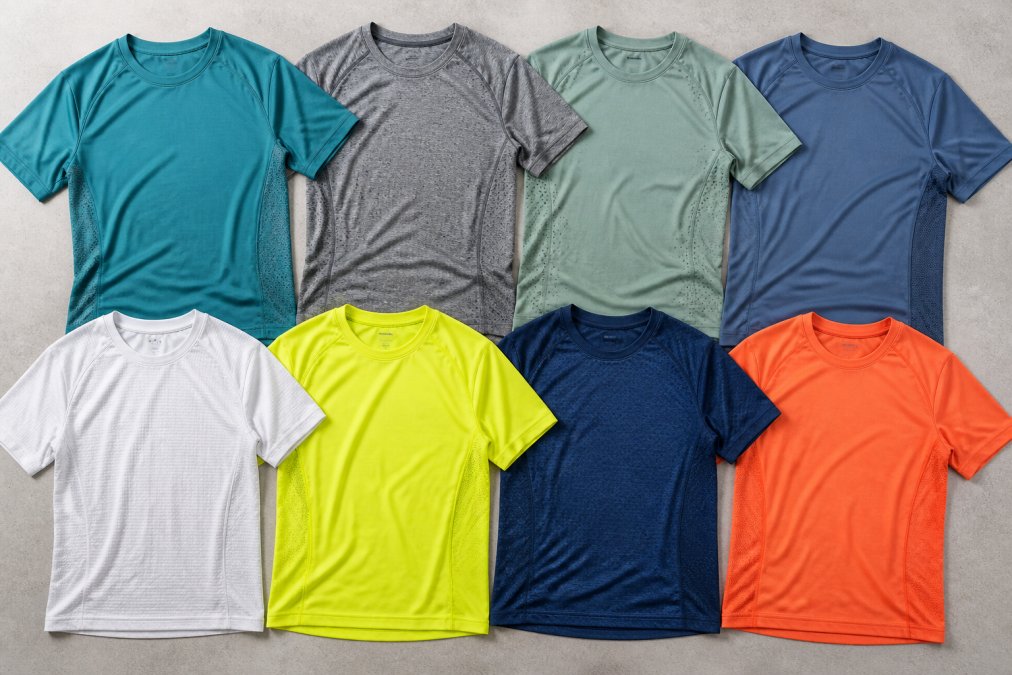
The best breathable running shirts 2026 are engineered with different priorities: some focus on maximum airflow for racing, others balance durability for trail use or add sun protection. We tested each shirt across hot weather runs, high-intensity sessions, and long distances. Here is how the top performers stack up.
| Shirt | Price | Best For | Key Feature |
|---|---|---|---|
| Patagonia Capilene Cool Ultra | £55 | High-intensity training | Odour control treatment |
| rabbit EZ Tee Perf SS | £48 | Hot-weather racing | Perforated ventilation |
| Janji Sun Shirt | £65 | Long runs in sunlight | UPF-rated sun protection |
| Outdoor Research Echo Tee | £42 | Ultra-lightweight needs | Polygiene odour control |
| Terignota Trail Tee | £22 | Budget-conscious runners | Ergonomic fit |
| Brooks Distance Short Sleeve | £40 | Traditional fit preference | Anti-chafe seams |
| Adidas Terrex Agravic Tee | £45 | Trail running | Body-mapped ventilation |
| Nike Stride Running Shirt | £55 | Daily training | Dri-FIT mesh panels |
How We Tested and Selected These Running Tops
We selected these shirts based on a consistent testing protocol. Each was worn on multiple runs of at least 8 kilometres in warm conditions, and we evaluated four key criteria: moisture-wicking speed, ventilation effectiveness, chafing risk, and overall comfort. We also considered fabric weight, durability after washing, and reflective detailing for night-time visibility.
Our Testing Protocol in Detail
Test environment: All testing took place between June and August 2026 in the UK, with temperatures from 18°C to 27°C and humidity between 55% and 80%, the typical warm-weather running window for British runners.
Run protocol: Each tester wore every shirt on at least three runs: one steady-state run at conversational pace, one interval session at 5K pace, and one longer run of 12-16 kilometres. This assessed performance under different sweat rates and effort levels.
Moisture-wicking measurement: We weighed shirts immediately on removal and again after 30 minutes of air drying. The best performers lost 80% or more of their absorbed moisture within that window.
Ventilation assessment: We combined subjective thermal comfort ratings with an airflow test, holding each shirt against a fan and measuring air passage with a handheld anemometer.
Chafing evaluation: Testers logged any skin irritation after each run, noting location and severity. We paid particular attention to seam placement, collar construction, and hem behaviour.
Durability testing: Each shirt was washed ten times per manufacturer's instructions, then re-examined for pilling, seam integrity, and colour fading. We also checked whether moisture-wicking properties degraded after repeated washing.
Our Selection Criteria
From an initial pool of 27 shirts, we narrowed the field to 8 finalists based on the following requirements:
- Moisture-wicking performance: The shirt must move sweat away from the skin within 60 seconds of heavy exertion, not simply absorb it.
- Ventilation effectiveness: The shirt must demonstrate measurable airflow through the fabric, not just rely on thin material.
- Chafing prevention: Seams must be flat or minimally abrasive, and the fit must not create friction points during a full range of motion.
- Durability: The shirt must maintain its performance characteristics after ten wash cycles.
- Value: The price must be justified by the performance, we excluded shirts that cost significantly more than comparable alternatives without delivering measurable benefits.
Sustainability: A Growing Consideration
We weighed environmental impact heavily in our selection. The sportswear industry is responsible for significant carbon emissions and plastic waste, and eco-conscious runners increasingly want gear that performs sustainably (europa.eu).
We prioritised shirts made from recycled materials where possible. The Patagonia Capilene Cool Ultra is made from 100% recycled polyester, while the Outdoor Research Echo Tee uses recycled nylon. These perform identically to virgin synthetics in our tests but have a lower environmental footprint.
We also looked for PFC-free durable water repellent (DWR) coatings on shirts offering weather resistance. PFCs are persistent environmental pollutants that do not break down in nature, so we favoured brands that have switched to PFC-free alternatives (the EPA).
Finally, we considered garment longevity. A shirt that lasts 200 washes instead of 50 is inherently more sustainable, so our durability testing helped identify which shirts would stand the test of time.
Night-Time Visibility: A Safety Feature Worth Checking
While breathability is our primary focus, we also noted which shirts incorporate reflective detailing for low-light running. Many runners train before sunrise or after sunset, particularly during the darker British winter months. Reflective elements on the chest, back, and sleeves significantly improve visibility to motorists and cyclists.
None of our finalists compromise breathability to add reflectivity, the materials are applied as small prints or trims that do not affect airflow. However, the amount and placement of reflective detailing varies considerably between models. If you run in low-light conditions regularly, prioritise reflective elements on moving parts (arms and legs) rather than just the torso.
Patagonia Capilene Cool Ultra: Best for High-Intensity Training
The Patagonia Capilene Cool Ultra is our top pick for high-intensity training because it combines advanced moisture-wicking fabric with a knit construction that promotes exceptional airflow. This breathable running shirt excels when effort spikes and sweat production increases, moving moisture away rapidly to keep you dry. The soft, non-chafing material feels smooth even during longer sessions.
The odour control treatment helps the shirt stay fresher between washes, making it reliable for a busy training week. The main drawback is the premium £55 price point. If you run hard and need a top that keeps up with your sweat rate, this is worth the investment.
rabbit EZ Tee Perf SS: Best for Hot Weather Racing
When the temperature climbs, the rabbit EZ Tee Perf SS is the shirt we reach for on race day. Its perforated fabric enhances ventilation, creating a breathable running shirt that feels almost weightless in hot conditions. The ultra-lightweight construction minimises drag, and the quick-drying synthetic blend keeps you dry when pushing hardest. It is engineered for maximum airflow, ideal for 5K and 10K races where every second counts.
The trade-off is that the fabric can be delicate, handle it with care when washing to avoid snagging the perforations. At £48, it is a solid investment for racers who prioritise lightweight performance.
Janji Sun Shirt: Best for Long Runs in Direct Sunlight
Long runs in exposed, sunny conditions demand protection without sacrificing breathability, and the Janji Sun Shirt delivers on both fronts. This breathable running shirt features UPF-rated fabric that shields your skin from harmful UV rays. The highly breathable mesh zones keep air moving across your body, preventing overheating even under a strong sun.
The lightweight, moisture-wicking material handles sweat effectively, and ventilation is well placed for running posture. At £65 it is expensive, but the sun protection makes it a unique and valuable piece of kit for summer training. For runners who train through the middle of the day, this shirt is a smart choice.
Outdoor Research Echo Tee: Best Ultra-Lightweight Option
For runners who want to feel like they are wearing nothing at all, the Outdoor Research Echo Tee is the best ultra-lightweight breathable running shirt on this list. It uses AirVent fabric technology for exceptional airflow and quick-dry performance, perfect for fast-paced runs and multi-day adventures where pack weight matters. It also includes Polygiene odour control, resisting smell build-up even after intense efforts.
The fabric is extremely thin, which is great for breathability but means it may snag on branches or rough surfaces, best saved for road running or well-groomed trails. At £42, it offers strong value. If you are a minimalist runner who hates heavy, sweaty tops, this is the one to try.
Terignota Trail Tee: Best Budget-Friendly Choice
The Terignota Trail Tee proves you do not need to spend a fortune to get a reliable, breathable running shirt. At just £22, it offers excellent value, using a lightweight technical fabric with a breathable weave that handles sweat well. The ergonomic fit allows a full range of motion on road or trail.
It is a simple, no-frills shirt focusing on comfort, breathability, and durability. The main limitation is limited colour options. For budget-conscious runners or beginners, this is a fantastic entry point into performance apparel.
Choosing the right breathable running shirts 2026 is about matching fabric technology to your running style and environment. Whether you need maximum airflow for racing, sun protection for long summer days, or a budget-friendly option for daily training, there is a top here that fits the bill. At REVIVE Activewear and Apparel, we understand that the right gear helps you restart, reset, and refocus on your goals, which is why we offer quality performance apparel with easy ordering for any quantity, from a single item to thousands for your team.
Frequently Asked Questions
What is the most breathable shirt for running?
The most breathable shirts use lightweight synthetic fabrics with perforated or mesh paneling to maximise airflow. Options like the rabbit EZ Tee Perf SS excel here, as their construction is designed to release heat quickly. For most runners, a shirt with visible ventilation zones and a quick-dry finish will provide the best temperature regulation during high-output sessions.
What are the best running shirts for hot weather?
The best running shirts for hot weather are ultra-lightweight and prioritise ventilation over everything else. Look for features like mesh back panels, perforated fabrics, and a loose or ergonomic fit that allows air to circulate. The Outdoor Research Echo Tee and rabbit EZ Tee are strong options. These tops help your body cool itself efficiently by moving sweat away from the skin and letting it evaporate quickly.
What fabric is most breathable for running?
Synthetic fibres like polyester and nylon are the most breathable for running. These materials are hydrophobic, meaning they repel water, which allows them to wick moisture away from your skin to the fabric's surface where it can dry fast. Many technical tops also include elastane for stretch. Avoid cotton for high-intensity running, as it absorbs sweat, becomes heavy, and can cause chafing.
How do I choose a running shirt that prevents chafing?
To prevent chafing, look for shirts with flatlock seams or seamless construction, as these reduce friction points against your skin. The fabric should be soft and smooth, even when wet. Pay attention to the fit; a snug but not tight ergonomic fit reduces movement that can cause irritation. You should also consider the shirt's length to ensure it won't ride up, and look for anti-odour treatments that keep the fabric feeling fresher for longer.