 Listicle
Best Compression Leggings for Long-Haul Flights: Tested Picks
Quick Summary
The best compression leggings for long-haul flights combine graduated support with a soft, breathable fabric you can wear for hours. Look for a stated mmHg figure and a high-rise, non-restrictive fit, since compression leggings support comfort but do not replace moving about the cabin.
- Check whether the mmHg figure is published and whether the compression is graduated or uniform.
- Choose light-to-moderate compression you can wear for hours without pinching or marks.
- Buy your measured size, since sizing down can restrict circulation on a long flight.
- Wash in cool water on a gentle cycle and dry flat to keep the stretch.
- Speak to your GP or pharmacist first if you have a circulation condition or have been advised to wear compression.
Table of Contents
- Which Compression Leggings Are Best for Long-Haul Flights?
- Comparison Table: Leggings Tested for Flying
- Compression Level for Flying: What the mmHg Ratings Mean
- Compression Socks vs Compression Leggings for Flying
- How to Choose Compression Leggings for Air Travel
- How to Wash Compression Leggings So They Keep Their Support
- Choosing Your Long-Haul Pair from REVIVE
- Frequently Asked Questions
Which Compression Leggings Are Best for Long-Haul Flights?
Last Updated: November 22, 2026
Long flights leave legs stiff and swollen, and compression leggings are one of the simplest ways to help. Some travellers find their legs feel more comfortable on landing, though the research on this is still limited. Our short answer is that the best compression leggings for long-haul flights combine graduated support with a soft, breathable fabric you can wear for hours. Compression leggings do not replace moving about the cabin or drinking water, but they add a useful layer of support. Alongside compression leggings, thoughtful choices like best travel accessories can make it easier to stay comfortable and move around during a long flight.
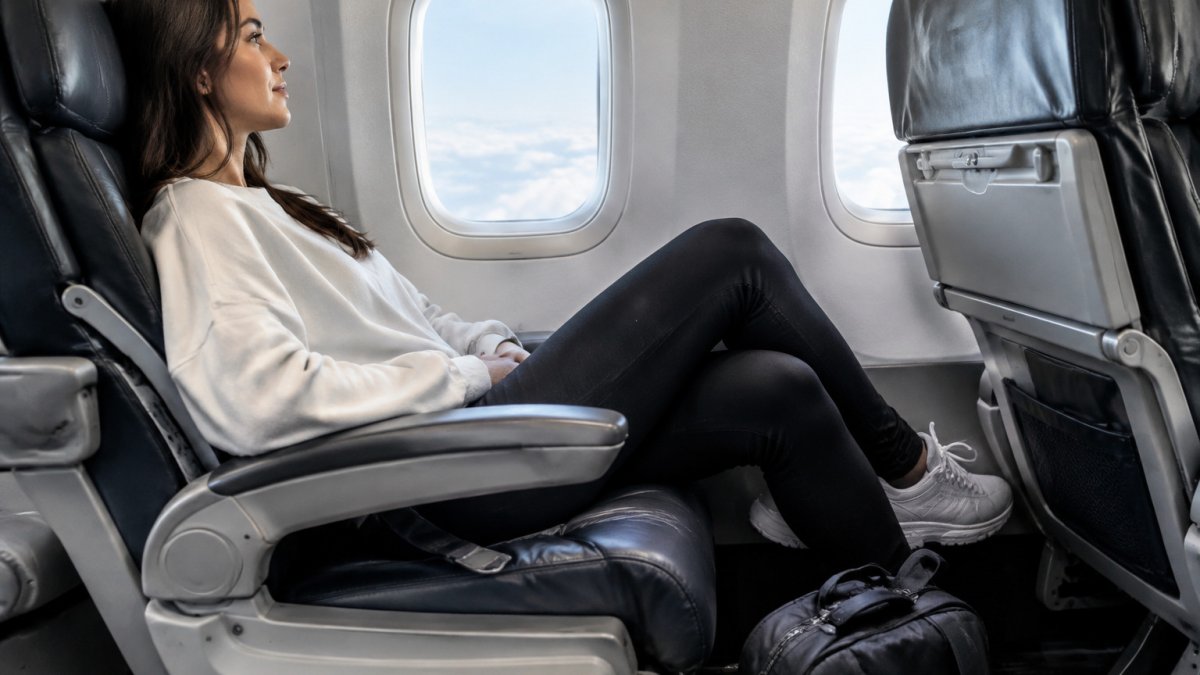
According to Cochrane review on compression stockings and deep vein thrombosis in airline passengers, evidence on whether compression stockings prevent travel-related clots is mixed, so treat any benefit as supportive rather than protective. A Cochrane review is a useful starting point for understanding that uncertainty.
Compression leggings are available from many activewear retailers, so compare stated compression, fit and fabric before you choose a pair.
Comparison Table: Leggings Tested for Flying
The table below compares a range of leggings on the features listed. Pricing depends on the retailer, size and colourway, so check the retailer for current GBP prices and delivery times.
| Product | Best for | Stated compression | Fabric and fit notes | Main drawback | Indicative GBP price |
|---|---|---|---|---|---|
| Carbon38 High Rise Sport Pocket Legging | Travellers who want a high-rise, soft-touch legging with pockets | Not published as mmHg; marketed as supportive | High-rise waistband, side pocket, soft stretch blend | No published compression rating, so hard to compare like-for-like | Check retailer; typically premium activewear pricing |
| Elastique Athletics L'Original Leggings | Full-length travel support | Not published as mmHg; brand cites long-flight use | Full-length, firm-feel knit | No mmHg figure to verify | Check retailer |
| CRZ Yoga Hugged Feeling Compression Leggings | Budget buyers wanting a soft, high-stretch feel | Not published as mmHg; marketed as compression | High-stretch, squat-proof knit, high waist | Compression is marketing-led, not graded | Around £25-£35 depending on retailer and size |
| Commando Butter Luxe Legging | Comfort-first flyers who dislike firm squeeze | No compression rating published | Modal-blend, very soft, lighter hold | Not a graded compression garment | Check retailer; premium pricing |
| 2XU Flying Compression Leggings | Flyers who want a garment explicitly designed for air travel | Brand positions it as flight-specific compression | Full-length, engineered for circulation support | UK availability and GBP pricing vary; confirm delivery before ordering | Check retailer |
| Planet Nusa T1 Thermal Tights | Cooler cabins and winter journeys | Not published as mmHg | Thermal brushed interior, full length | Not flight-specific; warmth may be too much on warm cabins | Check retailer |
How to read this table: a blank or 'not published' compression figure is not a red flag on its own, many fashion-led leggings are simply not graded in mmHg. It does mean you cannot compare them numerically with a medical-grade stocking. If graded compression matters to you, prioritise pairs that publish a mmHg range and state whether it is graduated.
Watch out: buying one size down to chase a 'tighter' feel can reduce comfort and restrict circulation over a long flight, choose your measured size and rely on the garment's stated compression instead.
Prices vary by retailer, size and colourway, so check the retailer for current GBP prices and delivery times before buying.
Compression Level for Flying: What the mmHg Ratings Mean
Compression is measured in millimetres of mercury (mmHg), and the figure describes how firmly a garment presses on the leg at a given point (Guidance on compression hosiery and garments). The pressure class and whether the compression is graduated or uniform both matter alongside the headline number.
Pressure classes in plain terms. Medical compression garments are usually grouped into pressure classes, from light to firm. Consumer 'compression leggings' often sit at the lighter end, and many publish no mmHg figure at all. A legging marketed as 'sculpting' or 'supportive' is not the same as a graded garment, and the two should not be treated as interchangeable.
Graduated versus uniform compression. Graduated compression is tightest at the ankle and eases as it moves up the leg, which is designed to encourage blood flow back towards the heart. Uniform compression applies roughly the same pressure throughout. Most flight-focused leggings are uniform or only lightly graduated; true graduated garments are usually described as such and specify ankle, calf and thigh pressures. If a product page does not state the graduation, assume it is not graduated.
How consumer leggings differ from prescribed garments. A medically prescribed compression stocking is fitted to your leg measurements, graded in mmHg, and intended for a defined clinical purpose. A compression legging is a piece of clothing with a firm stretch, useful for comfort and a sense of support, but not a substitute for a fitted garment if a clinician has told you to wear one. Light, comfortable compression is often a sensible starting point for travel unless you have been advised otherwise.
A practical way to choose. Match the compression to the journey and to your own comfort. For a long flight, light-to-moderate compression that you can wear for many hours without pinching is usually more useful than a very firm garment you want to take off after two hours. Check the manufacturer's stated mmHg figure and graduation rather than relying on words like 'supportive' or 'sculpting'.
Watch out: very firm compression can feel uncomfortable over a long flight and may not suit everyone, if a garment leaves marks, numbness or tingling, it is too tight, not 'working harder'.
If you have a medical condition affecting your circulation, are pregnant, have recently had surgery, or have been advised to wear compression, speak to your GP or pharmacist before choosing a garment for a long flight. Compression leggings are a comfort measure, not a treatment.
Compression Socks vs Compression Leggings for Flying
Compression socks cover the foot and calf, while leggings cover the full leg. For most long flights, leggings give more coverage and comfort because the compression is distributed over the thigh as well as the calf.
Read general travel guidance as a reason to match your choice to your journey length and personal risk. Socks are the lighter option for shorter trips, and leggings suit longer flights where you want full-leg support.
How to Choose Compression Leggings for Air Travel
Choosing the right pair comes down to four things: compression level, fabric, fit, and how you plan to move about the cabin. Start with the fabric. A soft, breathable blend keeps you comfortable over many hours, which matters more than any single feature.
Next, check the fit. Leggings that are too tight can dig in at the waist or behind the knee, and that discomfort tends to get worse as the flight goes on. Look for a high-rise waistband if you want no-slip support, and choose a pair that stays put when you sit and stand.
Finally, think about the rest of your travel outfit. Compression leggings work well under a relaxed top and a light layer for the cabin temperature. Our guide to athleisure outfit ideas for long flights covers how to pair them with other pieces. (Note: for styling ideas, see our article on 7 Comfortable Athleisure Outfits for Long Flights.)
Fit, Sizing and Waistband Checks
Before you travel, try your leggings on in the position you will sit in. Bend your knees, sit on a chair, and check that the waistband does not roll or cut in. Measure your hips and thighs against the brand's size chart, because sizing varies from brand to brand.
Run through this quick check:
- The waistband stays flat when you sit down.
- There is no pinching behind the knee or at the ankle.
- You can lift your leg comfortably to climb into a seat or step over a bag.
Watch out: buying one size down for a "tighter" feel can leave you with leggings that restrict circulation, which is the opposite of what you want on a flight.
How to Wash Compression Leggings So They Keep Their Support
Compression fabric can lose its stretch when washed hot or dried in a machine. Washing in cool water on a gentle cycle is a common way to care for activewear. Lay them flat or hang them to dry, and keep them away from direct heat.
Rotating between a few pairs if you fly often can give each one time to recover its shape.
Choosing Your Long-Haul Pair from REVIVE
If you want a pair that handles the gym, the court and the plane, REVIVE Activewear and Apparel is worth a look.
Our suggestion is to match the leggings to your journey. For flights where you want the most support, pick a legging with a stated compression rating. For comfort on shorter trips, a softer fabric may be enough. Check the product page for current pricing and delivery times before you order.
Frequently Asked Questions
Are compression leggings good for long-haul flights?
They can help some travellers feel more comfortable on long journeys because graduated compression supports circulation in the legs during sitting. The evidence is limited, and research on compression stockings for preventing deep vein thrombosis in airline passengers is mixed. Low-risk travellers on short flights may not need them. For longer flights, choose a pair that feels supportive without tight spots, and move regularly during the journey.
Should I ask a doctor before wearing compression garments on a flight?
Yes, it is sensible to ask your GP or pharmacist first if you have a history of blood clots, circulation problems, varicose veins, diabetes or recent surgery. Medical-grade compression is prescribed to a specific pressure, and garments that are too firm can cause harm if you have certain conditions. If you are healthy and simply want extra comfort on a long flight, a general-purpose pair is usually a low-risk choice.
What compression level should I choose for flying?
Compression is measured in mmHg, and lighter-compression leggings suit everyday comfort rather than clinical treatment. Check the product information for a stated rating rather than assuming one. Where a rating is not given, prioritise a snug but comfortable fit over a higher number. If you need a specific level for medical reasons, follow the advice you have been given.
How do I care for compression leggings so they keep their shape?
Wash them inside out on a gentle cycle in cool water, use a mild detergent and avoid fabric conditioner, which can coat the fibres and reduce stretch. Do not tumble dry or put them near direct heat, and lay them flat to dry.