 how-to
Bulk Apparel Discounts for Gyms: A 2026 Guide
Table of Contents
- Understanding Bulk Apparel Discounts for Gyms
- How Wholesale Pricing Tiers Work
- Custom Activewear for Gyms: Design and Branding Options
- The Bulk Order Activewear Process: Step-by-Step
- Wholesale Gym Clothing: Sourcing Strategies and Sustainability
- ROI Analysis: Why Bulk Ordering Saves Money Long-Term
- Seasonal Promotions and Logistics for Large Orders
- Common Mistakes to Avoid When Ordering Bulk Fitness Gear
Last Updated: August 18, 2026
Understanding Bulk Apparel Discounts for Gyms
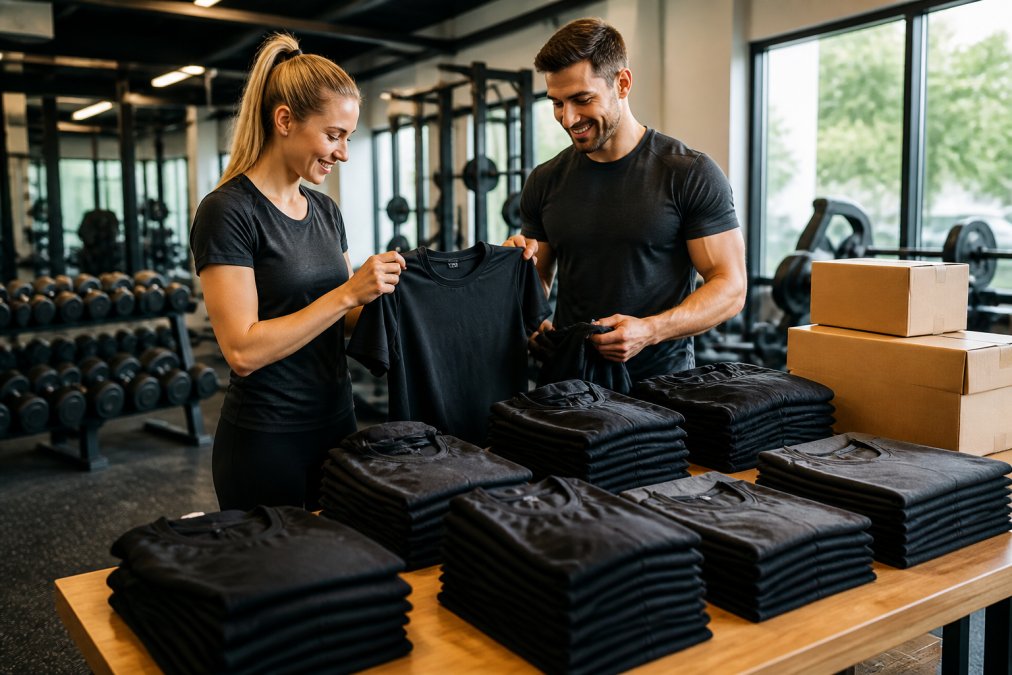
Bulk apparel discounts for gyms unlock tiered pricing, customisation options, and supply chain efficiencies unavailable through retail channels. The difference is substantial: wholesale rates can reshape your gym's profitability compared to full retail pricing.
At REVIVE Activewear and Apparel, we've worked with gym managers who assumed bulk ordering required enormous minimums or complex negotiations. Today's suppliers serve gyms of all sizes, from boutique studios to large facilities. When members wear matching branded gear, they feel part of something bigger. This cohesion drives retention and referrals, members in branded apparel stay longer and refer friends.
This guide covers sourcing bulk apparel discounts, from understanding wholesale pricing through executing your first order, calculating ROI, and avoiding common mistakes.
How Wholesale Pricing Tiers Work
Wholesale pricing tiers are structured around order volume: more units mean lower per-unit costs. Most suppliers operate on tiered models with clear breakpoints, orders under 50 units cost more per item, 50-150 units drop into a lower tier, and orders above 150 unlock further discounts.
Understanding your tier shapes buying strategy. If you're at 48 units and the next tier starts at 50, ordering two more pieces could significantly reduce per-unit cost. Conversely, ordering far beyond actual need wastes money. The sweet spot is ordering volume you'll genuinely use within three to six months.
Seasonal variations affect pricing. Suppliers often offer promotional pricing during off-peak seasons. Winter orders for spring activewear might unlock better rates than summer orders for summer delivery. Timing purchases around these windows yields additional savings beyond tiered discounts.
| Order Volume | Typical Price Per Unit | Best For | Lead Time |
|---|---|---|---|
| 1-49 units | Standard retail | Single items, testing | 1-2 weeks |
| 50-150 units | 15-25% discount | Small studios, pilot programs | 2-3 weeks |
| 151-500 units | 25-40% discount | Medium gyms, branded apparel | 3-4 weeks |
| 500+ units | 40-50%+ discount | Large facilities, custom designs | 4-6 weeks |
Custom Activewear for Gyms: Design and Branding Options
Custom activewear transforms generic fitness gear into branded merchandise that strengthens member identity and loyalty. Members wearing branded gear become walking advertisements for your facility.
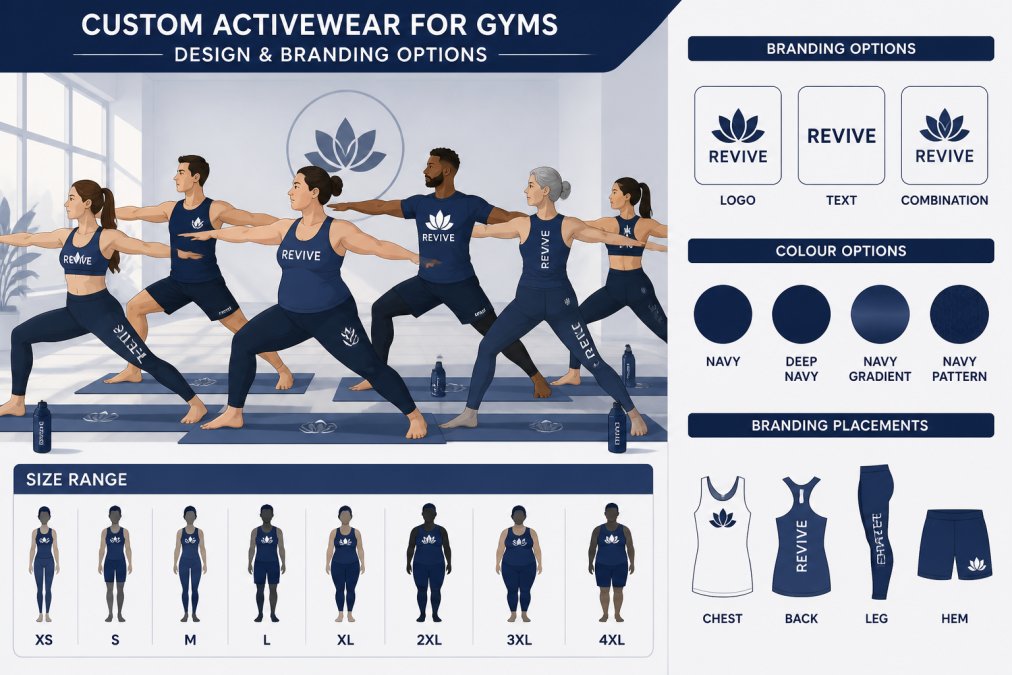
The customisation process starts with design: colour palette, logo placement, and fabric type. Most suppliers offer design templates and mockups for visualisation before committing. REVIVE Activewear and Apparel's design team can help translate your vision into production-ready specifications.
Logo placement matters significantly. A small embroidered logo on the chest feels premium; a large printed graphic across the back can cheapen the look. Chest logos work well on tops, sleeve embroidery adds sophistication, and hip or thigh placement suits leggings.
Fabric selection is equally critical. Moisture-wicking performance fabrics cost more than basic cotton but deliver tangible benefits. Members notice when branded gear actually performs during workouts. Compression wear appeals to serious gym-goers but commands premium pricing. For yoga and general fitness studios, standard moisture-wicking fabrics offer the best balance of performance and cost.
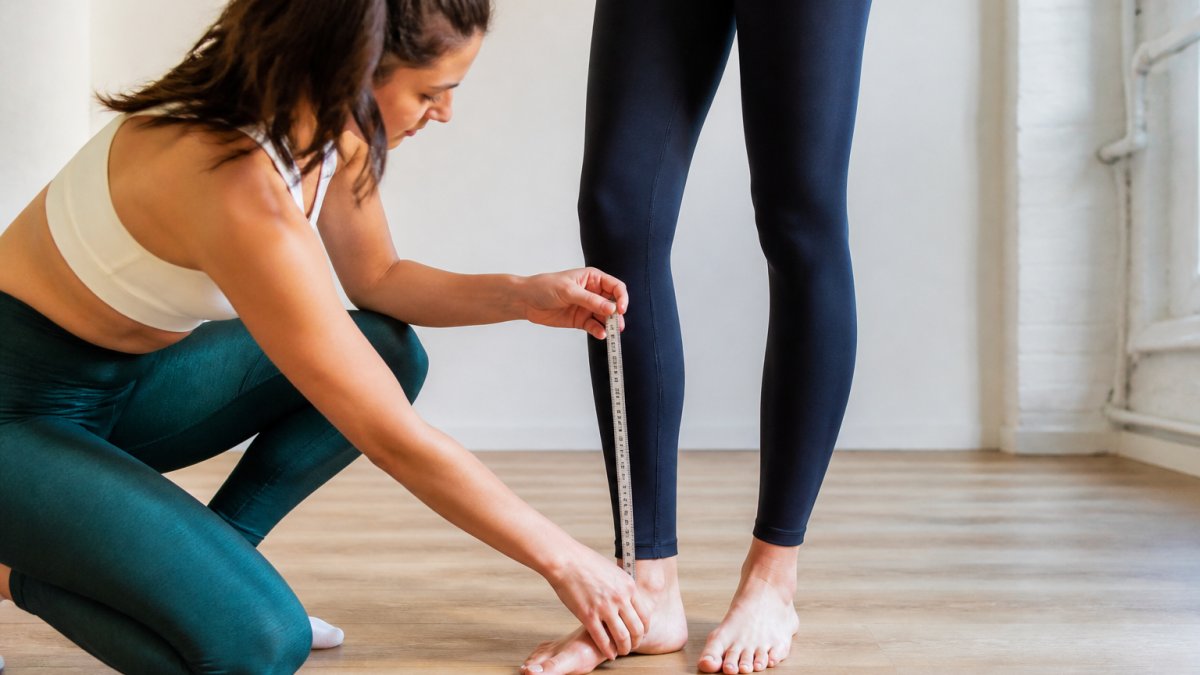
Work with your supplier to understand sizing charts, brands vary widely in fit. REVIVE Activewear and Apparel provides detailed fit guides. Getting fit right is critical; pieces that don't fit properly undermine branded apparel effectiveness.
The Bulk Order Activewear Process: Step-by-Step
Step 1: Define Your Requirements Determine what you actually need. How many members do you have? What's your target penetration, will 30% or 70% of members buy branded gear? What product categories matter most? Document your assumptions.
Step 2: Request Quotes from Multiple Suppliers Contact at least three suppliers with detailed specifications: product type, quantities, colours, customisation details, and delivery date. Good suppliers respond within 24-48 hours with formal quotes including unit costs, setup fees, and timelines.
Step 3: Evaluate Quality and Lead Times Price isn't everything. Request samples before committing. Feel the fabric, check seams and stitching quality. Ask about quality assurance and defect handling. REVIVE Activewear and Apparel offers express delivery options and dedicated support for bulk orders.
Step 4: Negotiate Terms Wholesale pricing is often negotiable, especially for first-time orders. Negotiate payment terms too, some require full upfront payment; others offer net-30 or net-60 terms. Understand minimum order policies.
Step 5: Finalise Design and Specifications Lock down design details. Approve mockups, confirm colours, logo placement, and sizing. Request a physical sample of the final product before mass production.
Step 6: Place the Order and Confirm Logistics Place your order in writing with all specifications documented. Confirm delivery address, date, and shipping method. Ask about tracking and progress updates.
Step 7: Inspect Upon Arrival Inspect thoroughly upon arrival. Check quantities, verify colours, inspect seams and stitching. Test fit on actual members if possible. Document any issues immediately.
Minimum Order Quantities and Negotiation
Minimum order quantities (MOQ) are the smallest volume a supplier accepts. Production setup costs are fixed, so suppliers pass that cost to smaller orders through higher per-unit pricing.
Typical MOQs range from 25 to 100 units, though suppliers often negotiate lower. MOQs aren't absolute, they're starting positions. If the stated MOQ is 50 and you're ordering 40, ask whether they'll work with you.
Negotiation strategies:
Commit to future orders. "We'll start with 75 units now and order another 100 in three months."
Combine product categories. Order 25 leggings plus 25 matching sports bras instead of 40 of one item.
Accept longer lead times. Suppliers often negotiate lower MOQs for extended timelines.
Order during off-peak seasons. Suppliers have more flexibility during slow periods.
Pushing below a supplier's comfortable MOQ usually costs you through raised per-unit prices. It's often better to accept a slightly higher MOQ at lower per-unit cost.
Fabric Technology and Quality Standards
Fabric technology directly impacts performance and member perception of your gym's quality.
Moisture-wicking moves sweat away from skin to the fabric's outer surface for evaporation. Synthetic blends (polyester, nylon, spandex) wick effectively; cotton absorbs moisture and stays wet. Most quality fitness apparel uses 88% polyester / 12% spandex or similar ratios.
Stretch and recovery matter for fit and durability. Quality activewear includes spandex (typically 8-15%) that allows movement and returns to shape. Cheap activewear loses shape quickly after washing.
Seam construction separates premium from budget apparel. Flat-lock seams are stronger and more comfortable than standard stitching but more expensive. Overlock seaming is adequate but less durable.
Fabric weight (measured in grams per square metre) ranges from lightweight (150-200 GSM) for warm climates to heavyweight (250+ GSM) for durability. Most gym apparel uses 180-220 GSM.
Quality standards to ask about:
- Pilling resistance: Does fabric pill after washing?
- Colour fastness: Will colour fade or bleed?
- Shrinkage control: Is apparel pre-shrunk?
- Durability testing: What testing standards does the supplier use?
REVIVE Activewear and Apparel focuses on innovative fabric technology balancing performance with longevity.
Wholesale Gym Clothing: Sourcing Strategies and Sustainability
Strategic sourcing considers quality, sustainability, supply chain reliability, and long-term partnerships beyond lowest price.
Supply chain resilience is critical. Work with suppliers having diversified manufacturing and inventory buffers. Ask about contingency plans if production is disrupted.
Sustainability increasingly matters to gym members. Sustainable activewear often costs more upfront but builds brand loyalty and justifies premium pricing.
Sustainable sourcing options:
- Recycled polyester: Made from recycled plastic bottles. Performance equals virgin polyester at slightly higher cost.
- Organic cotton blends: Grown without synthetic pesticides. Appeals to environmentally conscious members.
- Low-impact dyes: Reduce water usage and chemical pollution.
- Fair trade certification: Ensures ethical labour practices.
Ask suppliers about manufacturing facilities, labour practices, and environmental impact. Request certifications (GOTS for organic, OEKO-TEX for chemical safety).
Inventory management prevents tying up capital or experiencing stockouts. Forecast demand based on member count and historical sales. Most gyms find 20-30% of members purchase branded apparel within six months. Reorder in smaller batches rather than one massive order.
Supplier relationships matter more than most realise. A reliable supplier who delivers on time and handles issues professionally becomes invaluable. Invest in the relationship through regular communication and repeat orders.
ROI Analysis: Why Bulk Ordering Saves Money Long-Term
The financial case for bulk ordering is compelling when calculating true return on investment.
Direct cost savings are obvious. Buying 200 units at wholesale instead of retail reduces per-unit costs by 30-50%. If a legging retails for £30 and costs £15 wholesale, you save £15 per unit. On 200 units, that's £3,000.
Member retention drives real ROI. Members wearing your gym's gear feel invested in the community and are more likely to renew memberships. If branded apparel increases retention by 5%, the revenue impact far exceeds initial investment. A gym with 500 members losing 5% annually loses 25 members. At £50 annual profit per member, that's £1,250 in lost profit. Preventing that loss through improved retention exceeds branded apparel costs.
Revenue generation is another lever. Many gyms sell branded apparel to members at retail markup. Purchasing leggings at £15 wholesale and selling for £35 generates £20 profit per unit. On a 200-unit order selling 80% (160 units), you generate £3,200 gross profit, covering your entire bulk order cost.
Brand visibility creates indirect value. Members wearing branded apparel outside the gym promote your facility. One member at the supermarket might catch attention of five people; one of those might visit your gym.
Calculate your specific ROI:
- Direct savings: (Retail price - Wholesale price) × Expected units sold
- Retention impact: (Members retained × Annual member profit) - Bulk order cost
- Revenue from sales: (Selling price - Wholesale cost) × Expected units sold
- Brand impact: (Estimated new members from referrals × Lifetime member value)
Most gyms find bulk apparel orders pay for themselves within 6-12 months when accounting for retention and revenue generation.
Seasonal Promotions and Logistics for Large Orders
Seasonal timing shapes both pricing and logistics for bulk orders.
Seasonal pricing cycles follow predictable patterns. Spring and summer activewear peaks in demand March-June. Suppliers offer promotional pricing during off-season (September-February) to clear inventory. Ordering in December or January for spring launch unlocks better rates than March ordering.
Lead times expand during peak seasons. A supplier delivering in three weeks during January might need six weeks during April. Planning ahead prevents rushed orders costing premium pricing. Order by March for summer campaigns.
Logistics for large orders requires advance planning. A 500-unit order requires significant warehouse space. Confirm storage capacity before delivery arrives. Some suppliers offer phased delivery, easing storage pressure.
Customs and shipping costs matter for international orders. Factor in shipping time and costs. Express shipping is expensive; standard shipping saves money but takes longer.
Quality assurance logistics involve inspecting large orders efficiently. Designate a team member to verify quantities, colours, and quality upon arrival. Document issues with photos and contact your supplier immediately if defects are found.
Seasonal logistics best practices:
- Order 8-12 weeks before needed
- Confirm storage space before delivery
- Schedule delivery when you can inspect thoroughly
- Request tracking information and delivery windows
- Have a documented quality control process
- Maintain buffer inventory for unexpected demand
Common Mistakes to Avoid When Ordering Bulk Fitness Gear
Underestimating MOQ impact is common. A supplier quotes £12 per unit for 100 pieces but £10 for 150. Ordering 150 to hit lower price creates 50 units of excess inventory that sits in storage, becomes dated, and gets discounted or donated. The "savings" evaporate.
Neglecting fit testing creates member satisfaction problems. Order 200 leggings based on size charts without trying them on actual bodies. They arrive and members report sizing runs small or large. Always request samples and test on diverse body types.
Choosing suppliers solely on price leads to quality disasters. The cheapest supplier often cuts corners on fabric, stitching, or dye quality. A 10% price difference might mean 50% difference in durability.
Ignoring colour accuracy is surprisingly common. Mockups show vibrant teal; finished product arrives in muted blue-grey. Request physical colour samples before production. Specify colour using standardized systems (Pantone numbers).
Overcomplicating customisation increases costs and lead times. Every custom detail adds production complexity. Start simple and add complexity as you refine your brand.
Failing to plan for restocking creates supply gaps. You launch branded apparel and it sells well. Three months later you're out of stock. Plan reorder points in advance.
Not documenting specifications leads to inconsistency across orders. Maintain detailed specification documents including measurements, colour codes, and placement diagrams.
Ignoring payment terms creates cash flow problems. Understand your supplier's payment requirements before requesting quotes. Some offer net-30 or net-60 terms that ease cash flow.
Bulk apparel discounts for gyms represent a strategic investment in your facility's brand, member retention, and profitability. Start by understanding your actual needs, compare multiple suppliers, prioritise quality over lowest price, and build a reliable partnership. REVIVE Activewear and Apparel specialises in custom activewear sourcing for fitness facilities of all sizes, with scalable order quantities, express delivery options, and expert support throughout the process. Get started with a consultation to explore how branded apparel can transform your member experience and strengthen your facility's identity.
Frequently Asked Questions
What are the main benefits of ordering gym apparel in bulk?
Bulk ordering reduces unit cost significantly, improves member retention through branded team wear, simplifies procurement, and ensures consistent inventory. Gyms that order in bulk typically see lower per-item expenses and can maintain uniform quality across all pieces. Bulk orders also allow you to negotiate delivery timescales and customisation options that single-item purchases cannot access.
How do I negotiate bulk pricing for custom activewear?
Start by clarifying your minimum order quantity (MOQ) and annual volume expectations. Suppliers offer better unit costs at higher quantities, typically 50+ pieces triggers the first discount tier. Request quotes from multiple distributors, be transparent about repeat orders, and ask about seasonal promotions or payment terms that improve pricing. Many suppliers will negotiate MOQ if you commit to annual orders.
What factors influence the cost of wholesale gym clothing?
Fabric technology (moisture-wicking, compression, durability), customisation complexity, order quantity, delivery speed, and seasonal demand all affect wholesale pricing. Higher-quality textiles and advanced fabric features cost more but last longer, improving long-term ROI. Bulk orders placed during off-peak seasons often qualify for better rates than rush orders during peak fitness seasons.
How long does it take to receive a bulk order of custom gym wear?
Standard delivery typically ranges from 4-8 weeks, depending on customisation complexity and supplier capacity. Express delivery options are available but cost more. Plan your bulk order timeline around your gym's calendar, avoid ordering during peak seasons when lead times extend. Confirm delivery guarantees in writing before placing your order to ensure stock arrives when you need it.
This article was written using GrandRanker