 how-to
Activewear for a Balanced Silhouette: 2026 Guide
Table of Contents
- Start With Your Body Proportions, Not Your Size
- How to Choose Workout Leggings That Balance Your Lower Half
- How to Choose a Sports Bra That Supports Your Frame
- Tops, Layers and Colour: Building Visual Balance Up Top
- Do Matching Activewear Sets Create a Balanced Look?
- Fabrics and Fit That Keep the Silhouette Working Mid-Workout
- A Step-by-Step Method for Building a Balanced Outfit
- Frequently Asked Questions
Last Updated: October 13, 2026
Start With Your Body Proportions, Not Your Size
Choosing activewear to create a balanced silhouette starts with proportions, not the number on the label.
Most shoppers hunt for a size first. That is backwards.
Proportion is about width and length relationships, not height. Two people in the same size can need completely different cuts.
The NHS Better Health guidance on physical activity is a useful reminder that comfort drives how often you actually train.
The Three Proportion Patterns Most Outfits Fall Into
Most bodies read as one of three patterns:
- Shoulders wider than hips. Tops can feel tight; bottoms can look small.
- Hips wider than shoulders. Bottoms dominate; shoulders can look narrow.
- Shoulders and hips roughly even. The easiest base to style, but the waist still needs definition.
You are not locked into one. Cuts shift how a pattern reads.
Why Shoulder-to-Hip Ratio Matters More Than Height
Shoulder-to-hip ratio decides where the eye lands first. Height only changes how much fabric you have to work with.
A simple check: stand in a mirror in fitted clothing. Compare shoulder width to hip width. Whichever is wider is your styling anchor.
How to Choose Workout Leggings That Balance Your Lower Half
The best leggings for a balanced silhouette are high-rise, opaque and snug at the waistband. They hold the waistline where you want the eye to stop, then keep the leg line clean below it.
That single choice does more for proportion than any top you buy.
High-Rise, Mid-Rise or Flared: What Each Cut Does Visually
| Cut | Visual effect | Best for |
|---|---|---|
| High-rise | Lifts the waistline, lengthens legs | Shorter torsos, hip-dominant shapes |
| Mid-rise | Neutral, sits at the natural waist | Balanced proportions |
| Flared | Widens below the knee, softens the calf | Straight or athletic legs |
| Cropped | Stops at the calf, adds width there | Full-length tops, warm sessions |
Flared pants work, but they add volume at the hem, so pair them with a fitted or cropped top.
Checking Fit, Opacity and Waistband Grip Before You Buy
Do not trust the label alone. Test three things:
- Squat, lunge and bend in the fitting room
- Hold the fabric to a light and check opacity
- Pull the waistband up and let go; it should stay put
A waistband that rolls mid-session ruins the line you built. Look for a wide, flat band with four-way stretch fabric.
How to Choose a Sports Bra That Supports Your Frame
A sports bra does more to your silhouette than any other single piece, because it sets the line of your shoulders, chest and ribcage before anything else goes on. Get it wrong and no amount of clever layering will fix the shape underneath.
Two decisions matter: how the bra holds you, and where its edges sit on your frame.
Encapsulation Versus Compression: What Each Does to Your Line
Sports bras work in one of two ways, and the difference shows in the mirror.
- Compression bras press the bust flat against the chest, creating a streamlined, athletic line for smaller cup sizes and lower-impact sessions. The trade-off: they flatten the upper body, making a narrow-shouldered frame read even narrower.
- Encapsulation bras hold each breast in its own shaped cup, supporting through structure rather than pressure so the chest keeps a natural curve. They suit larger cup sizes and higher-impact work, and preserve the shoulder-to-waist relationship that makes a silhouette read balanced.
- Hybrid bras combine a compression outer layer with moulded cups, the most common design in mid-to-high support ranges and the easiest starting point if you are unsure.
A common pattern among fitters is that anyone above roughly a D cup gets better shape and less bounce from encapsulation. Below that, compression usually feels lighter and cooler.
Band Fit, Underband Placement and Strap Width
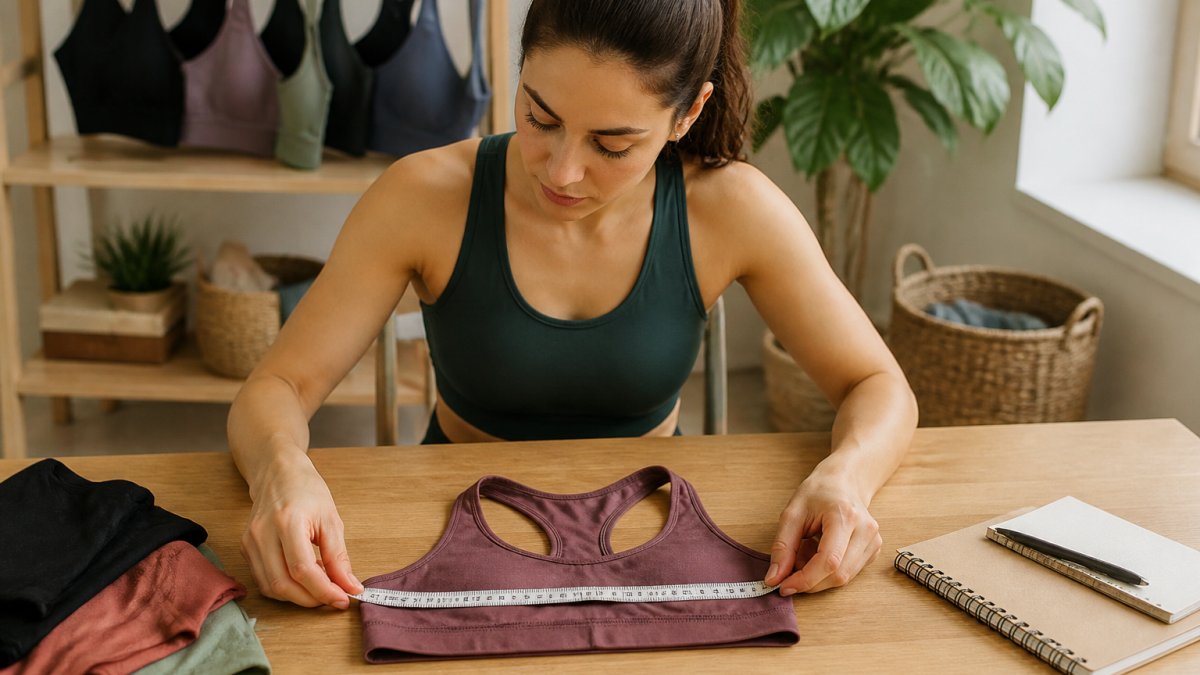
The band carries most of the support. The straps only fine-tune it. If a bra pulls on your shoulders, the band is almost always too loose.
Check these in order:
- Underband level. A firm band should sit level all the way round, roughly under the shoulder blades at the back. If it rides up, size down in the band or choose a firmer knit.
- Finger test. You should be able to slide one finger under the band, no more. Two fingers means it will shift during a run.
- Strap width against shoulder width. Wide straps spread load and soften a broad shoulder line. Narrow or racer-back straps draw the eye inward and keep a narrow frame from looking boxy.
- Cup edge. The top edge should lie flat against the chest. Any gaping or cutting in means the cup shape, not the size, is wrong.
Matching Support Level to the Session
Support is not a quality ranking. It is a match to impact.
| Session type | Support level | What to look for |
|---|---|---|
| Yoga, Pilates, stretching | Low | Soft band, minimal seams, free ribcage movement |
| Walking, weights, cycling | Medium | Moulded cups or light compression, adjustable straps |
| Running, HIIT, court sports | High | Encapsulation or hybrid, wide underband, minimal stretch in the band |
A bra too firm for yoga restricts the ribcage and changes how you breathe and hold your shoulders; one too light for running lets movement travel upward and pulls the whole outfit out of line.
The Chartered Society of Physiotherapy advice on exercise is clear that well-fitted kit helps you move well, and support you are not fighting is the foundation of that.
Tops, Layers and Colour: Building Visual Balance Up Top
Tops are where you correct the balance. If your hips dominate, add visual weight above the waist. If your shoulders dominate, keep the top simple and let the bottom carry more detail.
Colour does the heavy lifting. Dark, plain bottoms recede. Lighter or patterned tops draw the eye up.
Cropped Hoodies, Tunics and Relaxed Fits Compared
- Cropped hoodie: ends at the waist, pairs well with high-rise leggings, adds width up top.
- Tunic-length top: covers the hip, smooths the line, best for hip-dominant shapes.
- Relaxed top: loose through the body, needs a fitted bottom to avoid looking shapeless.
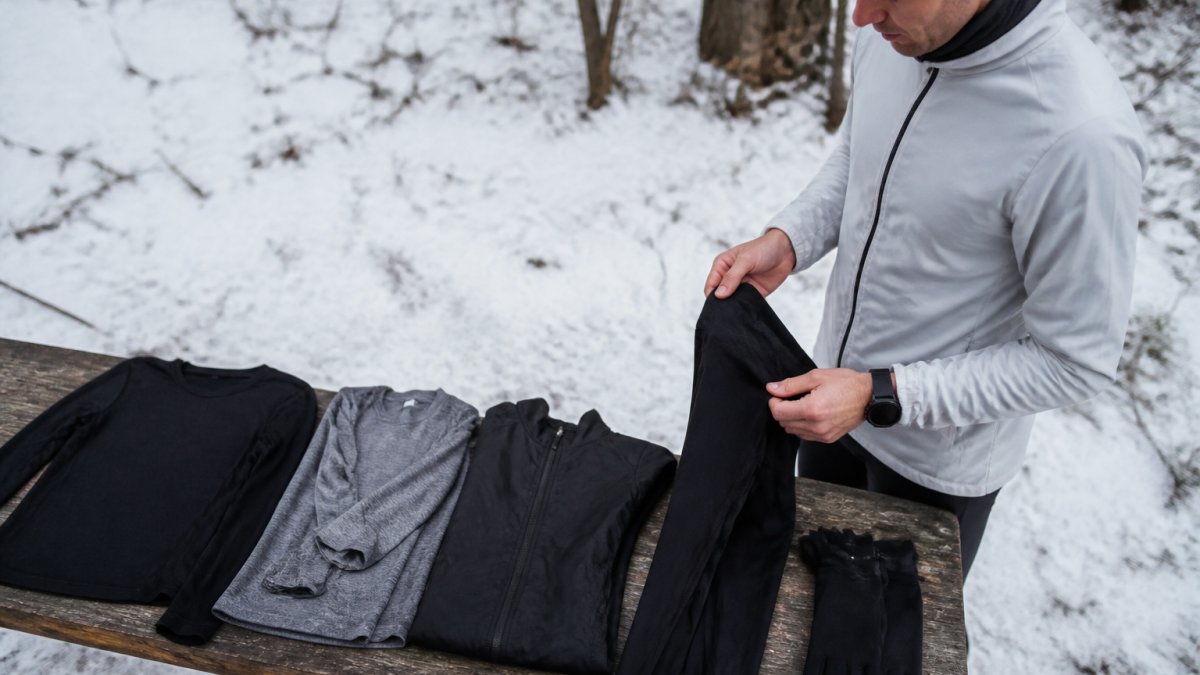
Layering finishes the job: a lightweight jacket worn open creates two vertical lines that read as length.
Do Matching Activewear Sets Create a Balanced Look?
Matching sets create a strong, unbroken line, which is why they read as balanced so often: one colour from shoulder to ankle removes the horizontal breaks that chop up your shape. What most guides skip is that a set only works if the two pieces are cut for the same proportions, and that is where sets quietly fail.
Why a Set Can Break the Balance It Was Meant to Create
A set is two garments, not one. If the leggings are high-rise and the top is cropped to sit at the natural waist, the two hems fight each other and create a band of skin or fabric across your middle. If the leggings are mid-rise and the top is long, the top hem lands on the hip and adds width exactly where you were trying to reduce it.
The fix is to check the rise and the top length together before you buy:
- High-rise leggings pair with a cropped or waist-length top so the two hems meet or overlap.
- Mid-rise leggings pair with a top that ends at or just below the waistband.
- Long-line or tunic tops need a fitted, high-rise bottom so the line stays clean underneath.
Colour, Tone and Fabric Weight in a Set
A set in a bright colour amplifies whatever it covers; a dark tone slims and lengthens; a light tone adds volume everywhere. Buy the set in a dark or mid tone first, then add colour once you know which cuts work on you. Fabric weight matters just as much, because both pieces are visible at once: a light, thin top over a heavier, more compressive legging creates a visible step in density that reads as two separate outfits.
| Set choice | Visual effect | Best for |
|---|---|---|
| Dark, matte, matched weight | Continuous, slimming line | First set, everyday training |
| Mid-tone with contrast trim | Adds definition at the waist | Balanced proportions |
| Light or bright, matched weight | Adds volume evenly | Those wanting a fuller read |
| Mixed weights or finishes | Breaks the line at the join | Best avoided unless deliberate |
Matching Sets by Activity
A set that works for yoga may not work for running, because the demands differ.
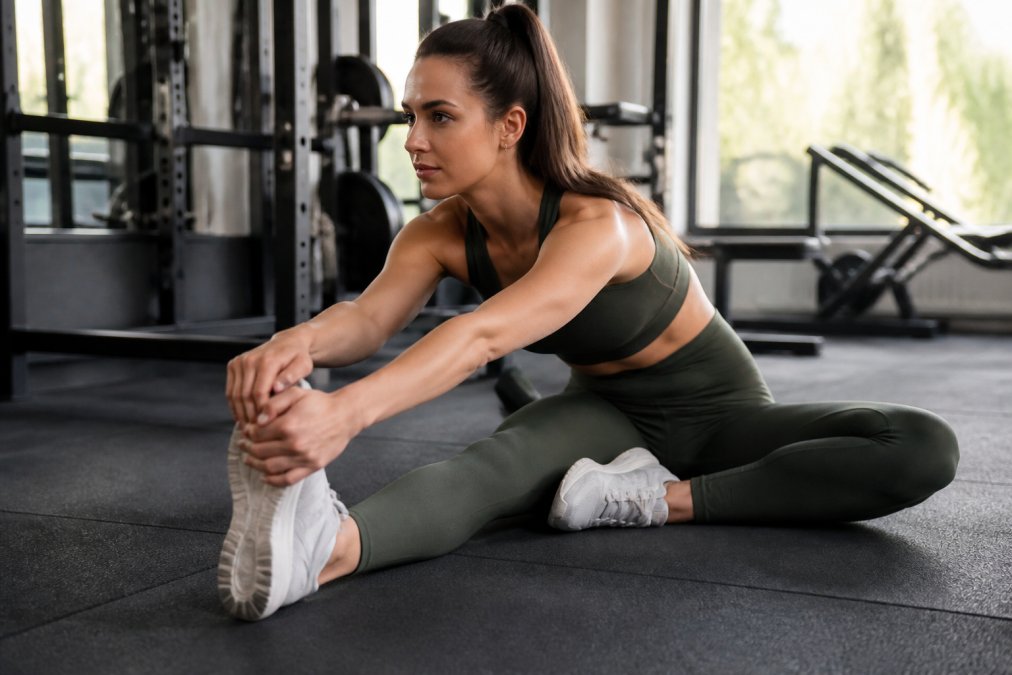
- Yoga and Pilates: a soft, low-compression set with a fitted top and high-rise legging. Freedom through the ribcage and hips matters more than hold.
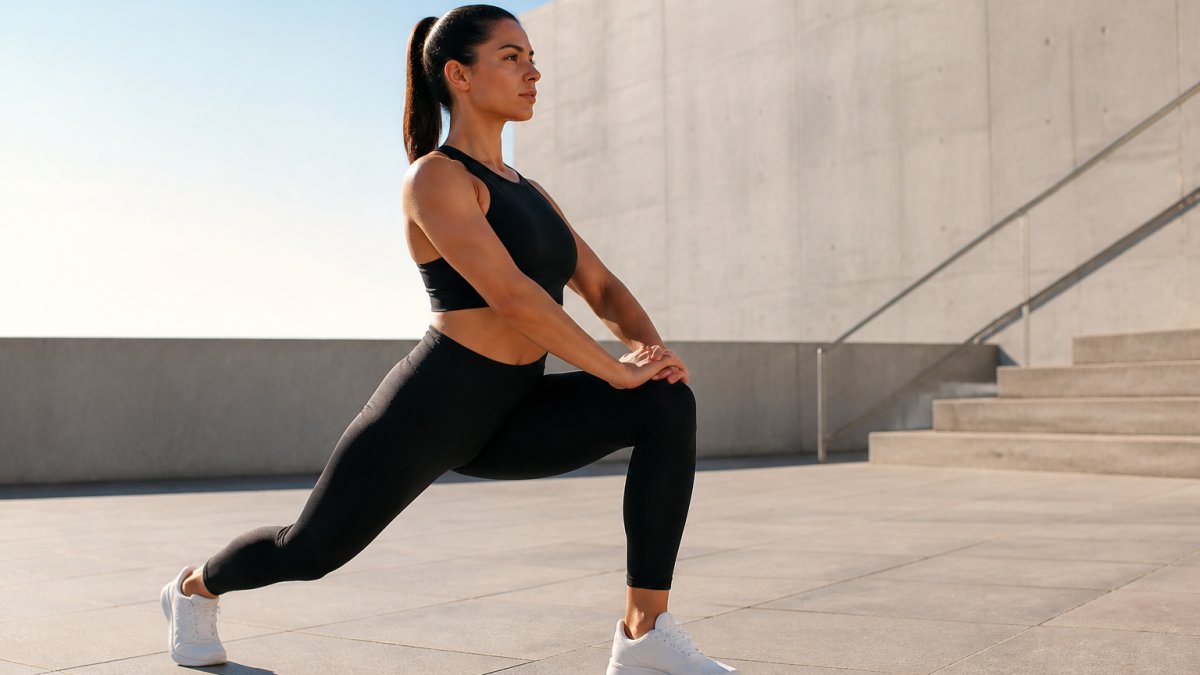
- Running and HIIT: a high-support bra, a fitted top and a compressive high-rise legging, so the line you built standing still survives the session.
- Court sports such as Padel tennis: a fitted top with a slightly longer hem and a high-rise legging with a wide, flat waistband. Quick direction changes test the waistband more than steady running does.
Fabrics and Fit That Keep the Silhouette Working Mid-Workout
A silhouette that looks good standing still has to survive a workout. Fabric decides whether it does.
Look for moisture-wicking performance fabric with four-way stretch. That combination holds shape through movement instead of sagging or bagging.
Compression fabric gives a sculpting fit and keeps everything in place.
Coverage is the other half. Thin fabric that goes see-through under strain undoes every proportion choice you made.
| Fabric trait | What it does | Watch out for |
|---|---|---|
| Moisture-wicking | Moves sweat away, keeps shape | Needs a wash after every session |
| Four-way stretch | Stretches in all directions | Cheaper versions lose recovery |
| Compression | Holds and sculpts | Can feel tight for low-impact work |
| Breathable knit | Stays cool in long sessions | Less support on its own |
A Step-by-Step Method for Building a Balanced Outfit
Here is the method we walk customers through, in order.
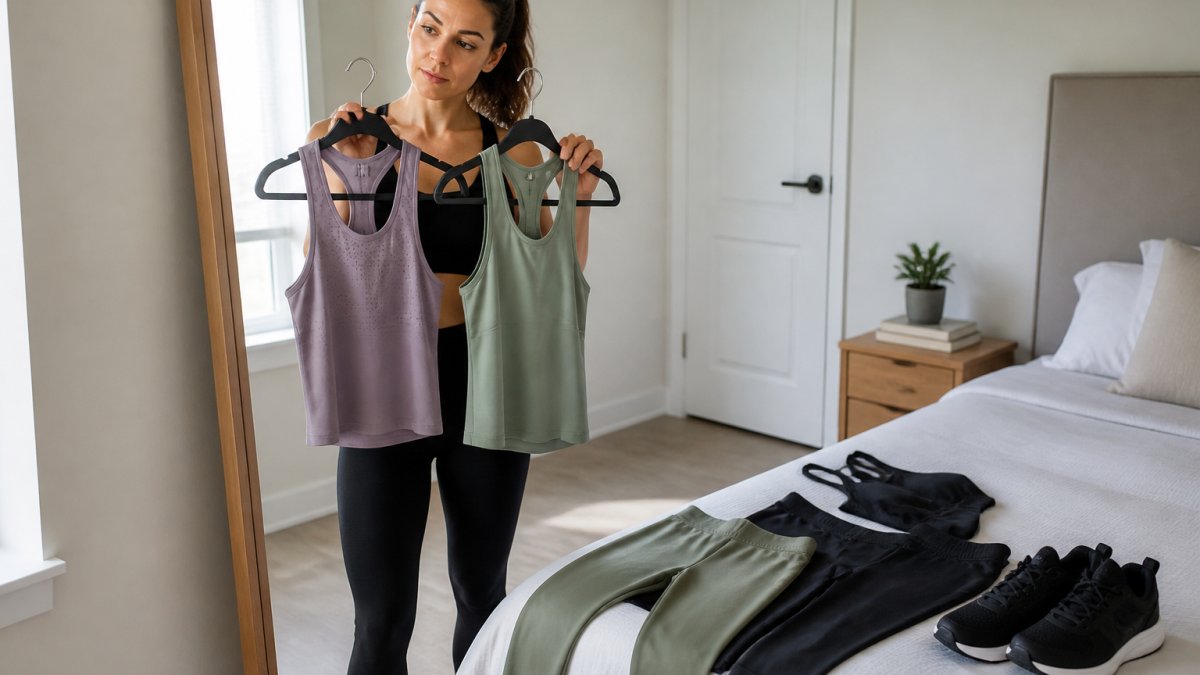
- Find your anchor. Compare shoulder and hip width in a mirror. Whichever is wider is where you add or reduce visual weight.
- Pick the bottom first. Choose a high-rise, opaque legging in a dark or plain tone. This is your base.
- Choose the top to correct the balance. Hip-dominant: add a cropped or detailed top. Shoulder-dominant: keep it simple and let the bottom carry detail.
- Add one layer. A lightweight jacket worn open adds two vertical lines and length.
- Check the colour flow. Keep the darkest tone at the area you want to recede.
- Test it in motion. Squat, reach and twist. If the waistband rolls or the fabric sheers, swap that piece.
- Repeat with a second set. Once you have one formula that works, buy it in another colour.
Sizing varies by cut and fabric, so check the fit guide and reviews before you buy. If you are ordering for a team or studio, ask about fit samples first.
REVIVE Activewear and Apparel builds for exactly this. Our range covers gym work, yoga, running and Padel tennis, with Padel tech designs built for court movement.
Frequently Asked Questions
How do you create a balanced silhouette with activewear?
Start by identifying whether your shoulders or hips read wider, then use contrast to even them out. If your hips are wider, choose a relaxed or tunic-length top over fitted leggings; if your shoulders are wider, try a fitted top with flared or bootcut bottoms. Dark, plain bottoms and lighter or textured tops shift visual weight upward. Add a cropped hoodie or lightweight jacket to break up the torso line, and keep the whole outfit in two or three colours so the eye reads one continuous shape rather than separate blocks.
What activewear styles flatter different body shapes?
The goal is proportion, not correction. If you are fuller through the hip and thigh, high-rise leggings with a wide waistband and a relaxed top work well. If you are broader in the shoulder, a scoop or V-neck top softens the line while flared pants add width below. If you are straight up and down, a matching activewear set with a defined waistband creates shape. Petite frames benefit from cropped tops and full-length leggings in one colour to avoid breaking the vertical line.
How should workout leggings fit?
Leggings should feel firm but not restrictive. The waistband needs to sit flat without rolling when you bend or squat, and the fabric should stay opaque through a deep stretch test. Check the gusset and seams for strain, and make sure the hem does not bunch at the ankle. Four-way stretch and a spandex blend give you mobility without losing shape. If you are between sizes, size up for comfort, since a tight waistband that digs in distorts the silhouette you are trying to build.
Do matching activewear sets create a balanced look?
Yes, when the set is cut for your proportions. A matching set in one colour creates an unbroken vertical line, which lengthens the body and reads as balanced. The trick is choosing the right combination: fitted bottoms with a relaxed or cropped top, or high-rise leggings with a tunic-length top if you want more coverage through the hip. Sets also remove the guesswork from colour matching, which is why they work well for gym sessions, Padel matches and studio classes alike.
Building a balanced outfit is not about hiding anything. It is about knowing which cuts, colours and fabrics work with your proportions, then repeating the formula. That takes a little trial, and the right gear makes it far easier. REVIVE Activewear and Apparel offers high-quality performance pieces, easy ordering for any quantity, and a team ready to help you get the fit right. Subscribe to our email list and get the fit guide before your next order.