 how-to
How to Find Accurate Activewear Sizing: A Step-by-Step Guide
Table of Contents
- Why Accurate Activewear Sizing Matters
- What You'll Need to Measure Yourself
- Step-by-Step: How to Measure Your Body for Activewear
- How to Read a Size Chart and Avoid Sizing Discrepancy
- Understanding Compression Fit vs Regular Fit
- How to Use a Clothing Size Calculator
- Common Mistakes to Avoid When Sizing Activewear
- Conclusion
Last Updated: August 15, 2026
Why Accurate Activewear Sizing Matters
Getting the right fit in activewear isn't just about comfort, it's about performance. When your clothing fits properly, you move better, stay dry longer, and avoid constant adjustments that distract you mid-workout. Poor sizing leads to chafing, restricted movement, and gear that doesn't perform as designed.
The challenge is that accurate activewear sizing varies dramatically between brands. A size small from one manufacturer might feel completely different from another's. At REVIVE Activewear and Apparel, we understand that finding accurate activewear sizing requires more than knowing your usual clothing size. Your body measurements matter far more than the number on the label. This guide walks you through measuring yourself correctly, reading size charts with confidence, and choosing activewear that actually fits your body.
What You'll Need to Measure Yourself
Gather a soft measuring tape (the flexible kind used for sewing, not rigid metal), form-fitting clothing or minimal clothing during measurement, and a full-length mirror to keep the tape level and straight. A second person can help hold the tape while you position it correctly. Write down your measurements as you go, don't rely on memory.
Step-by-Step: How to Measure Your Body for Activewear
Proper measurement technique is essential. Small mistakes compound when finding accurate activewear sizing, so take your time with each step.
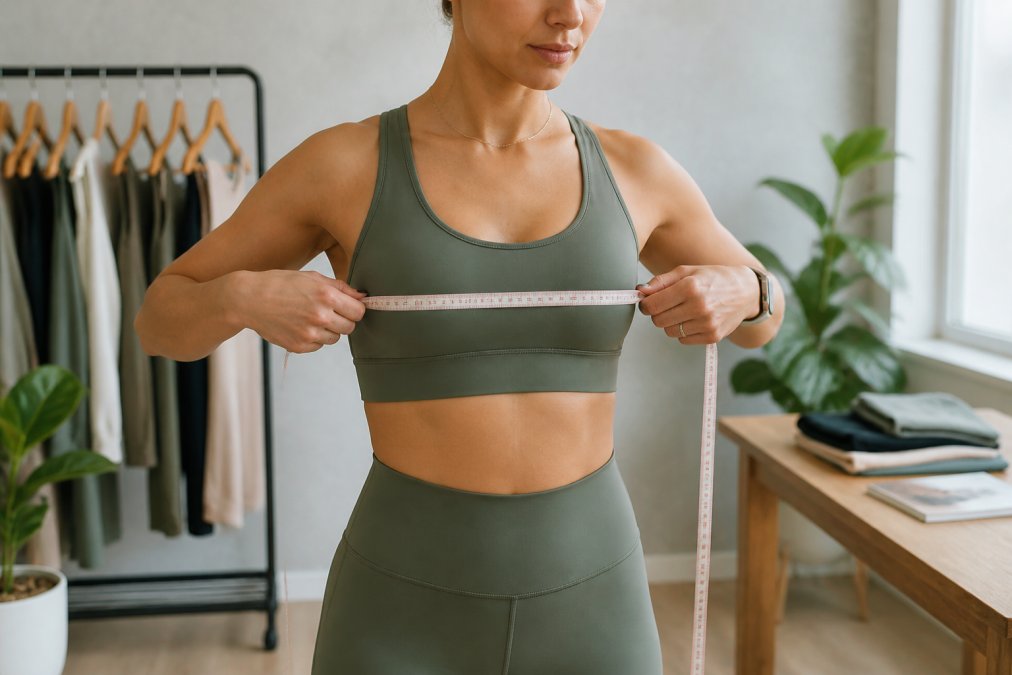
Measuring chest and bust circumference
Stand in front of a mirror and wrap the measuring tape around the fullest part of your bust, keeping it level and parallel to the ground. The tape should sit snugly but comfortably, with just enough room to slip a finger underneath. Keep your arms relaxed at your sides, tensing shoulders or raising arms changes where the tape sits and inflates the measurement.
For compression activewear, this measurement is critical. Compression garments rely on precise sizing to deliver the elasticity and support they're designed for. A measurement that's even two centimetres off can mean the difference between effective compression and uncomfortable tightness. Write down your bust measurement to the nearest centimetre.
How to measure your waist and hips accurately
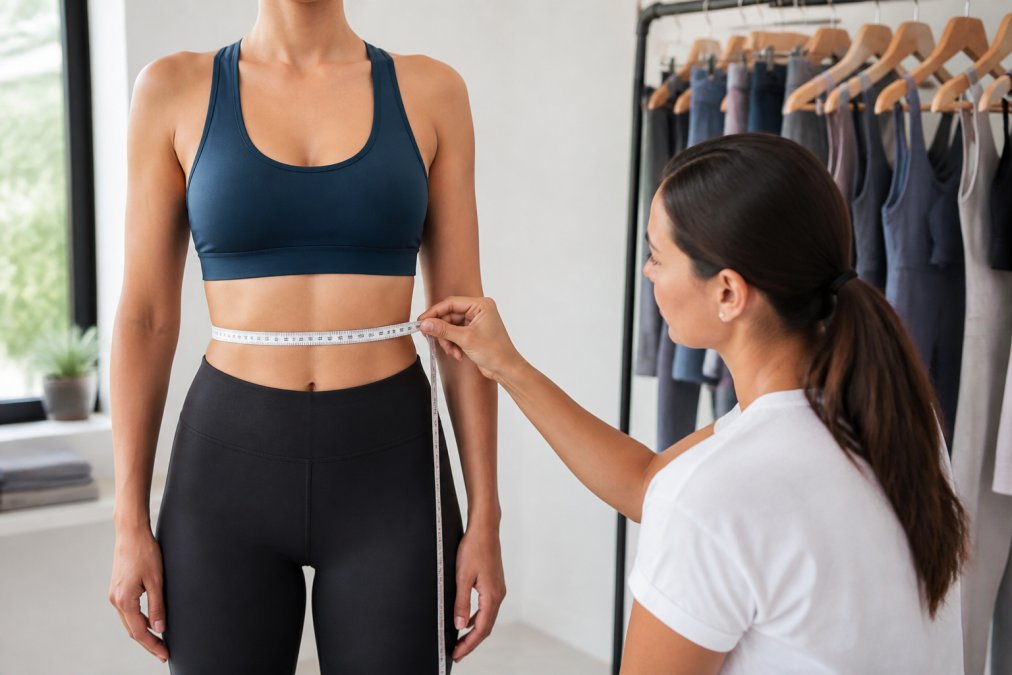
Your natural waist, where you actually bend, isn't always where clothing sits. For activewear, measure at your natural waist by bending gently to one side, this is typically the narrowest part of your torso. Wrap the tape measure around at this point, keeping it level and snug but not tight.
For hips, measure around the fullest part of your hip and buttocks, usually about 20 centimetres below your waist. Keep the tape level and parallel to the ground. The difference between your waist and hip measurements matters when selecting bottoms like leggings or shorts. A significant gap may mean some brands run too loose at the waist or too tight at the hips.
Understanding inseam length
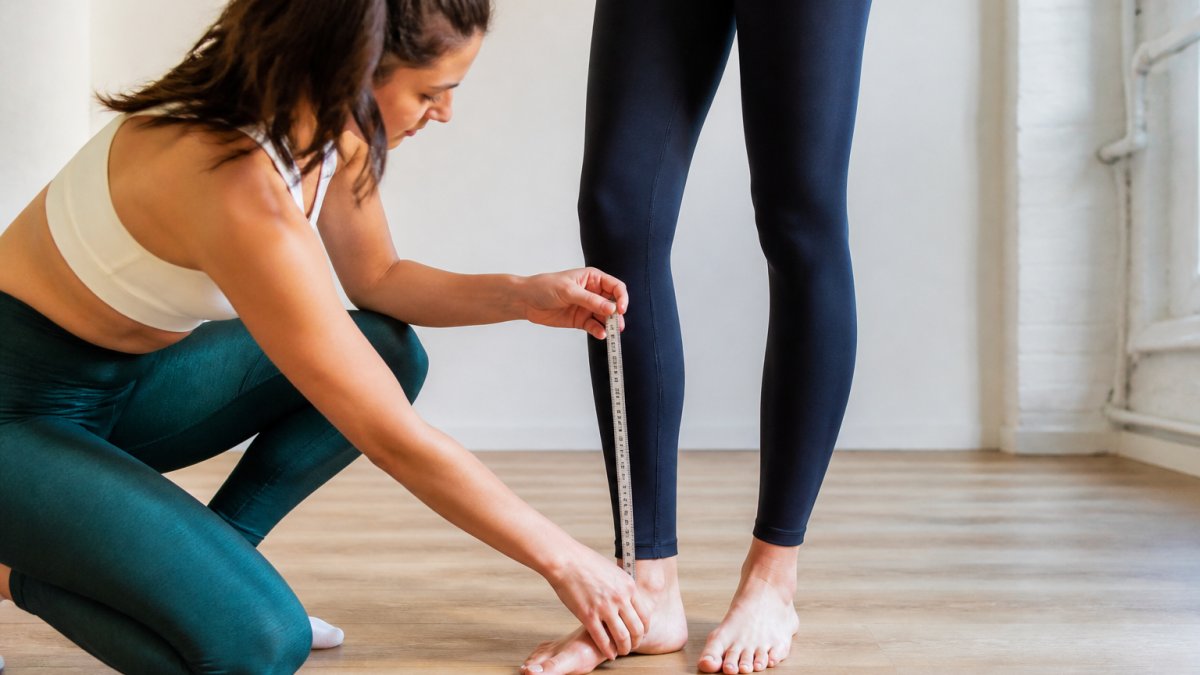
Inseam length determines whether the hem hits at your ankle, sits above it, or extends beyond it. Stand barefoot with feet slightly apart and have someone measure from your inner thigh to your ankle bone. If measuring yourself, sit with one leg extended and measure from inner thigh to ankle.
Many activewear brands offer different inseam lengths within the same size, particularly for leggings. A typical inseam for average-height adults can vary, so always check the brand's specific size chart. Record your inseam measurement in centimetres.
How to Read a Size Chart and Avoid Sizing Discrepancy
Size charts aren't standardised across brands, so a medium in one brand might be a large in another. Start by identifying which measurement the size chart is based on, most use bust circumference for tops and waist measurement for bottoms.
Find your measurement on the chart without rounding up or down. Pay attention to fit notes like "relaxed fit," "fitted," or "compression," as these indicate how the garment will sit on your body. Look for customer reviews mentioning whether items run small, large, or true to size, this real-world feedback often reveals sizing discrepancies the official chart doesn't capture.
| Measurement Point | What to Record | Why It Matters |
|---|---|---|
| Bust circumference | Distance around fullest part of chest | Determines top and sports bra sizing |
| Waist | Distance around natural waist | Determines bottoms fit at the waist |
| Hip circumference | Distance around fullest part of hips | Indicates whether bottoms will be too tight or loose |
| Inseam length | Distance from inner thigh to ankle | Ensures proper hem length for leggings and shorts |
| Shoulder width | Distance across shoulders | Affects how tops and tanks sit on the body |
Understanding Compression Fit vs Regular Fit
Compression activewear uses specific elasticity in the fabric to provide support and improve blood flow, while regular fit prioritises comfort and freedom of movement. Compression garments are engineered with specific compression levels, typically measured in millimetres of mercury (mmHg), and this compression needs to be precise to work effectively.
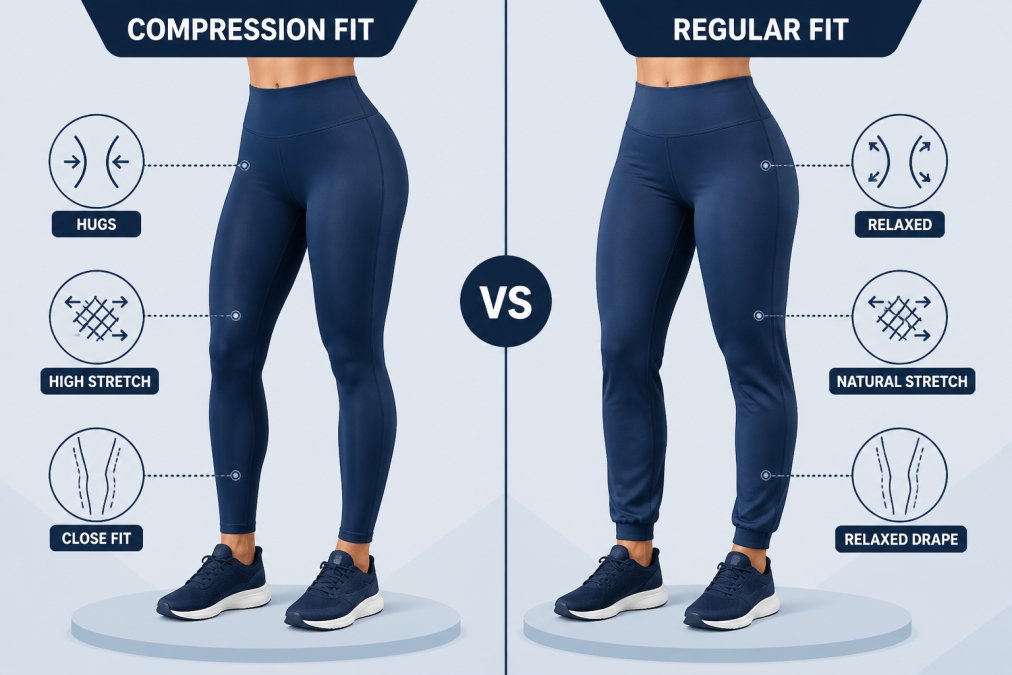
When sizing compression activewear, follow the manufacturer's size chart exactly. Don't size up thinking you want more room, compression garments need to fit snugly to function. However, they should never feel restrictive or cut off circulation. You should breathe comfortably and move freely.
Regular fit activewear has more give in the fabric, with elasticity designed to move with your body rather than compress it. This makes regular fit better for high-intensity workouts requiring maximum freedom of movement. Compression fabrics often have less stretch percentage but more recovery, bouncing back to their original shape quickly.
How to Use a Clothing Size Calculator
Many online retailers offer size calculators that take your measurements and recommend the best size. These tools are helpful only if you use them correctly.
Enter your measurements honestly, the calculator is only as good as the data you input. Select the specific product type you're sizing for, as a calculator for leggings might recommend a different size than one for sports bras despite the same body measurements. Pay attention to any fit preference options, as these affect the recommendation.
The calculator gives a recommended size as a starting point, not a guarantee. Check the detailed size chart to see if the recommended size is at the edge of the range for your measurements. If so, consider the adjacent size. Trust your measurements over your intuition, our brains are notoriously bad at judging our own sizing.
Common Mistakes to Avoid When Sizing Activewear
Most sizing problems stem from predictable mistakes. Never measure over clothing; thick fabrics, layers, and seams distort measurements. Always measure directly against your skin or wear minimal, form-fitting clothing.
Don't pull the tape measure too tight. Many people unconsciously cinch the tape, artificially reducing the measurement. The tape should be snug enough not to slip but loose enough to fit a finger underneath. Measure yourself multiple times and average the results if they vary.
Measure at the correct body points, your waist is where your body naturally bends, not where your trousers sit. Your bust is the fullest part of your chest, not where your bra sits. Always read the fit note on the size chart; a size medium in "fitted" feels completely different from a size medium in "relaxed."
Account for shrinkage, as some activewear fabrics shrink slightly after washing, particularly if they contain natural fibres blended with synthetics. Check customer reviews for shrinkage feedback before ordering. Finally, don't assume all brands use the same sizing system, your measurements are consistent; brand sizing is not.
Finding accurate activewear sizing requires taking your measurements carefully, understanding how different brands size their products, and knowing your body's unique proportions. Gear that fits properly performs better, lasts longer, and makes every workout more enjoyable.
REVIVE Activewear and Apparel offers detailed size charts for every product, and our expert team support is available to help you find the right fit. Check the latest guidance on clothing fit standards to understand how industry standards inform proper sizing practices. Get in touch with our team today to discuss your sizing needs, and subscribe to our email list for tips on maintaining your activewear and getting the most from your investment.
Frequently Asked Questions
How do I know if I should size up or down in activewear?
Size up if you prefer a looser fit or plan to layer underneath. Size down only if the brand's size chart indicates generous sizing or if you want a compression fit. Most activewear performs best when it sits snugly without restricting movement. Check the specific brand's size chart and read customer reviews mentioning fit, they often reveal whether pieces run large or small. For accurate activewear sizing, measure yourself first, then compare your measurements directly to the brand's chart rather than guessing.
Why does activewear sizing vary so much between manufacturers?
Sizing discrepancy occurs because there's no universal standard for activewear dimensions across the industry. Different manufacturers use different fabric blends, stretch factors, and compression levels, which all affect how garments fit. A size 12 from one brand may fit differently than a size 12 from another due to variations in bust measurement, waistline placement, and inseam length specifications. Always measure your body and compare your measurements to each brand's individual size chart rather than relying on your usual street clothing size.
How should compression leggings fit on my body?
Compression leggings should fit snugly against your skin without cutting off circulation or restricting your range of motion. The fabric should feel supportive around your legs, with the waistband sitting at your natural waist without rolling down during movement. They should be form-fitting enough that you can see the outline of your legs but loose enough to move comfortably during exercise. Check the brand's fit recommendations and elasticity specifications, compression levels vary, so a medium compression may feel different from high compression. If leggings feel too tight after 10 minutes of wear, they're too small.
What measurements do I need to take for accurate activewear sizing?
Take five key measurements: bust circumference (around the fullest part of your bust), waist circumference (at your natural waistline), hip width (around the fullest part of your hips), inseam length (from your inner thigh to your ankle), and shoulder blade width for tops. Measure while wearing form-fitting clothing or undergarments, keeping the tape measure level and straight. Write down each measurement in centimetres and compare them directly to the brand's size chart. This method is far more reliable than guessing based on your usual clothing size, as sizing varies significantly between manufacturers.
This article was written using GrandRanker