 how-to
How to Find True Size Activewear: A Fit Guide
Table of Contents
- Why Activewear Sizing Differs from Regular Clothing
- Step 1: Take Accurate Body Measurements
- Step 2: Understand Size Charts and Conversion
- Step 3: Decode Activewear Fabric Types and Stretch
- Step 4: Find True Size in Specific Garment Types
- [High-rise vs mid-rise leggings and fit consistency](#high-rise-vs-mid-rise-leggings and-fit-consistency)
- Sports bra support levels and sizing
- Step 5: Explore Size-Inclusive Activewear Brands
- Common Sizing Mistakes to Avoid
- How to Find True Size Activewear That Works for You
Last Updated: August 31, 2026
Why Activewear Sizing Differs from Regular Clothing
Activewear sizing operates on completely different logic than everyday clothes. A size 12 in a regular dress might translate to a size 10 in leggings, or a size 14 in a sports bra. The reason is engineering. Activewear fabrics are engineered to move with your body, cut differently, measured differently, and stretch differently than cotton t-shirts or jeans.
Manufacturers design activewear around movement, not just body coverage. A pair of gym leggings must accommodate hip flexion, squats, and lateral movement without riding down or bunching. This means garment dimensions on a fit guide don't match traditional clothing measurements. What looks like a smaller size on paper often fits larger in practice because the fabric is engineered to move with you rather than sit loose on your frame.
Most activewear contains elastane (also called spandex or Lycra), which adds stretch and recovery. The percentage of elastane directly affects how much a garment will stretch and how quickly it bounces back. A legging with 15% elastane will fit differently than one with 25% elastane, even in the same size.
REVIVE Activewear and Apparel designs with this principle at the core, engineering every piece for the specific movement patterns of its intended sport or activity, whether that's Padel tennis, CrossFit, yoga, or running.
Step 1: Take Accurate Body Measurements
Finding true size activewear starts with knowing your actual body measurements taken with a soft measuring tape against your skin.
Measuring waist circumference and hip measurement
Take your waist measurement at the narrowest point of your torso, typically just above your hip bones. Stand relaxed and wrap the tape measure snugly but not tight. For hip measurement, wrap the tape around the fullest part of your hips and buttocks. Keep the tape snug but not constrictive. Many people find their hip measurement is significantly larger than their waist, which is crucial information for selecting the right size in leggings.
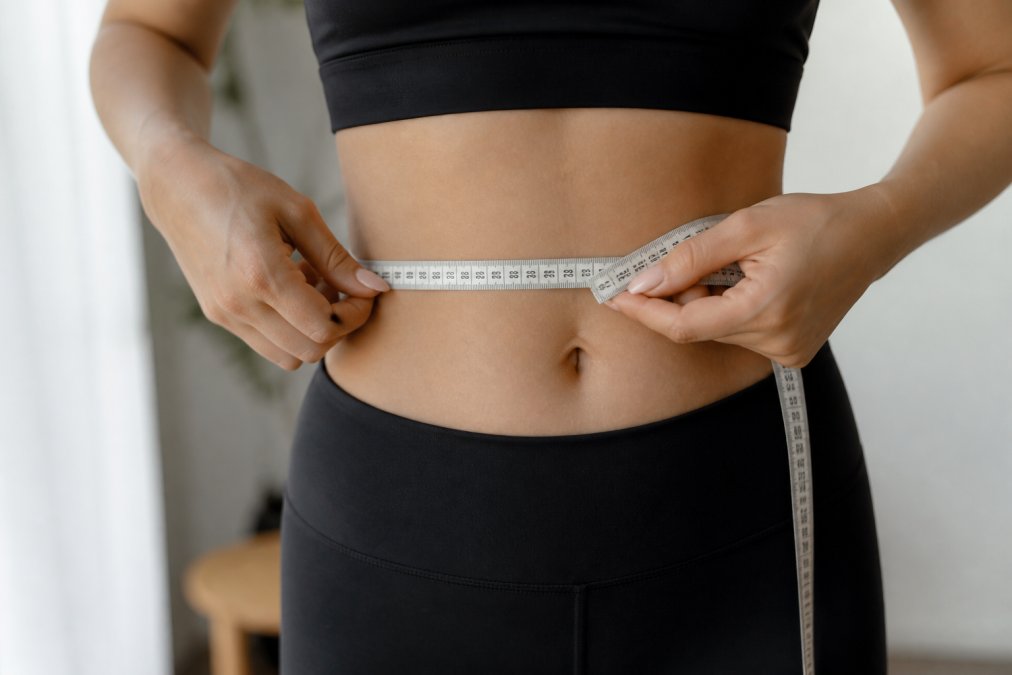
How to measure for gym leggings and inseam
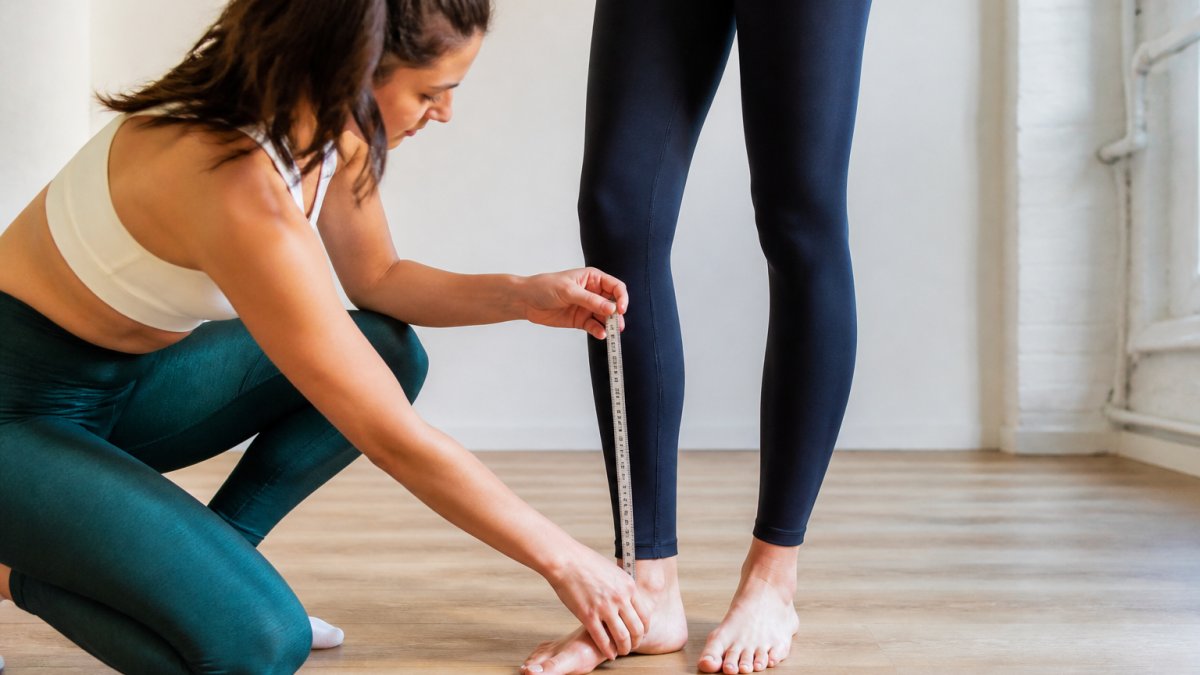
Inseam measurement determines whether leggings will hit at your ankle or bunch at your calves. Measure from your inner thigh, starting at the top of your inner leg, and run the tape down to your ankle bone. Keep the tape straight and parallel to your leg.
Rise height also matters. High-rise leggings typically sit a few centimetres above your natural waist and provide more coverage. Mid-rise sits at your natural waist. Your inseam measurement combined with your rise preference will determine the exact length you need.
Step 2: Understand Size Charts and Conversion
Once you have your measurements, you need to know how to read a size chart.
Reading garment dimensions on fit guides
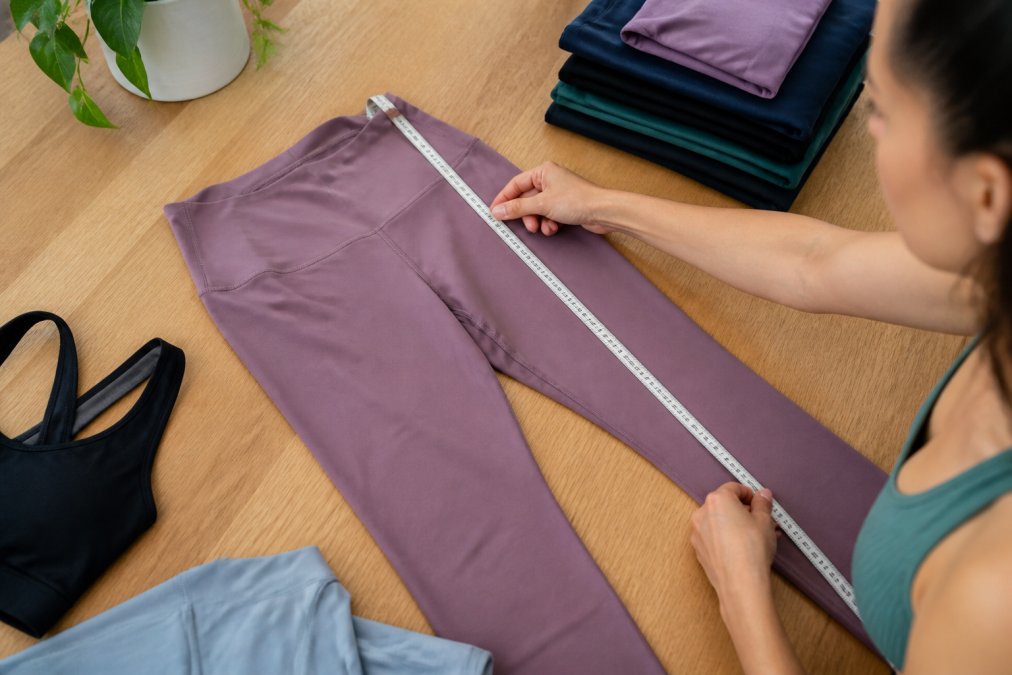
Every reputable activewear brand publishes garment dimensions on their fit guides. These are measurements of the actual finished garment, not your body. A size medium legging might have a waist circumference of around 71 centimetres when laid flat, which accounts for the stretch of the fabric.
The critical part: the garment's waist circumference is typically a few centimetres smaller than what the garment will fit comfortably. That's because elastane stretches. A 71-centimetre waist measurement on the garment will comfortably fit someone with a 76-81 centimetre waist, depending on how much stretch the fabric offers.
Read every dimension on the fit guide: waist, hip, inseam, and rise. Compare each one to your body measurements. If your waist is 76 centimetres and your hips are 97 centimetres, find a size where the garment's hip measurement can stretch to accommodate your hip circumference while the waist measurement aligns with your waist.
Decoding 'true to size' claims
When a brand claims their activewear runs "true to size," they're saying their garments fit as expected for your measured size. But "true to size" is relative to their own sizing system, not to high street clothing. Every manufacturer cuts differently, uses different elastane percentages, and designs for different body types.
Step 3: Decode Activewear Fabric Types and Stretch
The fabric you choose affects not just comfort but how the garment will fit over time.
How elastane content affects fit and recovery
Elastane is the synthetic fibre that gives activewear its stretch. Most quality activewear uses between 15-25% elastane, offering enough stretch for movement while maintaining shape retention. Garments with less than 10% elastane feel stiff. Garments with more than 30% elastane can feel overly stretchy and may lose their shape after repeated washing.
The type of elastane matters too. Premium elastane maintains its recovery properties longer, which is why a higher-priced pair of leggings might feel supportive after a year while a budget pair feels saggy after three months.
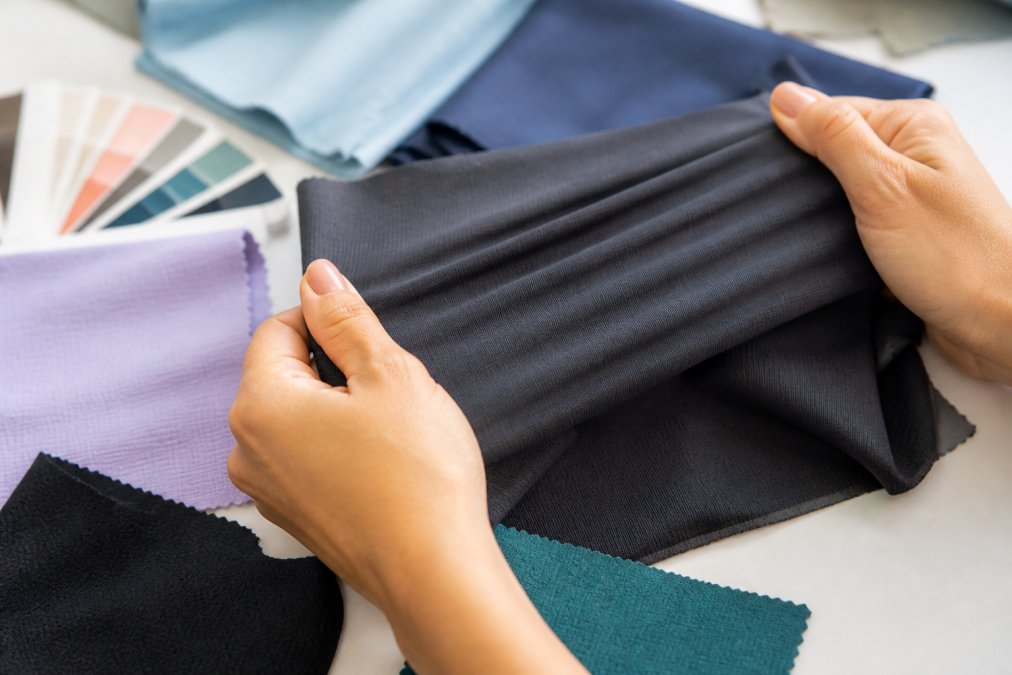
Four-way stretch vs compression fit
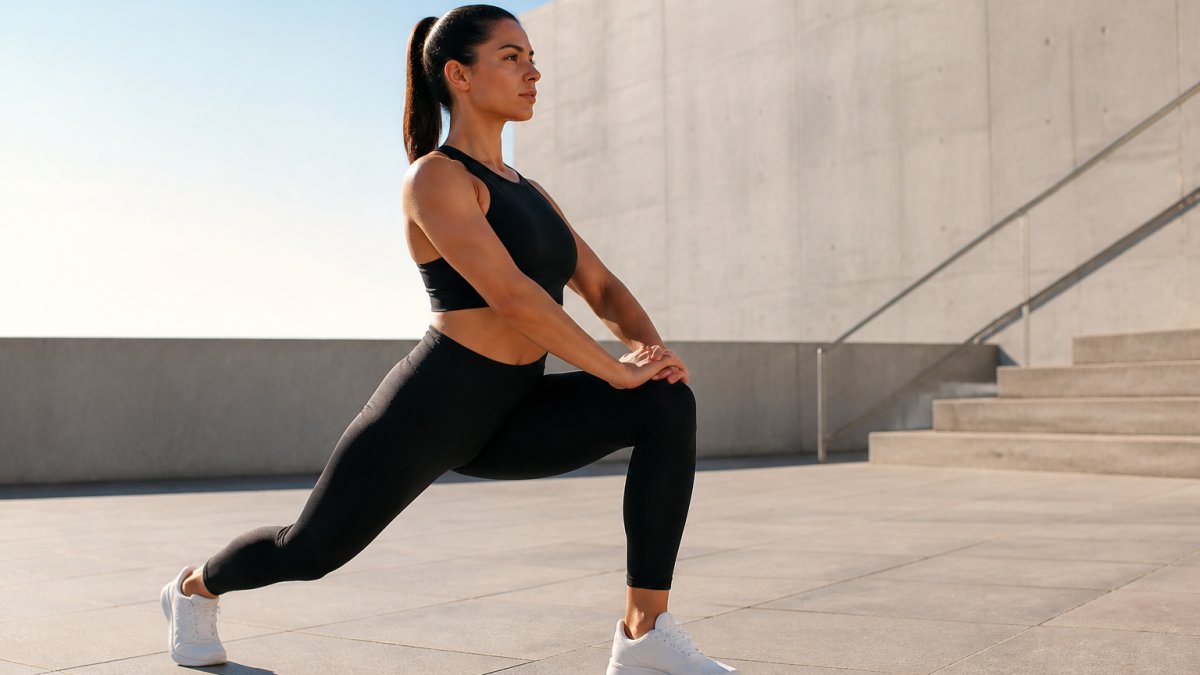
Four-way stretch means the fabric stretches horizontally and vertically. This is the standard for most modern activewear because it accommodates movement in all directions. A four-way stretch legging will move with your body during lunges, squats, and running without bunching.
Compression fit is engineered to apply consistent pressure to your muscles, which some athletes believe improves blood flow and reduces fatigue. Compression fit is tighter than regular activewear and is typically chosen for specific athletic goals.
Step 4: Find True Size in Specific Garment Types
Different garment types require different sizing approaches.
High-rise vs mid-rise leggings and fit consistency
High-rise leggings sit higher on your body, typically a few centimetres above your natural waist, providing more coverage and support than mid-rise. A high-rise legging in a size 10 will fit differently than a mid-rise in a size 10 from the same brand because the rise height changes the overall fit.
Consider rise height as part of your measurement process. If you have a longer torso, high-rise might fit better. If you have a shorter torso, mid-rise might be more comfortable. Always check fit guides for each specific garment type.
Sports bra support levels and sizing
Sports bra sizing is completely separate from legging sizing. A woman who wears a size 10 in leggings might wear a size 8 or 12 in a sports bra, depending on the band size and cup size. Sports bras are typically sized by band measurement (e.g., 32, 34, 36, etc.) and cup size (A, B, C, D, etc.).
Support level also determines sizing. Low-impact sports bras for yoga fit looser. High-impact sports bras for running are engineered tighter to minimise movement. The band should sit parallel to the ground, not ride up in the back.
Step 5: Explore Size-Inclusive Activewear Brands
Size-inclusive activewear brands recognise that bodies come in many shapes and sizes and design accordingly. When evaluating size-inclusive brands, check whether they offer extended inseam options for taller customers and shorter inseams for petite customers. Do they offer multiple rise heights across all sizes? Do their fit guides include measurements for every size they offer?
REVIVE Activewear and Apparel designs with multiple body types in mind, offering a range of sizes and fit options that account for different proportions and movement needs. Whether you're shopping for Padel tennis apparel, CrossFit gear, or yoga wear, detailed fit guides and transparent size information help you find true size activewear that works for your specific body.
Common Sizing Mistakes to Avoid
The most common mistake is ordering based on what you think you should wear rather than what your measurements actually indicate. If your measurements suggest a size 12 but you've always worn a size 10, order the size 12.
Another frequent error is ignoring the elastane percentage and fabric composition. Two leggings in the same size from different brands can fit completely differently because of elastane content and fibre blends.
People also frequently assume that if a garment fits well when it arrives, it will continue to fit the same way forever. Activewear degrades over time. Elastane loses its recovery properties. A pair of leggings that fit perfectly in month one might feel baggy in month six if the fabric quality is poor or if you're washing them incorrectly.
Finally, many people make the mistake of not checking the fit guide for each specific garment, even within the same brand. Always check the fit guide for the specific item you're buying.
How to Find True Size Activewear That Works for You
The process comes down to five steps: measure accurately, read the fit guide carefully, understand the fabric composition, consider the specific garment type, and check customer reviews for fit feedback.
Start by taking your measurements and recording them. Then, for any activewear you're considering, pull up the fit guide and compare the garment dimensions to your body measurements. Pay attention to elastane percentage and fabric type. Consider whether you want high-rise or mid-rise, compression or standard stretch. Finally, read customer reviews specifically for fit feedback.
When you find activewear that fits well, note the brand, the specific product name, and the size. Over time, you'll learn which brands and which fit guides work for your body, and the process becomes faster.
The goal isn't to find a universal size that works everywhere. The goal is to understand how to read fit guides and fabric specifications so you can confidently find true size activewear that fits your body and supports your movement, whether you're training for Padel, hitting the gym, or practising yoga.
Finding the right fit in activewear shouldn't require trial and error with multiple returns. When you understand how to read fit guides and interpret fabric composition, you can order with confidence. REVIVE Activewear and Apparel provides detailed fit guides for every garment, transparent elastane percentages, and expert support to help you find the right size on your first order. Whether you're shopping for one piece or outfitting an entire fitness studio with bulk orders, our team is here to ensure your activewear fits as well as it performs.
| Measurement | How to Take It | Why It Matters |
|---|---|---|
| Waist circumference | Measure at narrowest point, tape snug but not tight | Determines if waistband will stay in place |
| Hip measurement | Measure at fullest point of hips and buttocks | Critical for finding true size in leggings |
| Inseam | Measure from inner thigh to ankle bone | Determines whether leggings hit ankle or bunch |
| Rise preference | Note whether you prefer high-rise, mid-rise, or low-rise | Affects overall fit and coverage |
Frequently Asked Questions
How do I measure myself accurately for gym leggings?
Measure your inseam from the inside of your ankle to your groin whilst standing barefoot. Record your waist circumference at your natural waist and hip measurement at the fullest part of your hips. Use a soft measurement tape, keep it snug but not tight, and measure over bare skin or thin clothing. Write down all three measurements before consulting a size chart, as legging fit depends on all three dimensions, not just size alone.
Why does activewear fit differently than everyday clothing?
Activewear uses technical fabrics with elastane content (typically 10-30%) that provide stretch recovery and moisture-wicking properties. These fabrics are cut differently to accommodate movement and body contours during exercise. Size-inclusive ranges often vary more between manufacturers because performance requirements change the way garment dimensions are designed. Always check the specific brand's fit guide rather than assuming your regular clothing size applies.
What does 'true to size' actually mean for activewear?
True to size means the garment's dimensions match standard sizing charts for that brand. However, this claim varies widely between manufacturers. A brand's size guide should show actual garment measurements in centimetres (waist, hip, length). Compare these against your body measurements, not your typical clothing size. If a brand doesn't provide detailed garment dimensions, it's difficult to assess whether it runs true to size.
How much elastane content do I need for proper stretch and recovery?
Most high-performance activewear contains 10-30% elastane blended with nylon or polyester. Fabrics with 15-20% elastane offer excellent stretch recovery and durability for regular gym use. Lower elastane content (under 10%) provides minimal stretch and may lose shape quickly. Higher percentages (over 25%) increase compression but can reduce breathability. Check the fabric composition label and test how quickly the fabric bounces back after stretching.
External Sources Referenced:
British Standards Institution guidance on textile fibre content labelling
Trading Standards guidance on clothing size labelling and consumer rights
Consumer Association research on activewear durability and fabric care
This article was written using GrandRanker