 how-to
How to Order Custom Activewear: A Complete Guide
Table of Contents
- What You'll Need Before You Start Your Custom Activewear Order
- Best Fabrics for Custom Gym Wear: Performance vs. Comfort
- Screen Printing vs Embroidery for Sportswear: Which to Choose
- Minimum Order Quantity for Custom Sportswear: What to Expect
- Step-by-Step: How to Order Custom Activewear From Design to Delivery
- Branded Gym Wear Lead Times: Standard vs Express Delivery
- Budgeting and Cost Optimisation for Custom Team Uniforms
- Conclusion
Last Updated: August 13, 2026
What You'll Need Before You Start Your Custom Activewear Order
Knowing how to order custom activewear starts well before you pick a fabric or choose a print method. The decisions you make in the preparation stage determine whether your finished garments look exactly as planned or arrive with costly surprises. Two things trip up most first-time buyers: inadequate artwork files and incomplete sizing information. Sort both before you approach any supplier and you will save yourself at least one revision cycle.
Artwork and Logo Files
Your artwork needs to be supplied as a vector file to get clean, scalable results across any garment size. Vector formats (typically .ai, .eps, or .svg) can be scaled from a chest badge to a full back print without any loss of quality. Raster files such as JPEGs or PNGs are only acceptable for sublimation printing, and even then, a minimum resolution of 300 DPI at print size is non-negotiable.
Prepare Pantone codes for every colour in your logo, separate artwork layers if your design has multiple elements, and a brief noting logo placement: left chest, full back, sleeve, or collar. If you only have a low-resolution logo, most reputable suppliers offer a redraw service.
Sizing Requirements and Fit Preferences
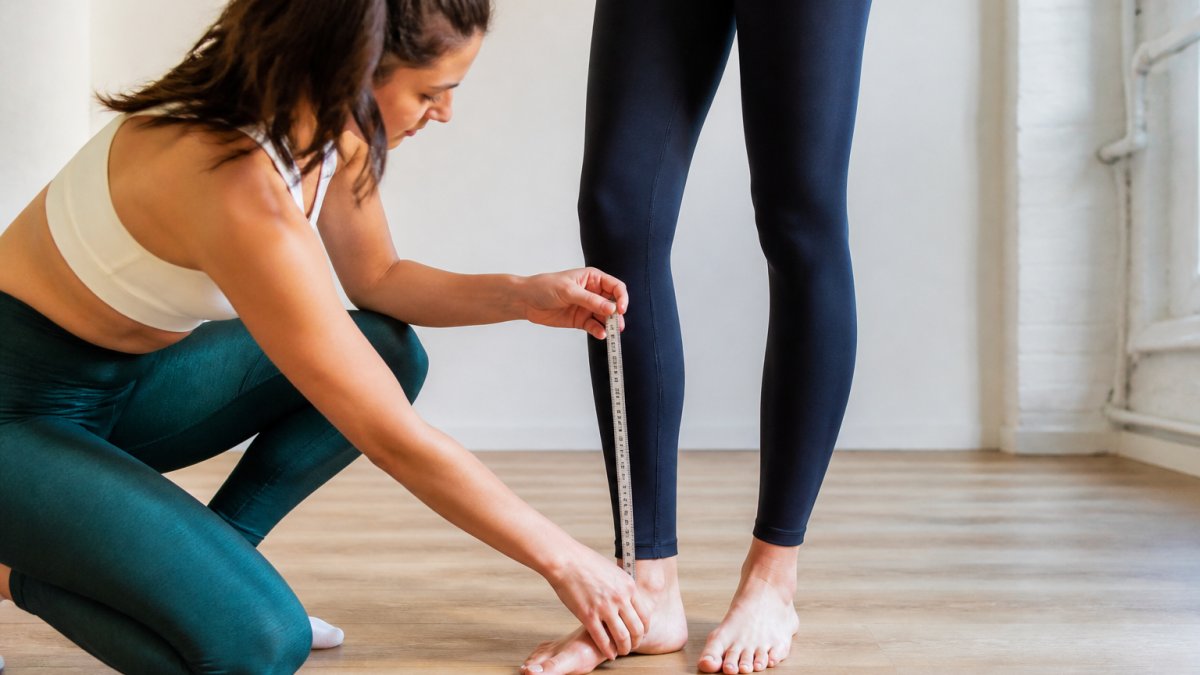
Custom activewear is only as good as its fit. Gather your team's measurements before you request a size chart from your supplier. Most performance apparel uses an athletic fit, which runs closer to the body than standard leisurewear. A common mistake is assuming one size chart applies to all garment styles. Request garment-specific size charts and, where possible, order a sample before committing to a full bulk run.
Best Fabrics for Custom Gym Wear: Performance vs. Comfort
The fabric choice is where performance apparel either earns its price or falls short. Many buyers focus on design and overlook garment weight, measured in GSM (grams per square metre), which directly affects durability, drape, and breathability.
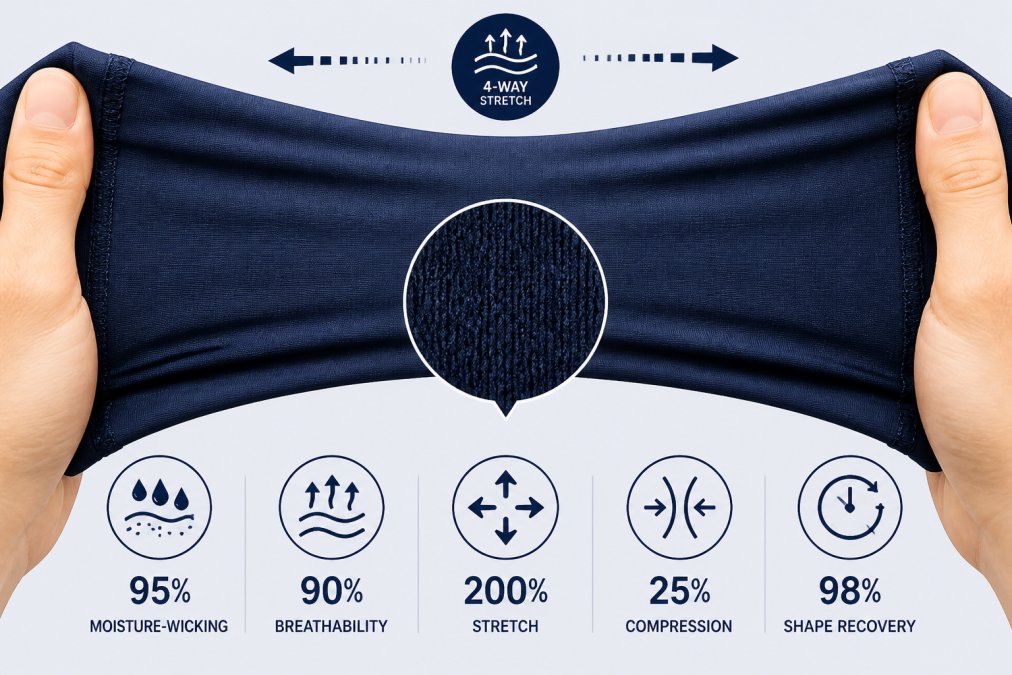
Moisture-Wicking and Breathable Fabrics Explained
Moisture-wicking fabric is engineered to pull sweat away from the skin and push it to the outer surface, where it evaporates quickly. The most common base materials are polyester and nylon, often blended with elastane for stretch. For high-output activities, look for fabrics in the 150-200 GSM range. Lighter weights dry faster; heavier weights offer more structure and wash durability. Breathable mesh panels, often placed at the underarm or back yoke, improve airflow without compromising construction.
According to the Textile Institute's guidance on performance fabrics, key performance indicators for sportswear textiles include moisture management, air permeability, and thermal comfort.
Sustainable Fabric Options Worth Considering
Recycled polyester, made from post-consumer plastic bottles, is now mainstream for custom activewear with performance characteristics comparable to virgin polyester. Blends using organic cotton or Tencel work well for lower-intensity activities such as yoga or studio fitness. Look for fabrics certified to the OEKO-TEX STANDARD 100 certification for textiles, which verifies that every component has been tested for harmful substances. For recycled content, the Global Recycled Standard provides independent verification of the supply chain.
Screen Printing vs Embroidery for Sportswear: Which to Choose
Screen printing applies ink directly to the garment surface through a mesh stencil, producing vivid, flat colours at low cost per unit. It is the go-to choice for bulk orders with simple graphic designs. The limitation is that it does not work well on heavily textured or stretchy fabrics, and fine gradients require more complex colour separations.
Embroidery stitches your design directly into the fabric using thread, producing a premium, tactile finish that holds up exceptionally well through repeated washing. It is best suited to logos and wordmarks with clean lines, placed on stable fabric areas such as the chest or collar. Avoid embroidery on thin, stretchy fabrics where stitching can pucker or distort the garment.
| Technique | Best For | Wash Durability | Minimum Detail Level | Typical MOQ |
|---|---|---|---|---|
| Screen printing | Bold graphics, team kits | High | Medium | 12-25 units |
| Embroidery | Logos, wordmarks | Very high | Low-medium | 6-12 units |
| Sublimation | All-over designs | Excellent | High | 1-25 units |
| Heat transfer | Short runs, complex artwork | Moderate | High | 1 unit |
Sublimation and Heat Transfer: Two More Techniques to Know
Sublimation printing uses heat to bond dye permanently into the fabric at a molecular level. Sublimated garments do not crack, peel, or fade like screen-printed alternatives. The trade-off: sublimation only works on white or very light-coloured polyester fabrics. It is the technique of choice for bespoke kit with complex, all-over designs.
Heat transfer applies a pre-printed design using a heat press, suiting small runs and detailed artwork that screen printing cannot reproduce economically. Wash durability is lower than other methods, so it is better suited to promotional or short-term use rather than high-frequency training kit.
Minimum Order Quantity for Custom Sportswear: What to Expect
Screen printing typically requires a minimum of 12-25 units per design to cover screen setup costs. Embroidery minimums are often lower, starting from as few as six pieces. Sublimation can sometimes be ordered as a single unit, though per-unit costs drop substantially at higher volumes. Print-on-demand services remove the minimum order barrier entirely, but per-unit costs are considerably higher.
For teams, fitness studios, or clubs ordering matching kit, a structured bulk order almost always delivers better value and consistency. If you are ordering for a group of 20 or more, always request a bulk pricing schedule. Most suppliers tier their pricing at common thresholds such as 25, 50, and 100 units.
Step-by-Step: How to Order Custom Activewear From Design to Delivery
The ordering process for custom activewear follows a consistent sequence regardless of supplier. Knowing each stage in advance prevents delays and ensures your final garments match your expectations.
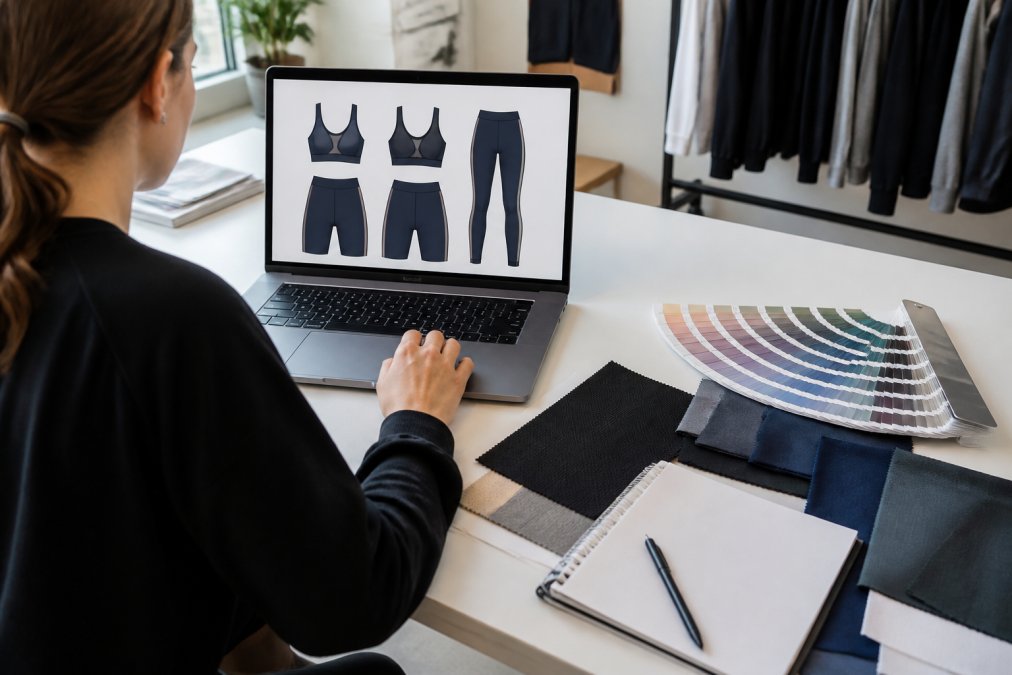
Step 1: Choose Your Garments and Specify Technical Requirements
Start by selecting the garment styles you need: training tops, leggings, shorts, jackets, or accessories. For each style, specify the fabric composition, GSM, fit type, and any performance features such as moisture-wicking lining or UV protection. Confirm colour options, since not every base colour is available in every fabric.
Step 2: Upload Artwork and Review Your Digital Proof
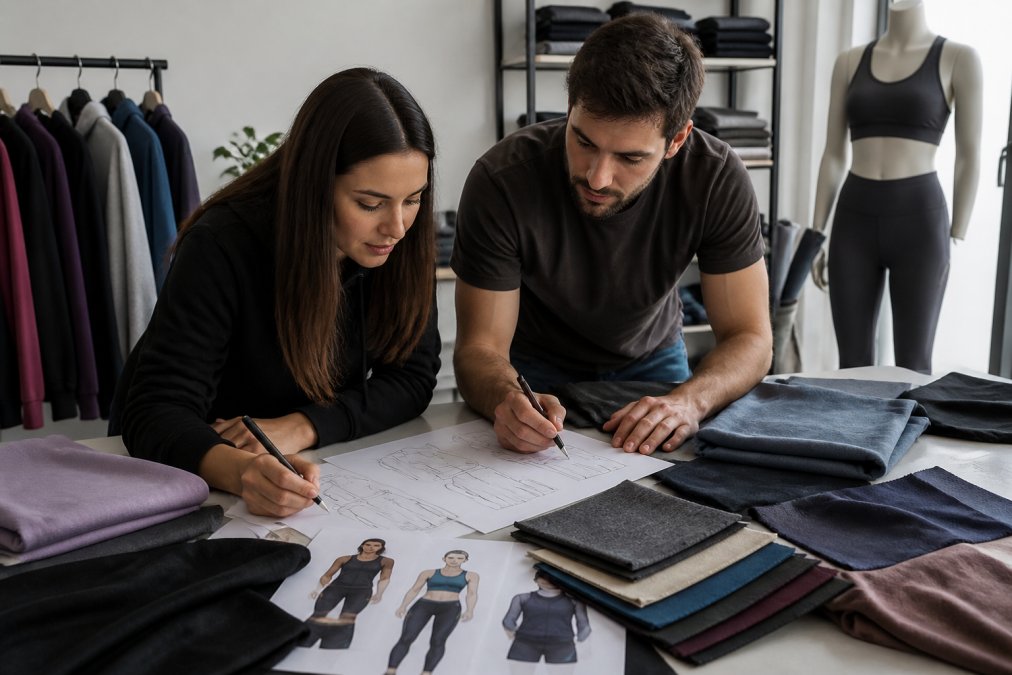
Upload your vector artwork through the supplier's design studio or send files directly to their artwork team. The supplier will return a digital proof, a scaled mockup showing your logo placement, colour matching, and print dimensions on the actual garment template. Review this carefully. Check that Pantone codes match your brand guidelines, that logo placement is centred and proportional, and that no text is too small to reproduce cleanly.
Step 3: Confirm Sizes, Quantities, and Bulk Pricing
Once artwork is approved, submit your full size breakdown cross-referenced against the garment-specific measurements. Double-check quantities against the supplier's MOQ and pricing tiers to ensure you are capturing the best bulk rate available.
Step 4: Approve and Place Your Order
Final approval triggers production. At this point, changes to artwork, colours, or sizes are no longer possible without restarting the process and incurring additional costs. Review the full order summary, confirm delivery address and lead time, and make payment.
Branded Gym Wear Lead Times: Standard vs Express Delivery
Branded gym wear lead times depend on the complexity of your order, the print technique, and the supplier's current production schedule. Standard production for screen-printed or embroidered garments typically runs between seven and fourteen working days from artwork approval, with delivery on top of that. Sublimation orders can take longer due to the all-over print process.
Express delivery options compress the production window to three to five working days but carry a premium and are not always available for every technique or garment type. If you have a fixed event or launch date, work backwards from it and add a buffer of at least five working days to account for unforeseen delays.
REVIVE Activewear and Apparel offers both standard and express delivery options, with a dedicated expert support team to help you plan your timeline and avoid production delays.
Budgeting and Cost Optimisation for Custom Team Uniforms
Budgeting for custom team uniforms involves more variables than most buyers anticipate. The garment unit cost is only one part of the total. Add setup fees for screens or embroidery digitisation, artwork redraw costs if your files are not print-ready, sample costs, and delivery charges.
A few principles that consistently reduce total cost:
- Consolidate your order. Splitting a 40-unit order into two runs of 20 will almost always cost more in setup fees than ordering all 40 at once.
- Standardise your colour palette. Each additional colour in a screen-printed design adds a screen setup cost.
- Plan for replacements. Order 10-15% more than you need at the time. Reordering small quantities later is disproportionately expensive.
- Request an itemised quote. Always ask for a full breakdown before committing.
Visit the REVIVE Activewear and Apparel website for current pricing or to request a quote tailored to your specific requirements. For teams managing a tight budget, check whether your organisation qualifies for support through Sport England's funding guidance for clubs and organisations, which periodically offers grants for equipment and kit purchases at grassroots level.
Ordering custom activewear at scale is straightforward once you understand the sequence. The challenge most buyers face is not the process itself but gaps in preparation: missing vector files, incomplete size data, and unrealistic lead time expectations. REVIVE Activewear and Apparel handles orders from a single item through to thousands of units, with expert support at every stage and both standard and express delivery available. Get started by visiting the REVIVE Activewear and Apparel website to explore the garment range, request a digital proof, and receive a full quote for your order.
Frequently Asked Questions
What is the minimum order quantity for custom sportswear?
Minimum order quantities vary depending on the supplier and the decoration method chosen. Screen printing and sublimation typically require higher minimums because setup costs are spread across the run, while embroidery and heat transfer can be economical at lower quantities. Some suppliers, including print-on-demand services, fulfil single-item orders. For team uniforms or studio kits, ordering in bulk almost always reduces the per-unit cost significantly, so it is worth confirming MOQ thresholds before you finalise your design.
How do I choose the right fabric for custom gym wear?
Start with the activity. High-intensity training calls for lightweight, moisture-wicking fabrics, typically polyester blends in the 150-180 GSM range, that pull sweat away from the skin and dry quickly. Yoga and low-impact sessions suit slightly heavier, four-way-stretch fabrics that hold their shape through repeated movement. For multi-sport use, look for breathable fabric with a tight knit construction and wash durability ratings. Always check the technical specifications provided by your supplier before ordering custom activewear.
What is the difference between screen printing and embroidery for activewear?
Screen printing deposits ink directly onto the garment surface, producing vibrant, full-colour designs at a low cost per unit when ordered in volume. Embroidery stitches the logo into the fabric, giving a premium, tactile finish that suits smaller branding on polo shirts or jackets. For performance apparel with all-over graphics, sublimation is usually the better choice. For a chest logo on a team kit, embroidery adds perceived quality. The right method depends on your design complexity, garment type, and order size.
How long does it take to receive custom printed sportswear?
Branded gym wear lead times depend on the decoration method, order size, and whether you choose standard or express delivery. After artwork approval and digital proof sign-off, production typically takes several working days, with standard delivery adding further time on top. Express options can shorten the overall window considerably. To avoid delays, submit print-ready vector artwork upfront, respond to proof requests promptly, and factor in any public holidays when planning around a launch date or event deadline.
This article was written using GrandRanker