 how-to
How to Wash Athletic Clothing: Complete Care Guide
Table of Contents
- What You'll Need Before Washing
- How to Wash Athletic Clothing: Step-by-Step
- Best Laundry Detergent for Activewear
- How to Get Sweat Smell Out of Gym Clothes
- Can You Tumble Dry Gym Clothes? Drying Methods Explained
- Common Mistakes to Avoid When Washing Athletic Gear
- Post-Workout Immediate Care and Machine Maintenance
- Conclusion
Last Updated: August 14, 2026
What You'll Need Before Washing
Before you start washing athletic clothing, gather the essentials. You'll need a suitable laundry detergent formulated for activewear, standard detergents often leave residue buildup that traps odour-causing bacteria in synthetic fibres. A mesh laundry bag protects delicate moisture-wicking fabrics during the wash cycle. White vinegar acts as a natural odour neutraliser and fabric softener alternative. Baking soda helps lift stubborn sweat odours. Cold water is your baseline; you'll avoid heat damage to elastane and spandex. A washing machine with a gentle cycle setting is essential. Finally, air-drying space, whether a clothesline, drying rack, or flat surface, preserves the elasticity and breathability of your gear.
The Textile Exchange sustainability guide on synthetic fibre care outlines why moisture-wicking fabrics require specialised handling. Standard laundry practices degrade performance over time, reducing the very properties that make activewear worth the investment.
Preparation matters more than most people realise. Taking five minutes to gather everything prevents mid-wash scrambling and ensures you follow each step correctly.
How to Wash Athletic Clothing: Step-by-Step
Washing athletic clothing correctly preserves performance and extends garment life. The process differs significantly from washing regular clothing because synthetic fibres respond poorly to heat, fabric softeners, and heavy agitation.
Step 1: Separate and Prepare Your Gear
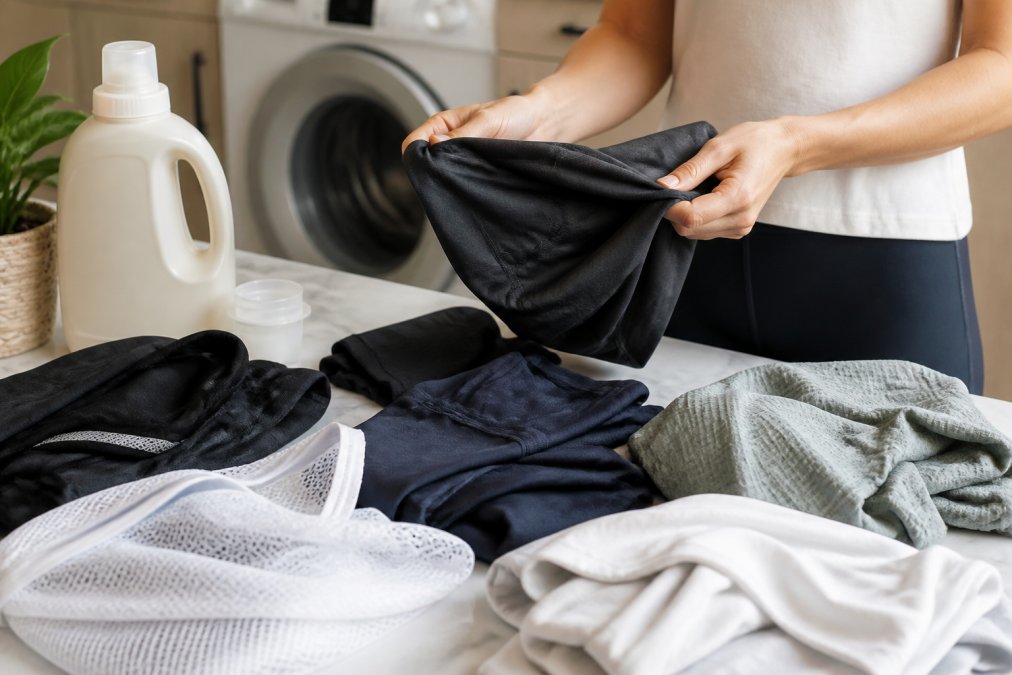
Start by turning garments inside out. This simple step protects the outer surface from friction damage during the wash cycle and helps preserve colour vibrancy. Moisture-wicking fabrics shed microplastics during washing; turning items inside out slightly reduces shedding and keeps the performance side in better condition.
Separate activewear from heavy fabrics like towels and jeans. Heavy items create excessive agitation that damages elastane and spandex. Group similar weights together: compression wear together, lightweight running gear together, padded sports bras separately if you have them.
Inspect each piece for stains or stubborn odours. If you notice sweat marks or discolouration, flag those items for pre-treatment before they enter the machine. Address stains immediately rather than washing and hoping they disappear, heat and agitation can set stains permanently.
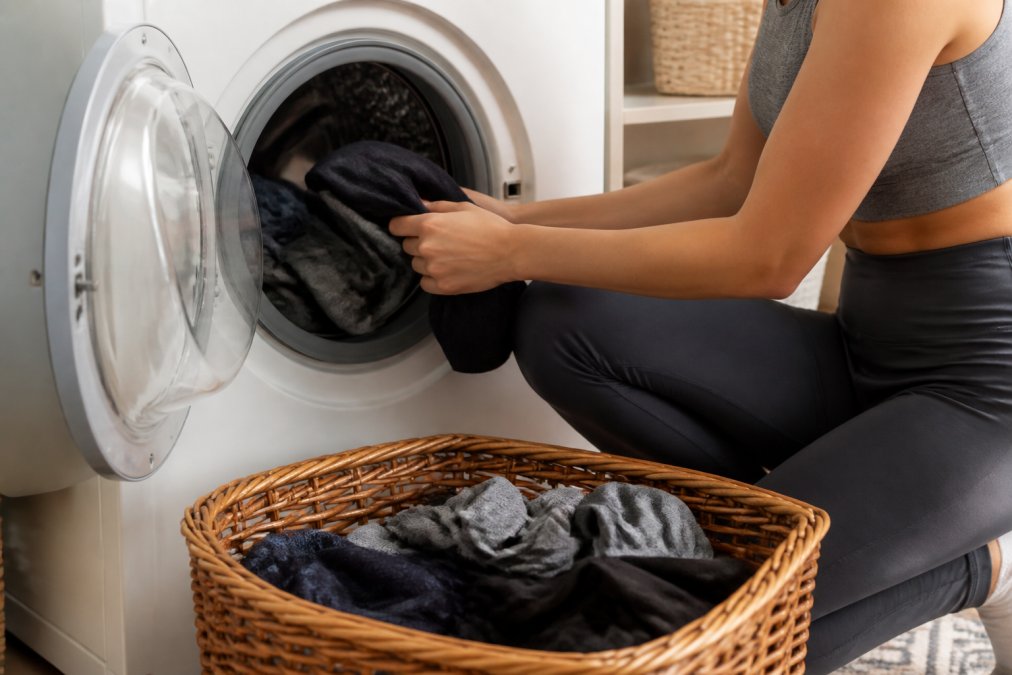
Check all pockets and remove items. Secure any velcro closures or zips to prevent snagging. Place delicate items, sports bras, or pieces prone to stretching into a mesh laundry bag. This barrier reduces direct contact with the drum and other garments.
Step 2: Pre-Treat Stubborn Odours and Stains
Pre-soaking tackles odour-causing bacteria before the main wash. Fill a basin with cold water and add either white vinegar (half a cup per basin) or baking soda (two tablespoons dissolved). Soak the most heavily soiled pieces for 15-30 minutes. This step is particularly effective for gym clothes that have absorbed heavy sweat during high-intensity training.
For visible stains, apply a small amount of mild detergent directly to the affected area. Gently rub the fabric together, allowing the detergent to penetrate the fibres. Avoid scrubbing harshly; synthetic materials are delicate and aggressive rubbing can damage elasticity.
White vinegar serves double duty: it neutralises odours and acts as a natural rinse aid, replacing commercial fabric softeners that leave residue on moisture-wicking fabrics. Baking soda absorbs odours rather than masking them, making it ideal for gym clothes worn during intense workouts.
Allow pre-treated items to soak fully before transferring them to the washing machine. This maximises the effectiveness of your chosen treatment method.
Step 3: Select the Right Wash Cycle and Temperature
Cold water is non-negotiable for athletic clothing. Heat damages elastane and spandex, reducing stretch recovery and compromising fit over time. Cold cycles preserve fabric integrity and prevent colour fading.
Use the gentle cycle setting on your washing machine. Gentle cycles reduce agitation, which minimises friction damage to synthetic fibres. Standard or heavy-duty cycles are too aggressive for activewear and will accelerate wear.
Select a sports detergent or a mild detergent specifically formulated for technical fabrics. These products are designed to clean without leaving residue buildup. Avoid fabric softeners entirely, they coat synthetic fibres and trap odour-causing bacteria, defeating the purpose of moisture-wicking technology.
Measure detergent carefully. More detergent doesn't clean better; excess creates residue that clings to fibres and reduces performance. Follow the product instructions for your water hardness and load size.
Run a full rinse cycle after the main wash. Extra rinsing removes any remaining detergent particles that could trap odours or reduce breathability. Some machines have a "extra rinse" option, use it for athletic gear.
Best Laundry Detergent for Activewear
Choosing the right detergent is fundamental to keeping athletic clothing fresh and functional. Standard laundry detergents contain surfactants and additives that leave residue on synthetic fibres, trapping odours and reducing moisture-wicking performance.
Sports-specific detergents are formulated to clean without residue buildup. They contain enzymes that break down sweat proteins and bacteria without coating the fabric. These detergents rinse cleanly, leaving no film behind.
Mild detergents designed for delicate fabrics also work well for activewear. They're gentler than standard products and less likely to leave residue. Look for products labelled "hypoallergenic" or "for technical fabrics."
Avoid detergents containing:
- Fabric softeners or conditioning agents
- Optical brighteners (these can damage synthetic colours)
- Heavy perfumes (they mask rather than eliminate odours)
- Phosphates (they reduce rinse effectiveness)
For heavily soiled gear, consider enzyme-based pre-wash treatments that target protein-based stains like sweat and blood. Apply these before the main wash cycle.
White vinegar remains one of the most effective and economical options for rinsing. Add half a cup to the rinse cycle to neutralise odours and remove any remaining detergent residue. It's particularly useful if you've used a standard detergent and want to improve results.
How to Get Sweat Smell Out of Gym Clothes
Persistent sweat odours mean odour-causing bacteria have colonised the fabric. These bacteria feed on sweat proteins and produce odorous compounds that standard washing doesn't fully eliminate.
Cold water pre-soaking with white vinegar targets these bacteria directly. The acidic environment disrupts bacterial growth. Soak heavily soiled pieces for 30-60 minutes before washing. This is more effective than hoping the main wash will solve the problem.
Baking soda is equally effective for odour removal. Dissolve two tablespoons in cold water and soak for 15-30 minutes. Baking soda absorbs odours at the molecular level rather than simply masking them with fragrance.
For stubborn odours that survive standard washing, try an enzyme-based laundry booster designed to break down protein residues. These products specifically target the organic compounds that create gym-clothes smell.
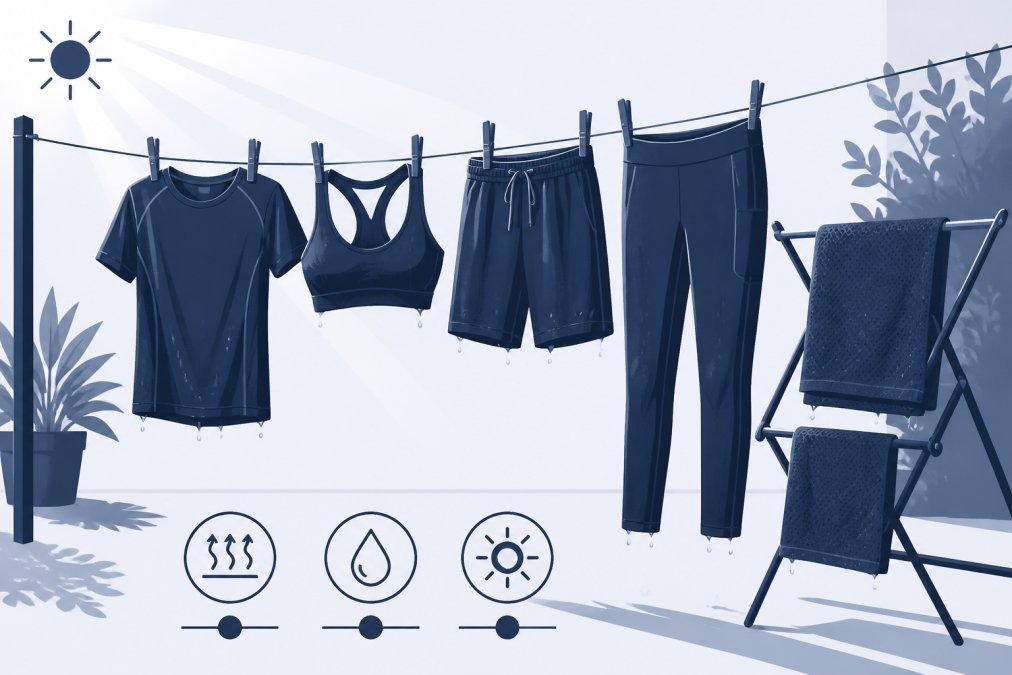
Air-drying in direct sunlight provides natural odour elimination. Sunlight has antimicrobial properties that kill odour-causing bacteria. If you have outdoor drying space, hang gym clothes in full sun for at least two hours. This step alone often eliminates lingering odours.
Never use scent boosters or heavily fragranced products to mask odours. These products add fragrance on top of the smell rather than eliminating it, creating an unpleasant combination. Additionally, they leave residue on moisture-wicking fabrics.
If odours persist after these steps, the bacteria may have become deeply embedded. Repeat the pre-soaking process and consider switching to a sports-specific detergent if you haven't already. Persistent odours often indicate that your current detergent isn't rinsing cleanly.
Can You Tumble Dry Gym Clothes? Drying Methods Explained
Tumble drying is the fastest method but the most damaging to athletic clothing. Heat damages elastane and spandex, reducing stretch recovery and compromising fit. If you must use a tumble dryer, use the lowest heat setting or air-dry mode.
Air-drying is the gold standard for activewear. It preserves elasticity, prevents heat damage, and eliminates odours naturally. Hang items on a clothesline, drying rack, or lay them flat on a clean surface. Most pieces dry within 2-4 hours in moderate conditions.
Avoid direct heat sources like radiators or heated clothes dryers. These concentrate heat on specific areas and can damage synthetic fibres unevenly.
Lay flat drying works well for items prone to stretching, such as sports bras or compression wear. Spreading them flat prevents gravity from pulling the fabric out of shape. This method takes slightly longer but preserves fit better than hanging.
For quick drying in damp climates, position items near a fan or open window to increase air circulation. This accelerates drying without applying direct heat.
Never use a tumble dryer on high heat. The combination of heat and mechanical agitation damages elastane and spandex simultaneously. Even "low heat" settings are hotter than air-drying and should be reserved for emergencies.
Common Mistakes to Avoid When Washing Athletic Gear
Using fabric softener is the single most common mistake. It coats synthetic fibres with a waxy residue that traps odours and reduces breathability. This mistake compounds with each wash, progressively degrading performance.
Washing athletic clothing with heavy fabrics like towels or jeans creates excessive agitation that damages elastane and spandex. Separate by weight and wash activewear in its own load whenever possible.
Ignoring care labels leads to preventable damage. Each garment has specific temperature and drying recommendations. Exceeding those limits voids the performance benefits of the fabric.
Using hot water weakens elastane and causes colour fading. Cold water is non-negotiable for activewear. Even warm water can damage synthetic fibres over time.
Overloading the washing machine prevents proper cleaning and rinsing. Clothes need space to move freely in the water. Fill the drum about three-quarters full, leaving room for water circulation.
Skipping the rinse cycle leaves detergent residue on the fabric. This residue traps odours and reduces moisture-wicking performance. Always run at least one extra rinse cycle for athletic gear.
Storing damp activewear creates an environment where odour-causing bacteria thrive. Ensure items are completely dry before storing them. Damp fabric left in a gym bag overnight will develop permanent odours.
Using scent boosters instead of addressing the underlying odour problem masks the issue temporarily but doesn't solve it. These products add fragrance that eventually fades, revealing the original smell.
Post-Workout Immediate Care and Machine Maintenance
Immediate post-workout care prevents odours from becoming entrenched. Don't leave sweaty clothes in a gym bag or laundry basket for hours. Hang them immediately in a well-ventilated area to allow moisture to evaporate. This simple step prevents bacteria from multiplying before washing.
Rinse heavily soiled pieces with cold water immediately after your workout. This removes excess sweat before it dries onto the fabric. A quick rinse takes 30 seconds and significantly improves washability later.
Separate post-workout gear from other laundry immediately. Don't mix it with clean clothes or items worn for shorter periods. This prevents bacteria transfer and keeps odours contained.
Maintain your washing machine to prevent odour transfer to clean clothes. Run a cleaning cycle monthly using either a commercial washing machine cleaner or white vinegar. Pour two cups of white vinegar into the detergent dispenser and run a hot cycle with no clothes inside. This removes detergent buildup and odour-causing bacteria from the drum and seals.
Check the rubber gasket around the door for mould or residue. Wipe it clean with a damp cloth monthly. Mould in the gasket can transfer odours to clothes during washing.
Ensure your machine drains completely after each cycle. Water left in the drum promotes bacterial growth. If water pools, contact a technician, drainage issues require professional attention.
Don't overuse your machine. Running it constantly accelerates wear and reduces cleaning effectiveness. If you wash activewear daily, consider spacing loads across multiple days to allow the machine to rest.
Conclusion
Proper athletic clothing care extends garment life and preserves the performance benefits you paid for. Cold water, gentle cycles, sports-specific detergents, and air-drying form the foundation of effective care. The investment in correct washing practices pays dividends. Your activewear maintains its moisture-wicking properties, elasticity, and fit. Odours stay gone. Colours remain vibrant. Start implementing these steps with your next wash load and you'll notice the difference immediately.
Frequently Asked Questions
Is it better to wash athletic clothes in cold or hot water?
Cold water is the better choice for athletic clothing. Cold cycles preserve the elasticity of synthetic fibres like spandex and elastane, maintain the integrity of moisture-wicking properties, and reduce colour fading. Hot water can damage the fibres and degrade the fabric's ability to wick sweat effectively. Always check your garment care label, but cold or cool cycles are standard for most activewear.
Can you wash athletic clothes with normal clothes?
It's best to wash athletic clothing separately from regular garments. Athletic wear benefits from a gentle cycle and specific detergents designed to remove sweat residue without leaving fabric softener buildup. Washing separately also prevents lint transfer to moisture-wicking fabrics and reduces friction damage. If you must wash together, use a mesh laundry bag to protect your activewear.
How can I remove sweat smells from my athletic clothes?
Sweat odours are caused by bacteria trapped in synthetic fibres. Pre-soak gym clothes in white vinegar or baking soda solution for 30 minutes before washing. Use a sports-specific detergent that targets odour-causing bacteria rather than masking smells with scent boosters. Air-dry completely after washing, as residual moisture can trap odours. If smell persists, soak again in vinegar before rewashing.
Should I use fabric softener on gym clothes?
No, avoid fabric softener on athletic clothing entirely. Fabric softener leaves a residue buildup that coats synthetic fibres and reduces breathability, elasticity, and moisture-wicking performance. This coating traps sweat and odour-causing bacteria, making your gear smell faster and perform worse. Stick to sports-specific detergents without additives and skip the softener completely.
This article was written using GrandRanker