 how-to
Third Shot Alternatives for Padel Players
Table of Contents
- Why the Third Shot Matters in Padel
- Understanding Third Shot Alternatives
- Padel Shot Selection Guide: Choosing Your Third Shot
- Padel Transition Tactics: Moving from Defense to Offense
- Technical Execution: How to Hit Each Alternative
- Common Mistakes When Executing Third Shot Alternatives
- Building Match Control Through Shot Selection
- Conclusion
Last Updated: August 16, 2026
Why the Third Shot Matters in Padel
The third shot determines whether you'll attack the net, reset defensively, or stay locked in a rally. A deliberate third shot, chosen based on court position, opponent placement, and tactical intention, puts you in control. A reactive one leaves you vulnerable.
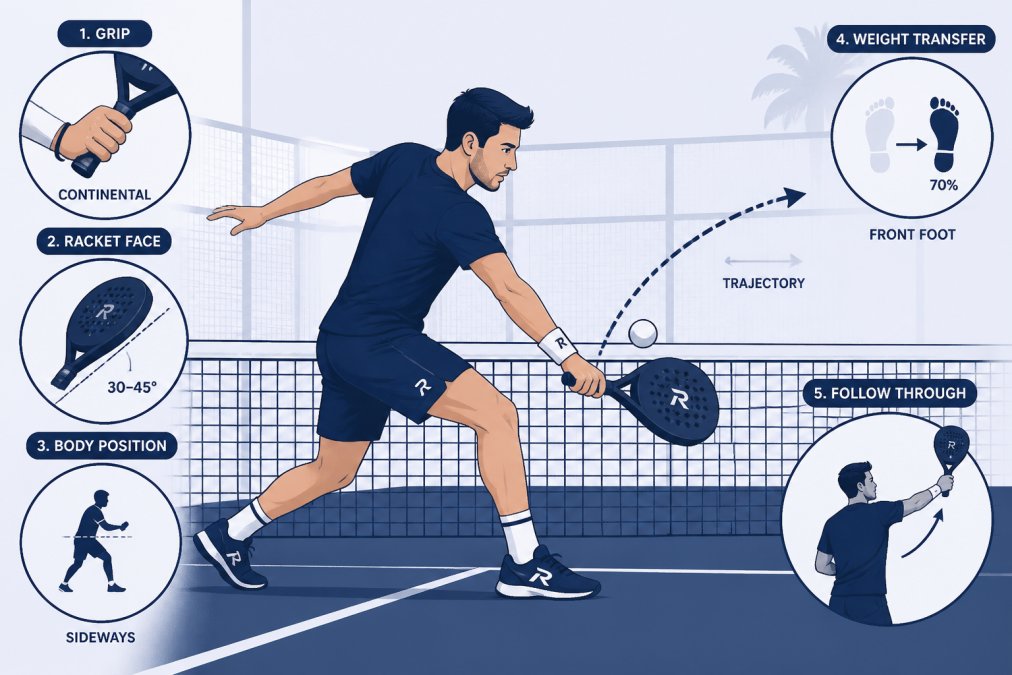
Players who master third shot alternatives move up the rankings faster than those who rely on one or two default shots. Variety forces opponents to adjust. Predictability lets them prepare.
This guide covers the main third shot alternatives padel players use, how to choose between them, and how to execute each with precision.
Understanding Third Shot Alternatives
The third shot is your first opportunity to shape the point after the serve-and-return exchange. You decide: do you attack, defend, or hold position? Your choice determines the next three shots and often the point itself.
A strong third shot alternative moves your opponent laterally, buys you time to recover and advance, or sets up an aggressive fourth or fifth shot. The four main alternatives are the bandeja, the chiquita, the lob, and the drop shot. Each has a specific purpose and excels in particular situations.
The Bandeja: Control and Net Dominance
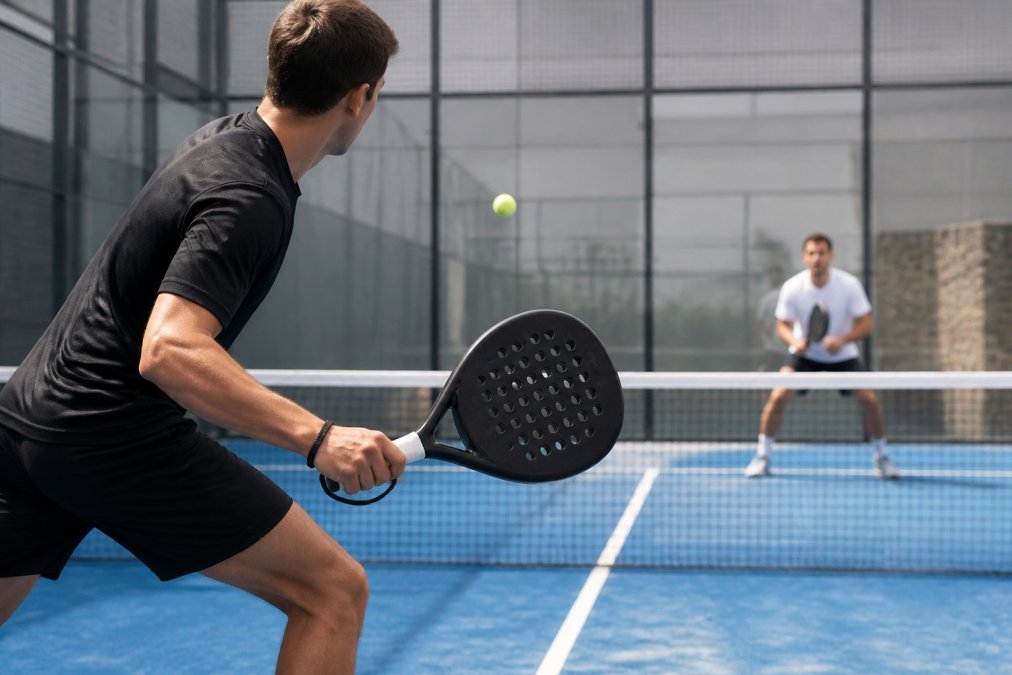
The bandeja is the overhead volley hit from mid-court, usually around the service line. It's played above shoulder height with a continental grip, angled downward to push the ball low over the net. The bandeja keeps you at the net while forcing your opponent to hit up.
This shot works best when your opponent's second shot sits high, around shoulder height or above. The real value is psychological: it signals you're comfortable at the net and willing to take balls early. Opponents know they can't lob you easily, forcing them to hit harder or wider, which increases their error rate.
Common mistakes include hitting it too hard (sending it long) and using it when the ball is too low (turning it into a defensive pop-up).
The Chiquita: Aggressive Counterattack
The chiquita is a short, angled slice hit with heavy backspin from near the net. It's played with a quick, compact motion and closed racket face, designed to drop the ball just over the net. The ball sits down immediately, forcing your opponent to move forward aggressively or watch it die.
The chiquita works because it's unexpected and the spin makes the ball harder to attack cleanly. It demands excellent racket head speed and timing. Slow it down and it becomes a weak drop. Rush it and you'll send it into the net. Use it when you have net position and your opponent is caught off-guard, not as a default option.
The Lob: Defensive Reset
The lob is a high, arcing shot that clears your opponents at the net and lands deep in the court. It buys you time, forces your opponents back, breaks their net dominance, and gives you space to advance. A well-placed lob prevents your opponents from hitting an aggressive fourth shot because they're too deep in the court.
The key is depth. A lob that lands inside the baseline is usually a mistake. One that lands at or beyond it is often a winner or forcing shot.
The Drop Shot: Precision Placement
The drop shot is a soft, angled volley hit with minimal pace and heavy touch, designed to land short and force your opponent to move forward quickly. It works because it's a change of pace and forces opponents forward, opening up the court behind them for your next shot.
The risk is consistency. A drop shot that lands too high or with too much pace becomes an easy put-away. Use it strategically when you have good court position and time to execute cleanly.
Padel Shot Selection Guide: Choosing Your Third Shot
Choosing the right third shot alternative depends on three variables: opponent positioning, skill level, and visual cues from the ball.
Reading Opponent Positioning
Your opponent's position after their second shot tells you almost everything you need to know. If they've moved forward aggressively and are at the net, they're vulnerable to a lob or drop shot. If they're still mid-court, they're in range for a bandeja or chiquita. If they're deep in the court, a drop shot or short angled drive might force them forward.
Watch their feet. If they're still moving forward, they're committed to the net and can't retreat quickly, this is your window for a lob. If they've stopped and are balanced, they're ready to react, so a change of pace might work better. If they're split-stepping, they're expecting a wide shot, which means hitting down the line might catch them off-guard.
Adjusting for Skill Level
Against beginners, consistency matters more than variety. A simple, well-placed drive or safe lob often works better than a risky chiquita. Against intermediate players, variety becomes important, they're good enough to read your patterns, so mixing in different shots keeps them guessing. Against advanced players, precision and timing matter most. Your edge comes from hitting the right shot at the right moment with perfect execution.
Advanced players play tighter angles and move faster, which means your margin for error shrinks. A drop shot needs to be short enough they can't attack it. A lob needs to be deep enough they can't smash it. A bandeja needs to be angled enough they can't pass you.
Visual Cues That Signal Shot Selection
A high ball, anything above shoulder height, is perfect for a bandeja. A ball at net height is ideal for a chiquita. A ball that's dropping and forcing you back suggests a lob or reset shot. A ball that sits up slightly is perfect for a drop shot.
The speed of the incoming ball also matters. A slow ball gives you time to execute a complex shot like a chiquita or drop. A fast ball forces you to react quickly, so a simpler shot like a bandeja or lob is often better.
Padel Transition Tactics: Moving from Defense to Offense
The third shot isn't just about hitting the ball back. It's about using that shot to transition from a defensive position to an offensive one. The best third shot alternatives padel players use simultaneously defend and set up the next aggressive shot.
Court Positioning After the Third Shot
Where you stand after hitting your third shot determines whether you can attack on the fourth shot or whether you'll be defending again. If you hit a bandeja and stay at the net, you're in an offensive position. If you hit a lob and retreat to mid-court, you're resetting. If you hit a drop shot and move forward, you're transitioning into an attacking position.
The goal is to finish your third shot in a position where your opponents are forced to hit up or defensively. The ideal position after a third shot is mid-court with your weight balanced, ready to move in any direction.
Anticipating Opponent Movement
After you hit your third shot, your opponents will react. The better you can predict their reaction, the better you can position yourself for the next shot. If you've hit a lob, they'll likely retreat. If you've hit a drop shot, they'll move forward quickly. If you've hit a bandeja, they'll look for a passing shot or lob.
Anticipation starts with understanding patterns. Most players hit the same shots in similar situations. Use these patterns to predict what's coming and position yourself accordingly.
Technical Execution: How to Hit Each Alternative
Understanding when to use each third shot alternative is half the battle. Executing them consistently is the other half.
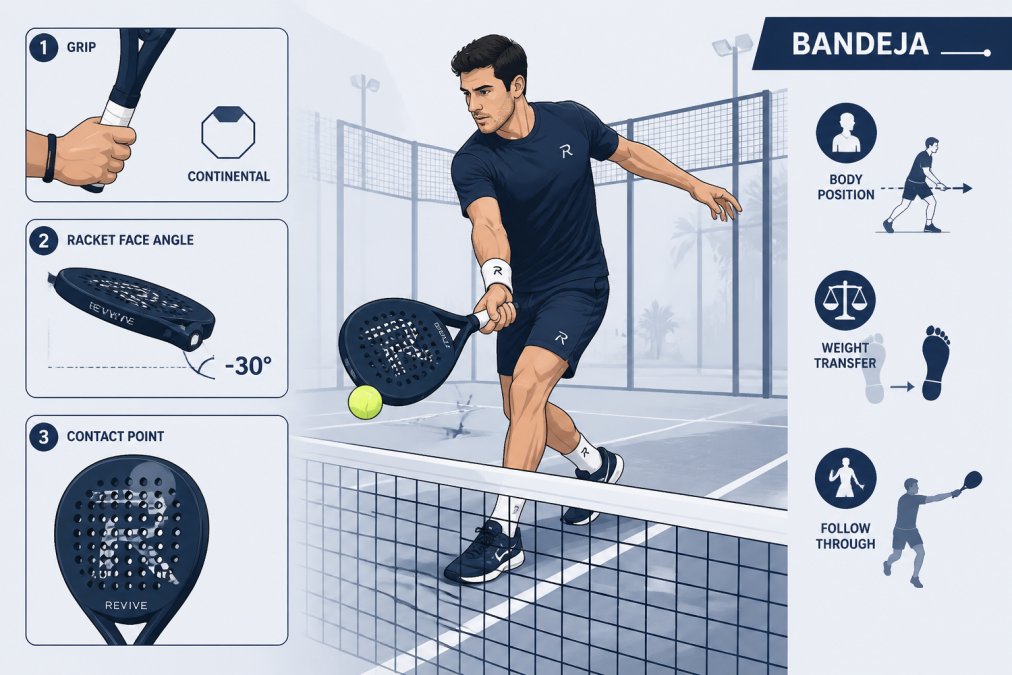
Bandeja Grip and Follow-Through
The bandeja is played with a continental grip. Your thumb sits diagonally across the grip, your index finger spreads slightly, and your wrist stays relatively firm. The swing path is short and compact. The racket starts above your head, comes down in a smooth arc, and follows through downward across your body.
Timing is crucial. Hit the ball at the peak of its bounce or slightly on the way down. Hitting it on the way up gives you less control. The sweet spot is when the ball is at or just past its highest point.
Chiquita Racket Head Speed and Timing
The chiquita requires fast racket head speed in a very small window. The grip is continental or slightly eastern backhand, and your wrist should be relatively firm. The swing path is short and sharp, using a quick flick of your wrist and forearm to accelerate the racket through the ball. The racket face should be slightly closed at contact to generate backspin.
Timing is tight. Hit the ball early, when it's still rising or at the peak of its bounce. The contact point should be in front of your body.
Lob Depth and Arc Control
The lob is played with a full swing, similar to a groundstroke but with an upward angle. The key is generating enough topspin to keep the ball in the court while getting it high enough to clear your opponents. The swing path starts low and finishes high, brushing up on the ball to generate topspin.
The timing of the lob is less critical than other shots. However, depth is crucial. A lob that lands at or beyond the baseline is usually effective.
Drop Shot Tempo and Spin
The drop shot is played with minimal pace and heavy touch. The grip is usually continental or eastern forehand, and your wrist should be relaxed. You're using feel rather than power. The swing path is short and controlled, with a gentle motion that decelerates through the ball. The contact point should be in front of your body, and the follow-through should be short and soft.
Common Mistakes When Executing Third Shot Alternatives
Most players make the same mistakes repeatedly. The first is hitting too hard. A hard bandeja that goes long is worse than a controlled one that lands short. Pace is useful only when you have the court position and angle to use it safely.
The second mistake is poor timing. Hitting too late forces you to compensate with extra pace or angle. Hitting too early can send it long. The sweet spot is when the ball is at or just past its peak height.
The third mistake is inconsistent court positioning. Players often drift too far forward or too far back after hitting their third shot, putting them out of position for the fourth shot. The ideal position is mid-court with balanced weight.
The fourth mistake is predictability. Hit the same third shot in the same situation repeatedly and you become easy to read. Mix in different shots to keep opponents guessing.
The fifth mistake is hitting when off-balance. A third shot hit while moving or off-balance is almost always less effective than one hit from a stable position.
Building Match Control Through Shot Selection
A match is a series of points, and each point is a series of shots. The third shot is where you start building control of the point. A player who makes smart third shot choices controls more points and wins more matches.
Control comes from variety and timing. If your opponents know what you're going to hit, they can prepare. If they don't know, they have to react. Reactive players make more mistakes. Mix in different third shot alternatives to keep opponents guessing.
Control also comes from reading the match. Early in a match, use simple shots to establish rhythm. As you understand your opponents' patterns, mix in more complex shots. Late in a match, return to simple, reliable shots that you can execute under stress.
Control also comes from understanding your own strengths. If you have excellent touch, use more drop shots and chiquitas. If you're quick and athletic, use more lobs. If you have a strong net game, use more bandeja shots. Play to your strengths.
Conclusion
Mastering third shot alternatives padel players use is the difference between playing reactively and playing strategically. The bandeja, chiquita, lob, and drop shot each serve a specific purpose. Knowing when to use each one, based on opponent positioning, skill level, and visual cues, transforms how you approach every point.
REVIVE Activewear and Apparel supports padel players who are serious about improvement. Our innovative Padel tech designs keep you comfortable and confident on court, whether you're working on your third shot alternatives or building match control. With easy ordering for any quantity and expert support, we're here to help you perform at your best. Explore our collection and get the gear that matches your commitment to the game.
Padel sport rules and regulations
Tennis and racquet sport biomechanics research
Court sports performance analysis guide
Frequently Asked Questions
What is the importance of the third shot in padel?
The third shot is crucial because it determines whether you gain net control or remain in a defensive position. A well-executed third shot alternative like the bandeja or chiquita allows you to transition from the baseline to the net, where you control the point. Poor third shot execution leaves you vulnerable to aggressive attacks from opponents already positioned at the net. Mastering third shot alternatives directly impacts your ability to win matches.
How do you choose between a bandeja and a chiquita for your third shot?
Choose the bandeja when opponents are positioned at the net and you need to regain control safely while advancing forward. Use the chiquita when you want to be aggressive and catch opponents off-guard with a sudden change of pace and spin. The bandeja prioritises placement and net transition; the chiquita prioritises tempo disruption. Read your opponent's court position and momentum before deciding which shot maximises your advantage.
What visual cues help with third shot selection in padel?
Watch your opponent's court position: if they're deep or retreating, a lob creates space; if they're at the net leaning forward, a drop shot or chiquita disrupts their rhythm. Observe their racket preparation and footwork to anticipate aggression. Check the incoming ball's height and spin, high balls suit bandeja or chiquita execution, whilst low balls may require a defensive lob. Quick assessment of these cues enables faster, smarter shot selection during rallies.
How does padel transition tactics improve my game after the third shot?
Effective transition tactics mean you don't just hit the third shot; you position yourself to capitalise on it. After executing a bandeja, move immediately toward the net with balanced footwork. Anticipate where your opponent will hit next based on court geometry and their position. This proactive approach converts defensive situations into offensive opportunities, allowing you to finish points at the net rather than trading baseline shots indefinitely.
This article was written using GrandRanker