 blog
Breathable Seamless Tops for Hot Yoga: A 2026 Guide
Last Updated: October 22, 2026
Quick Summary
Breathable seamless tops hot yoga eliminate pressure points and wick moisture away during 60 minutes of heat, keeping you dry and focused. Look for synthetic blends with 10-20% elastane, fine single jersey knits with mesh zones, and a snug fit that stays in place through inversions and arm balances.
- Seamless construction removes shoulder and side seams that cause discomfort during repetitive movements like vinyasas and downward dog.
- Synthetic fabrics like polyamide and polyester wick sweat outward to evaporate, while cotton absorbs and holds moisture, making it unsuitable for hot classes.
- High-cut armholes, a fitted hem, and medium-width straps prevent gaping, riding up, and shifting during poses.
- Test a top through overhead reach, forward fold, inversion, backbend, twist, and arm balance before committing to ensure it stays in place.
- Fine synthetic single jersey with mesh panels dries fastest, often within one to two hours, making it ideal for back-to-back classes.
Table of Contents
- Why Breathable Seamless Tops Matter for Hot Yoga
- Sleeveless Yoga Tops: Freedom and Airflow
- Moisture-Wicking Yoga Tops: Sweat Management and Comfort
- Hot Yoga Clothes for Women: Coverage, Support, and Fit
- Yoga Tops with Built-In Bras: All-in-One Support
- Fabric Performance: What Works Best Under Heat and Sweat
- Fit, Coverage, and Staying in Place During Poses
- Conclusion
- Frequently Asked Questions
Why Breathable Seamless Tops Matter for Hot Yoga
In a 40°C studio, breathable seamless tops hot yoga classes mean the difference between focus and fighting fabric that clings, bunches, or chafes.
Standard tops absorb sweat, turn heavy, and restrict movement. Seamless construction eliminates pressure points, and breathable fabrics pull moisture away through 60 minutes of heat.
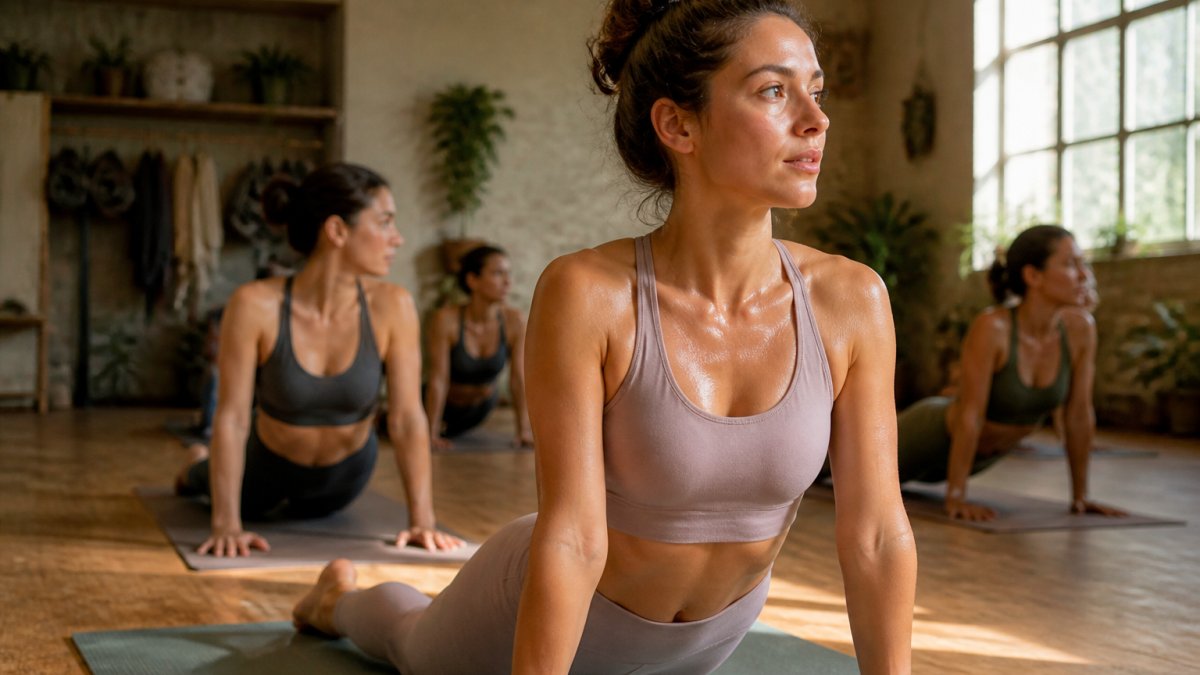
Sleeveless Yoga Tops: Freedom and Airflow
Sleeveless designs dominate hot yoga for one reason: maximum airflow.
A quality sleeveless yoga top gives full shoulder mobility for vinyasas and arm balances.
Seamless sleeveless tops eliminate shoulder seams that dig in during downward dog, so you hold poses longer without distraction.
A simple sleeveless tank also works for gym sessions and layering on cooler days, making quality construction worth the investment.
Moisture-Wicking Yoga Tops: Sweat Management and Comfort
Moisture-wicking yoga tops move sweat away from your skin instead of letting it pool, transforming your comfort in a heated room.
Synthetic fabrics like nylon and spandex pull moisture outward, where it evaporates faster.
Look for tops that combine a moisture-wicking base with breathable construction and dry within a few hours, which matters for back-to-back classes.
Quick-drying fabrics also resist odour better than cotton, where sweat sits longer and bacteria thrive.
Hot Yoga Clothes for Women: Coverage, Support, and Fit
Most women prefer moderate coverage through the torso, cut close enough to avoid excess fabric.
The fit should be snug without compression. Loose fabric flaps during transitions; snug seamless construction stays in place through every pose.
Length varies from cropped to hip-length, but whatever you choose should stay put during movement. Fabric creeping upward mid-class ruins focus.
For larger frame sizes, look for subtle structure or thicker straps that won't dig into shoulders, so you can move freely without constant adjustment.
Yoga Tops with Built-In Bras: All-in-One Support
Yoga tops with built-in bras eliminate layering, simplifying your setup and reducing bulk.
Built-in bra construction suits moderate-impact activities. Hot yoga involves sustained movement, not high-impact jumping, so integrated support handles it well.
One garment replaces two, reducing chafing points and fabric, and you avoid a separate sports bra showing under a thin yoga top.
The bra portion should provide lift without compression.
Sizing is tricky with built-in support: the bra portion is fixed, so measure carefully.
Fabric Performance: What Works Best Under Heat and Sweat
Two tops with identical fibre percentages can behave completely differently 40 minutes into a flow. Comfort depends on fibre composition, knit structure, fabric weight, and drying behaviour, here's how to judge a top before you buy.
Fibre composition: what each component does
Performance knits are blends, and each fibre earns its place:
- Polyamide (nylon): strong, smooth, and good at holding its shape. It takes up little water, so it feels lighter when damp than cotton, and it recovers well after stretching.
- Polyester: the workhorse for moisture movement. It transports liquid sweat to the fabric surface to evaporate rather than holding it against the skin. It is also highly durable and resists stretching out.
- Elastane (spandex): provides stretch and snap-back. Even 10-20% makes a noticeable difference to how a top recovers after deep backbends and inversions.
A common performance blend is 80-90% synthetic (polyamide or polyester) with 10-20% elastane, giving durability, stretch recovery, and moisture movement without high-elastane cling.
Knit structure: why two 'seamless' tops differ
Seamless tops are knitted as a tube on circular machines, so they have few or no side seams. But the knit itself varies:
- Single jersey: thin, smooth, and light. Excellent airflow and quick drying, but can be less opaque when wet and offers little compression.
- Rib knits: the raised channels create tiny air gaps and allow more stretch. They feel cooler and more forgiving across the torso, though slightly warmer than a fine single jersey in still air.
- Mesh or eyelet zones: engineered areas of open knit at the back, underarms, or centre back increase ventilation exactly where heat builds. Look for these if you overheat quickly.
The practical test: hold the fabric up to a light. If you can see your hand clearly through it, expect more transparency when wet. If the knit looks dense and uniform, expect better opacity but potentially less airflow.
Drying time and sweat handling
Drying speed is the single most useful proxy for hot-class comfort. A top that dries quickly stays light and avoids the clammy stage where fabric sticks to the skin. As a rule of thumb:
- Fine synthetic single jersey with mesh zones dries fastest, often within an hour or two hung in a warm room.
- Ribbed synthetic blends dry slightly more slowly because of the thicker structure.
- Bamboo and TENCEL blends dry more slowly again and may still feel damp several hours later.
If you attend back-to-back classes or practise most days, a quick-drying top lets you rotate two or three pieces rather than owning a large wardrobe.
Opacity when wet
Light colours and thin single jerseys can become semi-transparent once saturated, especially across the chest and back. If you prefer lighter tones, look for denser knits, double-layer panels at the bust, or a top designed to be worn over a supportive bra. Darker colours and denser constructions hide moisture patches and stay opaque.
Odour retention
Synthetic fabrics are durable but can hold odour if sweat is left in the fibres. Rinse or wash promptly after class rather than leaving a damp top in a bag, and choose knits with mesh zones that dry fast rather than thick, dense structures that stay damp longer. Bamboo blends resist odour but hold moisture longer, so the benefit depends on how quickly you wash them.
A simple fabric checklist
When comparing two seamless tops, ask:
- What is the fibre blend, and is elastane in the 10-20% range?
- Is the knit a fine single jersey, a rib, or does it have engineered mesh zones?
- Does it feel cool and smooth against skin, or sticky and clingy?
- Held to the light, how opaque is it, and how will that change when wet?
- How quickly would it dry if hung overnight?
Fit, Coverage, and Staying in Place During Poses
A top that looks right in the mirror can still fail the moment you invert. Real fit testing happens upside down, in backbends, and during fast transitions. Here are practical checks to run before you commit, plus the trade-offs of seamless design.
The seamless trade-off
Seamless tops reduce chafing because there are no stitched seams to rub against skin during repetitive movement, a genuine advantage in a hot class where you might flow through dozens of vinyasas. But seamless construction is not automatically better in every respect:
- Reduced chafing and smoothness: the main benefit. Fewer pressure points along the shoulders, sides, and underarms.
- Compression: seamless tubes are often knitted with varying tension, creating tighter zones through the waist or under the bust. That helps a top stay put but can feel restrictive during deep breathing.
- Heat retention: denser knit zones and compression panels reduce airflow. If you overheat easily, look for mesh panels or a lighter single jersey rather than a dense compression knit.
Understanding these trade-offs lets you choose the right seamless top for your body and practice rather than assuming all seamless tops behave the same way.
Pose-specific fit checks
Run these checks in the fitting room or at home before you commit to a top:
1. Overhead reach (downward dog, warrior sequences) Raise both arms fully overhead. The hem should not ride up past your waistband, and the armholes should not gape. If the top pulls tight across the chest or shoulders, size up or choose a style with more stretch through the upper body.
2. Forward fold (uttanasana, seated folds) Fold forward from standing.
3. Inversion (shoulder stand, handstand, legs-up-the-wall) Turn upside down, or lie on your back with hips lifted.
4. Backbend (cobra, wheel, camel) Arch back and reach overhead.
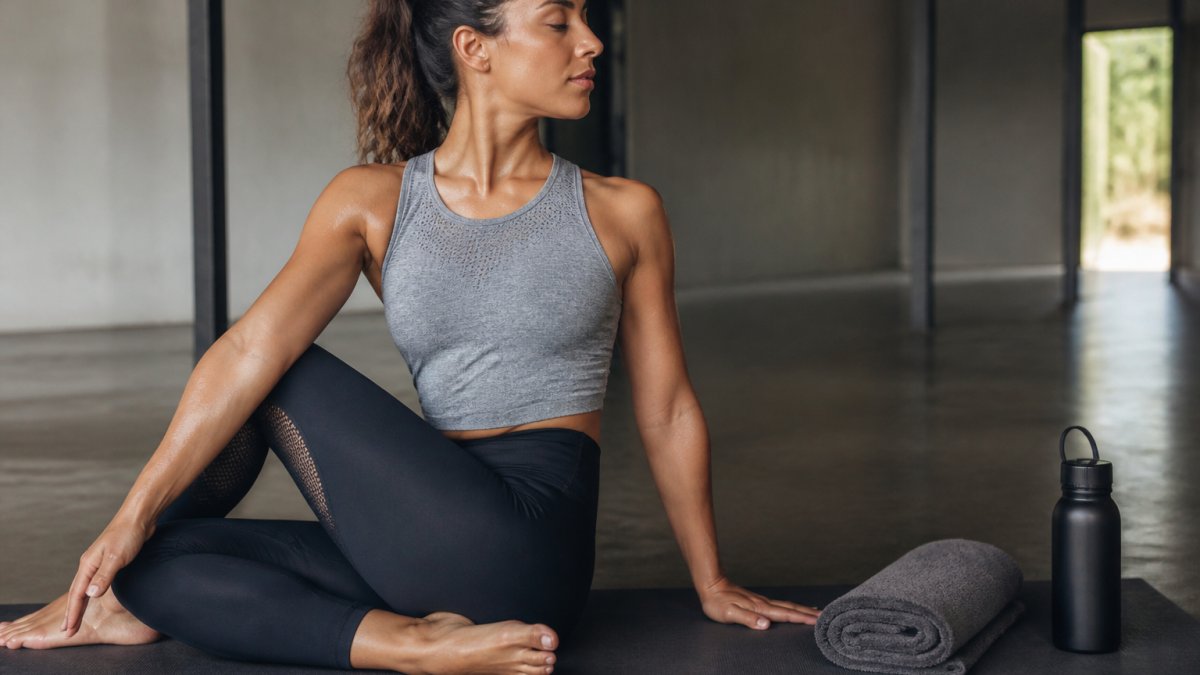
5. Twisting (revolved triangle, seated twists) Twist to both sides.
6. Arm balance (crow, side plank) Come into a arm balance or side plank.
Staying in place: what actually helps
- High-cut armholes prevent gaping during inversions and arm balances. Low armholes create gaps that expose more than intended and distract during practice.
- A slightly fitted hem through the waist reduces riding up. A hem that sits close to the body stays put better than a loose or flared one.
- Medium-width straps (roughly a finger's width) balance comfort and security. Very thin straps can dig into shoulders during sustained poses; very wide straps can restrict shoulder mobility.
Support and layering guidance
Seamless tops vary widely in built-in support. As a general guide:
- Light support only: fine single jerseys and thin rib knits. Best for smaller busts or for wearing over a separate sports bra.
- Moderate support: tops with a firmer underband or a double-layer bust panel. Suitable for many practitioners in hot classes, where impact is low but movement is continuous.
- Structured support: rare in seamless tops. If you need more hold, choose a top designed to be worn over a supportive bra rather than relying on the top alone.
Layering is a balance. A separate sports bra adds support but also fabric and warmth. In a hot class, many practitioners prefer a single top with enough built-in support to avoid a second layer, reserving separate bras for higher-impact sessions. If you do layer, choose a smooth, seam-free bra so it does not create new pressure points under a seamless top.
Conclusion
Finding the right breathable seamless tops hot yoga requires balancing airflow, support, durability, and fit.
REVIVE Activewear and Apparel provides high-quality, stylish, and functional activewear for men and women, perfect for everything from gym workouts and yoga to running and Padel tennis, with a special focus on innovative Padel tech designs.
Ready to upgrade your fitness experience? Browse our collection of high-quality, stylish, and functional activewear designed for performance and comfort.
Frequently Asked Questions
Is a seamless top better for hot yoga?
Yes. Seamless construction eliminates irritation points where fabric seams can dig into skin during intense stretching and repeated movement. In hot yoga, where sweat increases friction, seamless tops reduce chafing and allow your skin to breathe freely. The continuous fabric also supports moisture-wicking more effectively because there are no seams to trap sweat or create dry spots.
What fabric is best for a breathable hot yoga top?
Synthetic blends like nylon and spandex mixtures excel at moisture-wicking and quick drying. Natural fibres like bamboo and TENCEL offer breathability and comfort but dry more slowly. Many performers prefer synthetic-dominant blends (70-85% nylon or polyester, 15-30% spandex) because they manage sweat efficiently while maintaining stretch and durability through repeated washing and high-heat practice.
How do you stop a yoga top from riding up during class?
Look for tops with a fitted waistband, longer hemlines, or integrated grip features that anchor fabric during movement. Seamless construction helps because there are no seams to catch or shift. Choose a size that fits snugly at the torso without restricting breathing. Built-in bras or supportive panels also provide stability. Test poses like downward dog and forward folds before committing to a style.
Should you wear a fitted or loose top to hot yoga?
Fitted tops are generally better for hot yoga. They stay in place during inversions and flowing sequences, reduce excess fabric that can trap sweat, and allow instructors to see your alignment. Loose tops can ride up, bunch around your shoulders, or create drag during movement. A fitted seamless top provides the best combination of freedom of movement, moisture management, and stability throughout class.