 blog
Durable Activewear for Racket Sports: A Buyer's Guide
Table of Contents
- Why Standard Gym Gear Fails on Court
- Padel Clothing: What the Sport Actually Demands
- Moisture-Wicking Activewear: How It Works and When It Doesn't
- Activewear Fabric Durability: A Side-by-Side Comparison
- How to Choose Durable Activewear for Racket Sports
- Care and Repair: Making Court Clothing Last Longer
- Durability by Sport and Playing Frequency
- Conclusion: Buying for the Long Game
- Frequently Asked Questions
Last Updated: October 16, 2026
Why Standard Gym Gear Fails on Court
Most gym kit is built for straight lines. Racket sports are not. A standard cotton-blend tee might survive a weights session, but it will not survive a lunging padel smash or a squash rally that runs you into the back wall.
The problem isn't quality. It's purpose. Gym gear prioritises looks and light movement. Court clothing needs stretch, moisture management and abrasion resistance. When you wear the wrong fabric for the job, seams split, colours fade and the garment loses shape within months.
At REVIVE Activewear and Apparel, we design specifically for padel and other racket sports. Players often buy general activewear, then replace it frequently.
Below, we break down what actually makes durable activewear for racket sports last, sport by sport, fabric by fabric.
Padel Clothing: What the Sport Actually Demands
Padel clothing must handle constant lateral lunging, overhead smashes and wall-adjacent scrambling. That combination of stretch, sweat and friction is what separates padel kit from general sportswear.
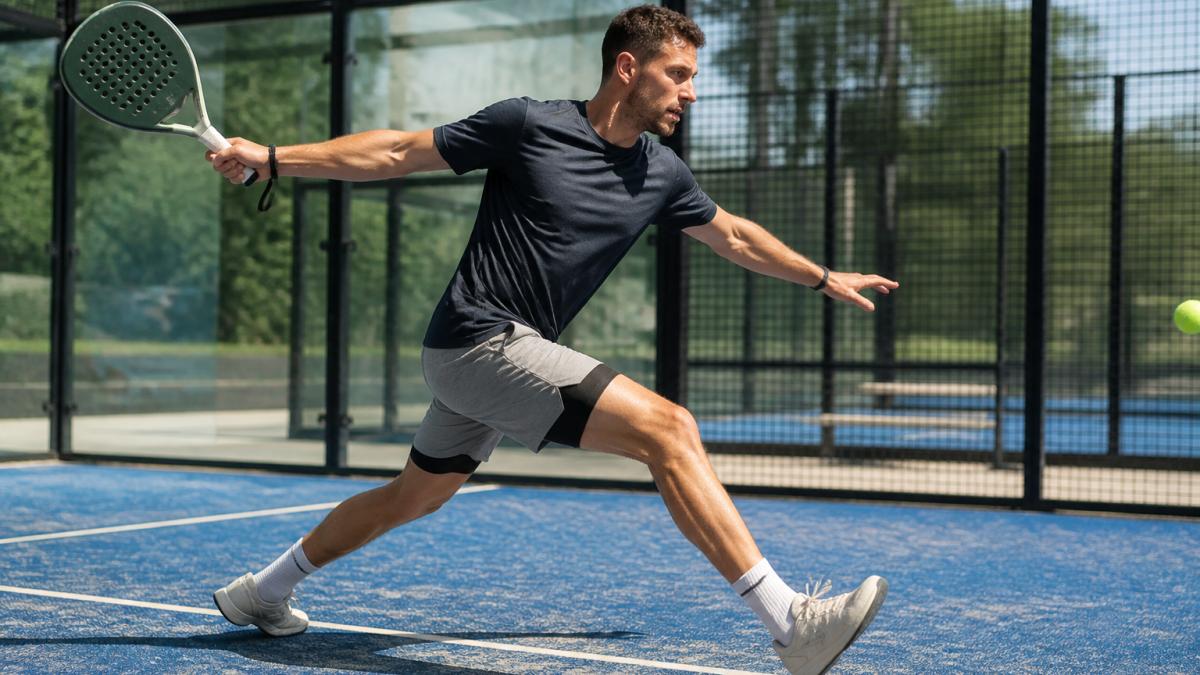
Three demands matter most:
- Four-way stretch so fabric moves with hips and shoulders, not against them
- Reinforced seams at the crotch, gusset and underarm, where padel movement stresses fabric hardest
- Quick-dry construction because padel is played in short, intense bursts that build sweat fast
What most guides miss is the wall. Glass and mesh walls mean players brush against hard surfaces mid-rally. A smooth, tightly woven outer face resists snagging far better than loose knits.
The Wear Points Padel Punishes
Padel wear is not evenly spread across a garment. Four zones take almost all the punishment, and they are the ones worth inspecting before you buy:
- Inner thigh and gusset, lateral lunges stretch this seam in opposite directions hundreds of times per match. A gusseted crotch with flatlock stitching survives; a standard overlocked seam does not.
- Underarm and side seam, overhead smashes and wall scrapes abrade the same strip of fabric. Look for a higher denier yarn or a bonded panel here.
- Rear and hip, sliding against the back glass scuffs loose knits and pills brushed inner faces. A tight, smooth outer face slides rather than snags.
- Waistband, repeated bending and twisting breaks down elastic. A wide, flat waistband with a drawcord holds shape longer than a narrow elasticated one.
Fabric Specs That Actually Matter
Broad claims like "performance fabric" tell you nothing. These are the specifications worth checking on a label or product page:
| Specification | What to look for | Why it matters on court |
|---|---|---|
| Fibre blend | Nylon or polyester with 15-20% elastane | Stretch recovery; nylon resists abrasion better than polyester |
| Fabric weight | Roughly 180-240 gsm for tops, 200-260 gsm for shorts | Light enough to breathe, heavy enough to resist pilling |
| Stretch | Four-way, with visible snap-back | Two-way stretch restricts lunging |
| Seam type | Flatlock or bonded | Reduces chafe and seam failure |
| Gusset | Present on shorts and leggings | Prevents crotch blowout |
| Outer face | Tight, smooth weave | Resists snagging on glass and mesh |
How Long Padel Kit Should Last
A quality nylon/elastane top can hold its shape for many washes before stretch recovery noticeably drops, while a cotton-blend tee used for the same purpose often loses shape more quickly. Shorts with a gusseted crotch and flatlock seams typically outlast those with standard overlock stitching by a wide margin, because the failure point is often the seam, not the fabric.
The practical takeaway: judge padel clothing by its weakest seam and its elastane content, not by how it feels in the shop. A garment that snaps back after a hard pull and has no exposed overlock stitching in the gusset is the one that will still be in your bag next season.
Moisture-Wicking Activewear: How It Works and When It Doesn't
Moisture-wicking activewear is fabric engineered to pull sweat away from your skin and spread it across the surface so it evaporates faster. It works well in most conditions. It fails when the fabric is saturated, when the weave is too dense, or when detergent residue blocks the fibre's ability to move water.
That last point catches people out. Fabric softener coats fibres and reduces wicking over time. If your kit feels clammy after a few months, the fabric may be fine. The washing routine may not be.
Wicking also matters less in cold weather. In cooler conditions, layering does more work than any single fabric.
Activewear Fabric Durability: A Side-by-Side Comparison
Fabric choice decides how long a garment lasts. Here is how the main fibre families compare for activewear fabric durability.
Natural vs Synthetic vs Bio-Based Fibres
| Fibre type | Durability | Moisture handling | Best for |
|---|---|---|---|
| Cotton (natural) | Low, wears and stretches | Poor, holds sweat | Casual warm-up wear |
| Polyester blends (synthetic) | High, resists abrasion | Strong wicking | Match play, training |
| Nylon/elastane (synthetic) | High, excellent stretch recovery | Strong wicking | Padel, squash, badminton |
| Bio-based (e.g. bamboo, Tencel) | Moderate | Moderate wicking | Low-intensity, casual |
Natural fibres feel good against the skin but lose shape under repeated stress. Synthetics hold their structure but can trap odour if not washed properly. Bio-based options sit in the middle: comfortable and increasingly popular, but not yet matching synthetics for hard court use.
Construction Details That Predict Longevity
Fabric is half the story. Construction is the other half.
- Flatlock seams reduce bulk and friction, so they chafe less and last longer
- Gusseted crotches prevent the seam blowouts common in shorts
- Bonded hems avoid stitching that frays after repeated washing
- Higher denier yarns in high-wear zones add abrasion resistance without weight
A cheap garment with good construction often outlasts an expensive one with poor stitching. Check the inside of the garment before you buy.
How to Choose Durable Activewear for Racket Sports
Choosing durable activewear comes down to five checks. Run them before you buy anything.
A Five-Step Selection Checklist
- Check the fibre blend. Look for polyester or nylon with at least 10-15% elastane for stretch recovery.
- Inspect the seams. Flatlock or bonded seams beat standard overlock stitching for court use.
- Test the stretch. Pull the fabric in four directions. It should snap back, not sag.
- Check the gusset. Shorts and leggings should have a gusseted crotch for freedom of movement.
- Read the care label. If it demands dry cleaning or hot washing, it will not survive regular play.
Care and Repair: Making Court Clothing Last Longer
Washing habits shorten garment life faster than play does. Heat, aggressive detergents and tumble drying all break down elastane and wicking finishes.
Follow these rules:
- Wash at 30°C or lower on a gentle cycle
- Use a sports-specific detergent, not biological powder
- Air dry whenever possible; heat is the enemy of stretch
- Repair small seam splits early with a simple stitch before they spread
Value over time is the metric that matters, not sticker price.
Durability by Sport and Playing Frequency
Different racket sports wear kit differently, and the surface matters as much as the sport. Understanding why your kit fails tells you what to buy next.
How Each Sport Wears Kit Down
- Tennis, hard courts abrade fabric through sliding and repeated stopping. The wear concentrates on the seat, outer thigh and the hem of shorts. Clay courts stain and grind fabric but abrade it less; grass is gentlest on garments but hardest on whites.
- Squash, explosive lunging in a confined space stresses the gusset and inner thigh hardest. The low ceiling and tight corners mean more contact with walls, so side seams and shoulders take scuffs.
- Badminton, rapid direction changes and deep lunges wear the gusset and knee area. Overhead smashes stretch the shoulder and underarm repeatedly.
- Padel, combines short bursts with wall contact, so rear panels, hips and the outer face of shorts take the most punishment.
Rotation Maths: How Many Sets Do You Actually Need?
The single biggest factor in garment lifespan is not price, it is how often each garment is worn and washed. A common pattern is that a garment worn and washed twice a week will show stretch loss in roughly half the time of the same garment worn once a week.
A practical rule of thumb:
- Once a week, two sets is comfortable; each garment gets a full week to recover between wears.
- Twice a week, three sets lets you rotate so no garment is washed more than once a week.
- Three to four times a week, four to five sets. At this frequency, elastane fatigue, not fabric abrasion, is what ends a garment's life.
- Five or more times a week, five to six sets, and expect to replace the most-used set roughly once a season.
Rotating sets spreads the wash cycles and gives elastane time to recover its shape between wears. It is the cheapest durability upgrade available.
Value Over Time: Cost Per Wear
Sticker price is a poor guide to value. Cost per wear, price divided by the number of times you actually wear the garment before it fails, is the metric that matters.
Consider two tops used twice a week for a 40-week season, so 80 wears per year:
| Garment | Price | Realistic lifespan | Cost per wear (year one) |
|---|---|---|---|
| Budget cotton-blend tee | £20 | ~4 months (roughly 35 wears) | ~£0.57 |
| Mid-range synthetic top | £40 | ~2 seasons (roughly 160 wears) | ~£0.25 |
| Premium nylon/elastane top | £70 | ~3 seasons (roughly 240 wears) | ~£0.29 |
These figures are illustrative, but the pattern holds: a mid-range synthetic top often delivers the lowest cost per wear because it combines a moderate price with a long lifespan. A premium top can match it if the construction genuinely lasts, but only if the seams and gusset justify the price. A cheap cotton tee looks like the bargain and ends up the most expensive per wear.
Matching Kit to Your Actual Use
Buy for the frequency you actually play, not the frequency you aspire to. A casual player on court once a week does not need premium abrasion-resistant panels; a competitive player on court four times a week will destroy budget kit within a season. Match the fabric weight, seam construction and rotation to your real schedule, and durability stops being a lottery.
Conclusion: Buying for the Long Game
Durable activewear for racket sports is not about paying more. It is about buying the right fibre blend, the right construction and the right care routine.
REVIVE Activewear and Apparel builds padel-focused kit with performance fabrics, reinforced construction and scalable ordering for individuals and teams. We offer standard or express delivery and a dedicated support team to help you choose the right fit and quantity.
Subscribe to our email list for fit guides, care tips and early access to new padel collections.
Frequently Asked Questions
What should you look for in durable racket sports clothing?
Focus on four things: fabric weight and composition (blends with elastane hold shape better), stitch quality (flatlock seams resist chafing and splitting), gusseted construction in shorts and tops, and moisture management. Check whether the brand publishes fabric details and care guidance. Durable activewear for racket sports typically uses denser knits that resist pilling and maintain stretch after repeated washing. If a product page does not list fibre content or construction details, that is a warning sign.
How do you care for sportswear so it lasts longer?
Wash at 30°C or lower on a gentle cycle, turn garments inside out, and avoid fabric softener because it coats moisture-wicking fibres and reduces their performance. Skip the tumble dryer where possible; heat breaks down elastane and causes shrinkage. Air-dry flat or hang in shade. Use a mesh laundry bag for delicate items. Treat stains promptly with cold water rather than hot. These habits can add months to the lifespan of moisture-wicking activewear and keep colours from fading.
Can you wear regular gym clothes for racket sports?
You can, but gym clothing is designed for different movement patterns. Racket sports involve lateral lunges, overhead reaches and rapid direction changes. Standard gym leggings or cotton T-shirts restrict hip rotation and hold sweat against the skin, which affects grip and comfort. Padel clothing and tennis apparel typically use four-way stretch fabrics with gusseted seams. If you play more than once a week, purpose-built court clothing will perform better and last longer than general gym wear.
Which material is best for activewear fabric durability?
Polyester blends with 10-20% elastane offer the best balance of stretch recovery, moisture management and abrasion resistance for court sports. Nylon blends are softer and equally strong but can be heavier. Bio-based options like recycled polyester perform similarly to virgin polyester in durability tests while reducing reliance on petroleum-derived fibres. Cotton alone absorbs sweat, gets heavy and loses shape. The key is the blend ratio and knit density, not just the fibre name.