 comparison
Can One Outfit Work for Padel and CrossFit?
Table of Contents
- Can One Outfit Work for Padel and CrossFit?
- Key Differences Between Padel Clothing Requirements for Movement and CrossFit Gear
- Best Moisture-Wicking Fabrics for High-Intensity Training in Both Sports
- Footwear: Why One Shoe Cannot Do Both
- Durable Activewear for Functional Fitness That Also Handles Court Play
- What You Can Safely Cross Over and What You Cannot
- Hygiene and Fabric Odour Management Across Different Training Intensities
- How to Build a Hybrid Athlete Wardrobe Without Overspending
Last Updated: August 17, 2026
Can One Outfit Work for Padel and CrossFit?
The short answer is no, not completely. You can build a hybrid wardrobe where certain pieces work across both sports, whilst others must stay sport-specific. Trying to force one outfit to do everything leads to compromised performance, faster wear-and-tear, and frustration. The real question isn't whether one outfit can work, but which pieces can safely cross over and how to build a smart wardrobe without buying everything twice. The differences between these sports are biomechanical, not just aesthetic.
Key Differences Between Padel Clothing Requirements for Movement and CrossFit Gear
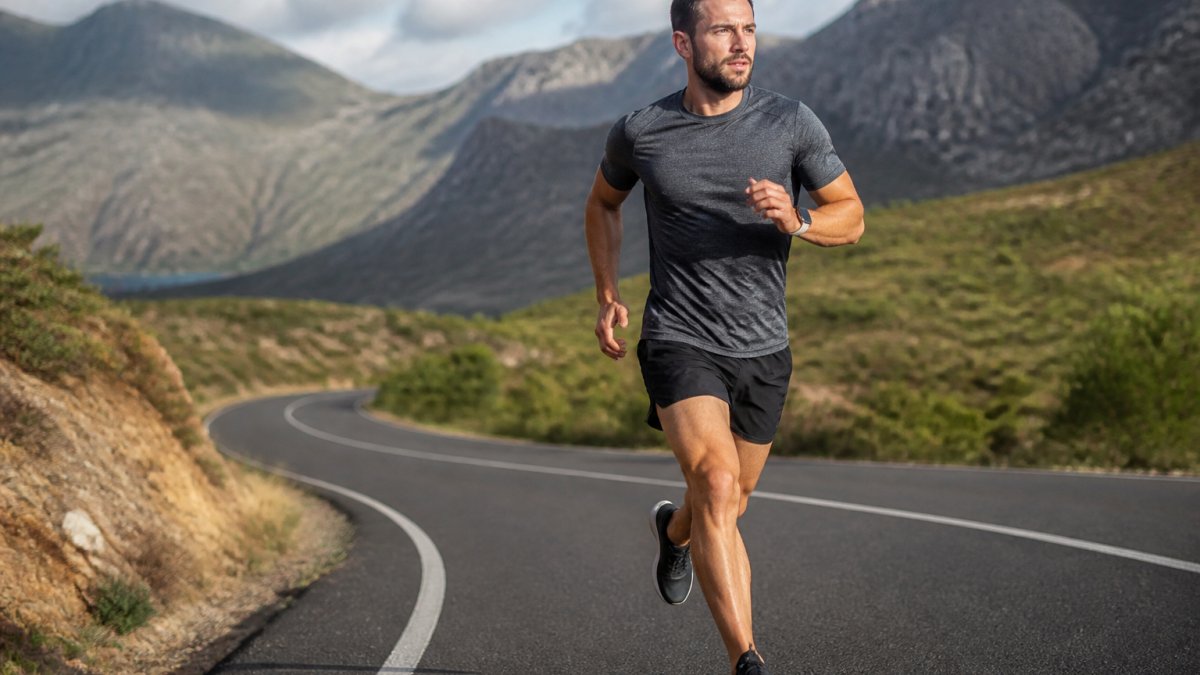
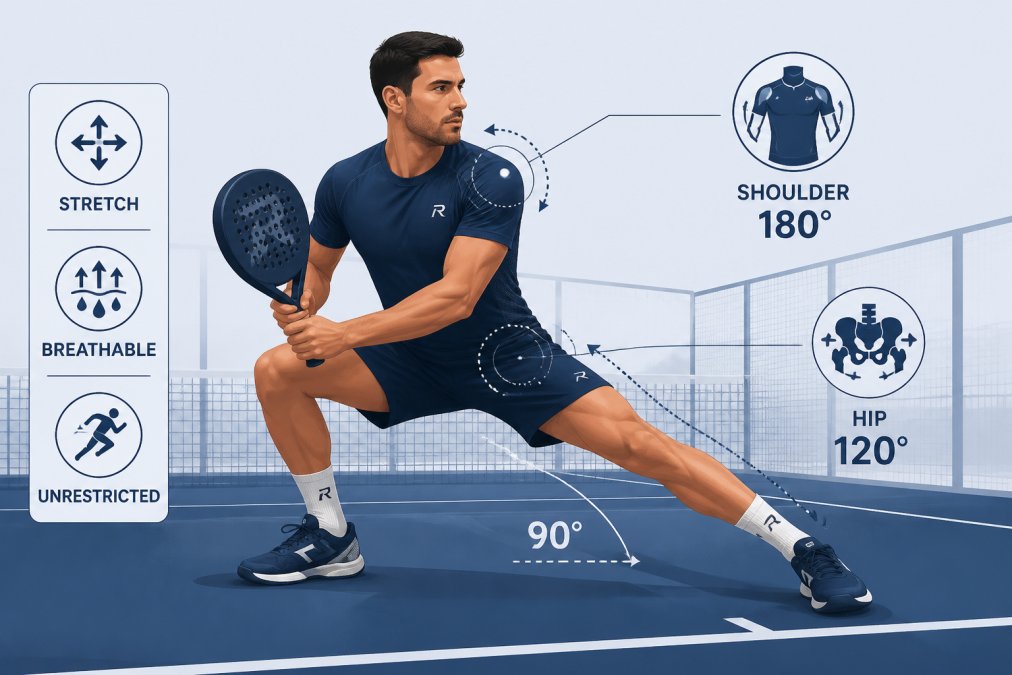
Padel is a lateral sport with explosive directional changes, rapid deceleration, and constant pivoting on a confined court. Your clothing needs to support unrestricted movement in the frontal and transverse planes, with complete freedom for shoulders, hips, and ankles.
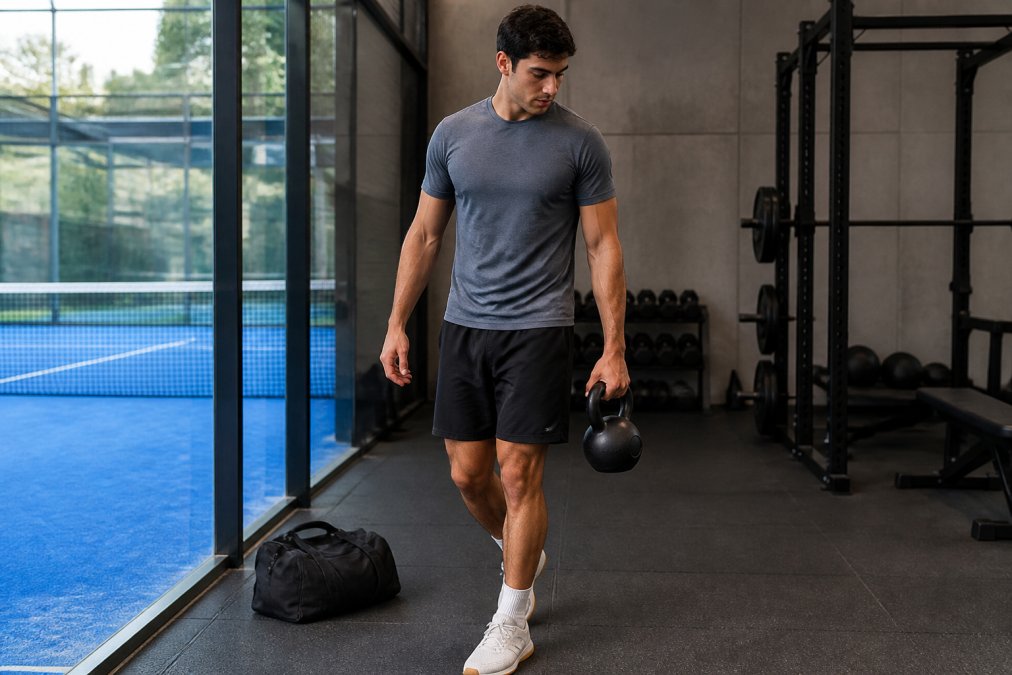
CrossFit involves vertical loading, compound barbell movements, and high-intensity metabolic conditioning. The primary demands are overhead stability, hip mobility for deep squats, and durability against friction from equipment like pull-up bars and rope climbs.
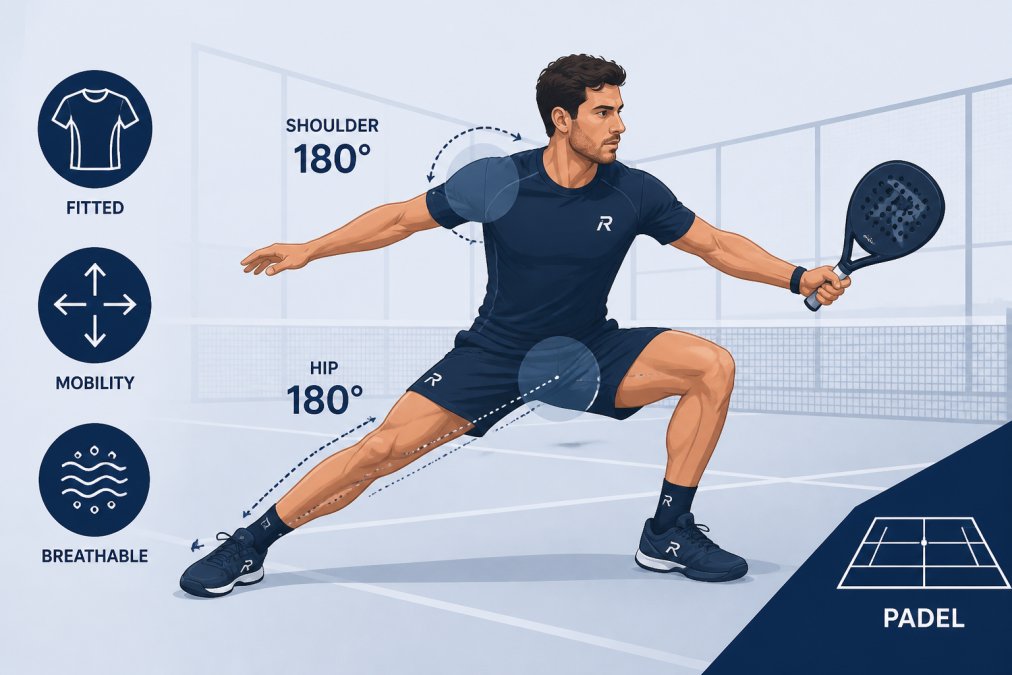
Padel requires apparel that won't restrict lateral reach or balance recovery after explosive directional changes. Seams must sit where they won't chafe during repetitive lateral movement. CrossFit puts clothing under different mechanical stress: barbell movements create friction at the shoulders, lower back, and thighs, while rope climbs and box jumps generate abrasion that destroys delicate fabrics. Both sports demand moisture-wicking fabrics, but the movement patterns, friction points, and durability requirements are distinct enough that compromising on either sport usually means underperformance.
Best Moisture-Wicking Fabrics for High-Intensity Training in Both Sports
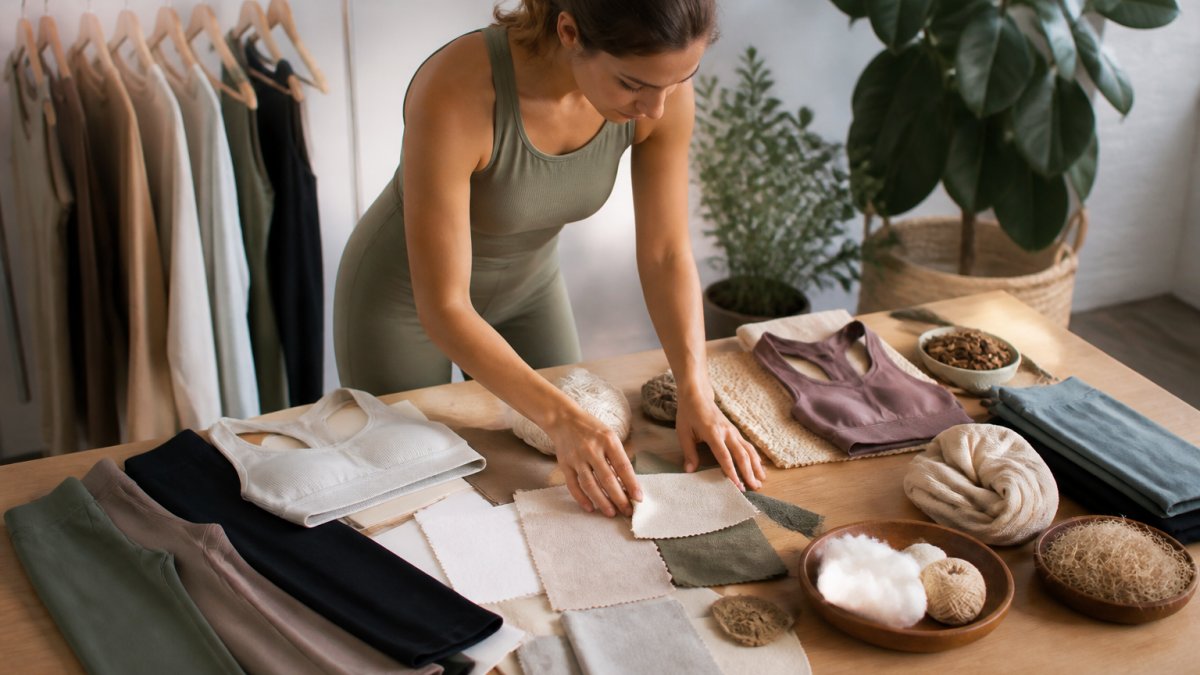
Synthetic blends pull sweat away from your skin faster than natural fibres, keeping you cooler and maintaining grip on equipment and court surfaces. Polyester-based blends dominate high-intensity activewear because they dry quickly and handle repeated washing without degrading. Nylon blends add durability and softness, whilst spandex (elastane) provides stretch, typically 5-10% in a blend.
Fabric weight matters: lighter fabrics (around 150-180 gsm) work well for padel's explosive movement and breathability, whilst CrossFit often benefits from slightly heavier fabrics (180-220 gsm) that provide durability against equipment friction. A strong synthetic blend with proven moisture management works adequately in both contexts, even if not perfect for either.
Look for smooth internal weaves rather than textured ones. Smooth fabrics reduce friction points against equipment and court surfaces, meaning less pilling and longer lifespan. Seam quality and fabric recovery after stretching should be evident, the fabric should snap back, not stay loose.
Footwear: Why One Shoe Cannot Do Both
Padel shoes and CrossFit shoes serve completely different biomechanical purposes, and wearing the wrong shoe increases injury risk.
Padel shoes are engineered for lateral stability and rapid directional changes on hard court. They have reinforced medial and lateral support to prevent ankle rolling during explosive lateral movement, with soles designed for quick directional changes and traction optimised for hard court surfaces.
CrossFit shoes prioritise vertical loading, heel stability for heavy squats, and grip for Olympic lifting platforms. They have minimal heel-to-toe drop to keep your foot flat and stable under loaded barbells, with rigid soles that transfer force efficiently during lifts.
Wearing a padel shoe to CrossFit means your heel isn't stable enough for heavy squats. Wearing a CrossFit shoe to padel means you'll overshoot pivots and lack the lateral support needed during explosive changes of direction. Ankle sprains from inadequate lateral support during padel and knee or hip injuries from unstable loading during CrossFit are common outcomes of compromising on footwear. Invest in sport-specific shoes, the biomechanical differences are too significant to bridge.
Durable Activewear for Functional Fitness That Also Handles Court Play
CrossFit is brutal on apparel. Rope climbs, pull-ups on rough bars, box jumps, and constant friction mean your clothing needs serious durability. Strong seam construction, quality synthetic blends, and reinforced stress points all translate reasonably well to padel.
A top designed to handle rope climbs will easily handle lateral movement and pivoting on court. Padel-specific apparel often sacrifices durability for lighter weight and maximum mobility, meaning it won't survive repeated rope climbs or heavy barbell work.
If you're building a hybrid wardrobe, start with pieces designed for CrossFit's durability standards. They'll handle padel without complaint. Then add padel-specific pieces for when court play is your primary focus.
Cross-Functional Gear Durability and Seam Integrity
Seam quality determines durability. Flat-lock seams are the gold standard for high-intensity activewear, they sit flush against your skin, reducing chafe points and lasting longer than traditional stitched seams. Double-stitched seams in high-stress areas like shoulders and underarms add durability without bulk. Reinforced stress points like underarm gussets and thickened fabric at friction points extend garment life.
When evaluating a piece for cross-functional use, check seams under good light. They should look even, tight, and well-finished.
What You Can Safely Cross Over and What You Cannot
Tops and Bottoms That Work for Both
Moisture-wicking technical tops with flat-lock seams, strong synthetic blends, and minimal restriction work well in both contexts. Compression shorts work across both sports effectively, providing hip and glute support for heavy squats without restricting lateral movement on court. High-waisted compression leggings are similarly versatile. Lightweight, stretchy shorts with internal liners work in both contexts if made from durable synthetic blends.
Gear That Needs to Stay Sport-Specific
Padel-specific skirts and shorts are optimised for freedom of movement and minimal weight. They won't survive rope climbs or heavy barbell work. Heavily padded CrossFit shorts designed to protect during box jumps feel clunky on court and reduce court feel. Sports bras designed for high-impact work won't provide enough support for heavy barbell work or box jumps. Compression sleeves and wraps are sport-specific too, padel sleeves are lighter, whilst CrossFit sleeves provide significant compression for joint support during heavy lifting.
Hygiene and Fabric Odour Management Across Different Training Intensities
Synthetic fabrics manage odour better than natural fibres because they dry faster. Bacteria that cause odour thrive in damp environments. Wash each piece once before washing, don't try to get multiple sessions from one top or shorts. Wash in cool water with sports-specific detergent targeting sweat and bacteria. Avoid fabric softeners, which reduce moisture-wicking performance.
Air-dry when possible. Machine drying generates heat that degrades synthetic fabrics over time. If managing multiple pieces across two sports, rotate your gear so you can wash every 2-3 days rather than daily, reducing wear and tear on individual items.
How to Build a Hybrid Athlete Wardrobe Without Overspending
Start with versatile core pieces designed for durability, then add sport-specific items for each discipline.
Begin with 2-3 technical tops made from strong synthetic blends with flat-lock seams in neutral colours. Add 2-3 pairs of compression shorts or leggings that work across both contexts. Invest in sport-specific footwear immediately, one pair of padel shoes and one pair of CrossFit shoes.
Once you have these core pieces, add sport-specific items. For padel, add lighter technical tops and padel-specific shorts. For CrossFit, add more heavily reinforced shorts and any compression sleeves you find useful.
A practical hybrid wardrobe might include: 3 versatile technical tops, 2 pairs of compression leggings, 1 pair of padel shoes, 1 pair of CrossFit shoes, 2 padel-specific pieces, 2 CrossFit-specific pieces, and appropriate sports bras. That's roughly 12-14 pieces total, more than a single sport requires, but far less than buying completely separate wardrobes.
REVIVE Activewear and Apparel offers scalable ordering for both single items and team quantities, so you can build your hybrid wardrobe piece by piece. When investing in quality hybrid pieces, prioritise durability, moisture management, and fit that doesn't compromise performance in either sport. Those three factors matter far more than brand names or marketing claims.
The hybrid athlete doesn't need two completely separate wardrobes, but they do need to be intentional about which pieces can genuinely cross over and which ones are better left sport-specific. Start with core pieces designed for durability and versatility, invest in sport-specific footwear without compromise, and add sport-specific apparel where performance or comfort genuinely matters. Get started with REVIVE Activewear and Apparel's technical activewear collection and build a hybrid wardrobe designed for athletes training multiple sports.
Frequently Asked Questions
What are the key differences between padel clothing and CrossFit gear?
Padel requires lateral stability and unrestricted shoulder rotation for rapid directional changes and overhead shots. CrossFit demands impact protection, reinforced seams for heavy lifting, and compression for joint support. Padel apparel prioritises lightweight breathable fabric and grip-friendly surfaces; CrossFit gear needs durability through repeated ground contact and sweat management during high-intensity intervals. One outfit can handle basic moisture-wicking and flexibility, but sport-specific features like padel's lateral support or CrossFit's reinforced construction cannot be compromised.
Can moisture-wicking fabrics handle the intensity of both padel and CrossFit?
Yes, quality moisture-wicking fabrics perform well in both sports because they manage sweat across high-intensity aerobic performance and explosive movements. However, the fabric weight and construction matter. Padel benefits from lightweight, quick-dry synthetics that allow full range of motion; CrossFit demands heavier-gauge moisture-wicking blends with reinforced seams that survive repeated friction and heavy loads. A mid-weight technical fabric with proven durability can cross over effectively if the base construction is sound.
Do I need specific shoes for padel versus CrossFit?
Absolutely. Padel shoes require lateral support and grip-specific outsoles for quick pivots on hard courts; CrossFit needs cushioning and stability for vertical impact and heavy lifting. Padel footwear has reinforced toe protection and lateral shanks; CrossFit shoes prioritise flat, stable platforms. Wearing padel shoes for CrossFit risks ankle instability during squats and deadlifts. Wearing CrossFit shoes on court reduces grip and increases injury risk during rapid directional changes. This is one area where compromise is not safe.
Is it better to have separate outfits for different sports?
For optimal performance and durability, yes, but strategic overlap saves money and wardrobe space. Tops and bottoms with strong moisture-wicking, breathable fabric, and unrestricted movement can work for both. Invest in sport-specific footwear, socks, and compression gear. This hybrid approach means you buy a few multipurpose pieces (base layers, shorts, vests) and supplement with sport-specific items (padel shoes, CrossFit lifting shoes, padel-grip socks). You avoid buying two complete outfits while protecting performance and injury prevention in each sport.
This article was written using GrandRanker