 how-to
How to Choose the Right Sports Bra Size
Table of Contents
- Why Getting Your Sports Bra Size Right Matters
- How to Measure for a Sports Bra
- How to Calculate Band and Cup Size
- Using a Sports Bra Size Chart and Calculator
- How Should a Sports Bra Fit
- Matching Support Level to Your Activity
- Common Fit Issues and How to Troubleshoot Them
- Handling Brand Size Differences and Fit Variations
- Frequently Asked Questions
Last Updated: October 10, 2026
Why Getting Your Sports Bra Size Right Matters
Choosing the right sports bra size directly affects your performance, prevents injury, and keeps you confident during activity. Most people wear the wrong size without realising it.
An ill-fitting sports bra causes shoulder pain, back strain, chafing, and limited range of motion. A proper fit lets you focus on your workout instead of adjusting straps or managing discomfort.
Finding your correct size takes a few minutes and three simple measurements. Once you know your dimensions, you can read size charts, troubleshoot fit problems, and choose the right support level.
How to Measure for a Sports Bra
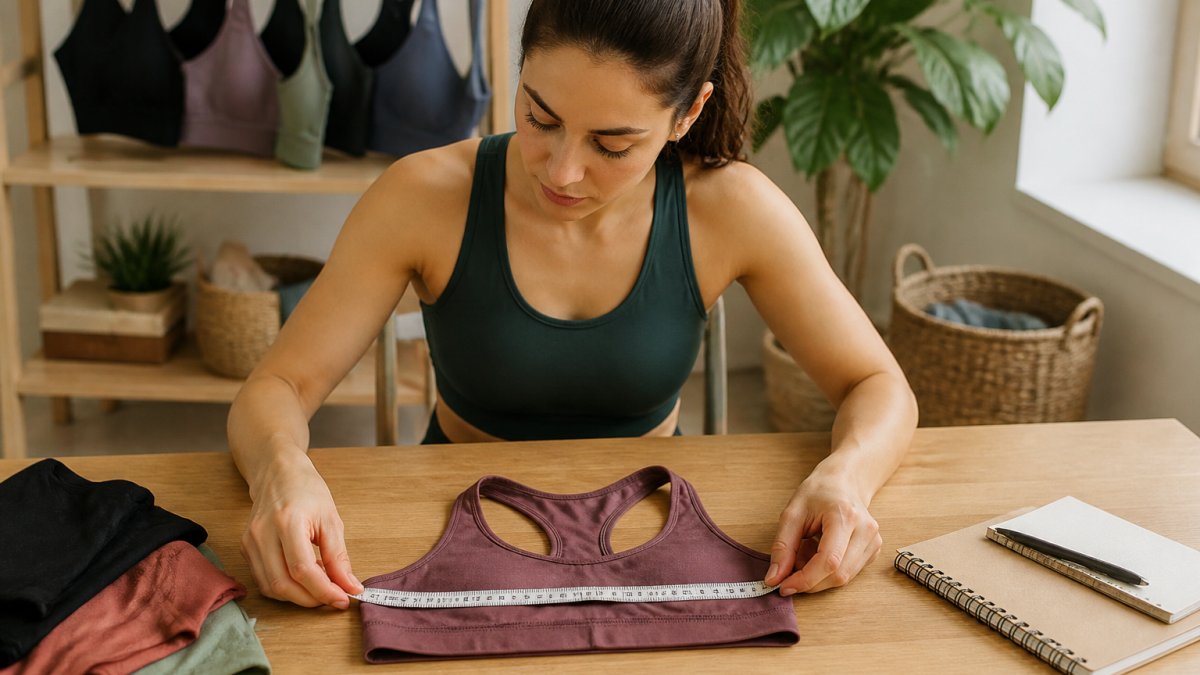
Use a soft measuring tape over bare skin. Keep the tape snug but not tight; it should sit flat without digging in.
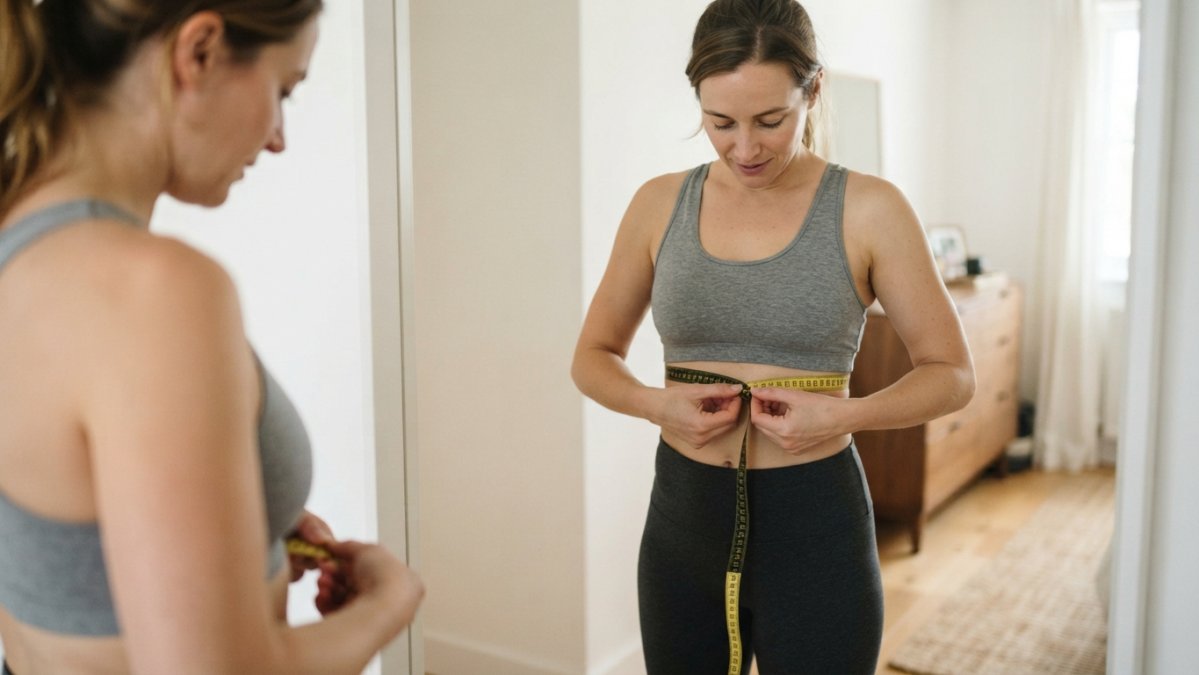
Measuring Your Underbust and Rib Cage
Stand straight and wrap the measuring tape snugly around your rib cage directly underneath your bust, keeping it parallel to the ground. This is your band size.
The band provides the foundation for all support. A band that's too loose won't support properly; one that's too tight restricts breathing and causes discomfort.
Measuring Your Bust at the Fullest Point
Measure around the fullest part of your bust at the level where your breasts are widest, keeping the tape parallel to the ground and at the same tension as your underbust measurement.
This determines your cup size. For every inch of difference between bust and underbust, you go up one cup size; for example, a 3-inch difference typically translates to a C cup.
How to Calculate Band and Cup Size
Round your underbust measurement to the nearest whole number for your band size. Then calculate the difference between your bust and underbust measurements.
Here's how the cup sizes work:
- 1-inch difference = A cup
- 2-inch difference = B cup
- 3-inch difference = C cup
- 4-inch difference = D cup
- 5-inch difference = DD or E cup
- 6-inch difference = E or F cup
For example, if your underbust is 34 inches and your bust is 37 inches (3-inch difference), your size is 34C, though fit varies between brands and styles.
Using a Sports Bra Size Chart and Calculator
Different brands use different sizing standards, so always check the specific brand's size chart before buying.
Reading a Size Chart Accurately
Find your band size in the left column, then move across to your cup size. Some charts include width measurements, which matters if you have narrow or broad shoulders.
Pay attention to the measurement range and notes about fit; some brands run tight, others run loose.
When to Use a Size Calculator
Online calculators can confirm your math, but always cross-reference the result with the actual size chart.
If a calculator gives you a size that feels off, trust your measurements; the brand's sizing system may differ from what you expected.
How Should a Sports Bra Fit
A well-fitting sports bra feels secure without being restrictive. You should breathe fully, move freely, and jump without bounce. The band sits level all around, and straps stay in place without digging.
Checking Band Fit and Support
The band should sit parallel to the ground at front and back. If it rides up, it's too loose. If it digs in or restricts breathing, it's too tight. You should slip one finger under the band comfortably.
Don't choose a loose band to compensate for cup size issues; this reduces support. If the band fits but cups are wrong, change the cup size.
Checking Cup Coverage and Fit
Cups should fully contain breast tissue with no spillage or gaping. No pinching or compression should cut off circulation. Spillage means you need a larger cup; gaping means you need a smaller cup.
The straps should sit on your shoulders without slipping off during movement. They should feel supportive without digging in. If straps slip constantly, the band might be too loose, or you might need a style with a tighter strap placement.
Matching Support Level to Your Activity
The right support level depends on your activity's impact and intensity. Wrong support causes discomfort, poor performance, and injury.
Low-Impact Activities: Yoga and Pilates
For yoga and Pilates, prioritise comfort and freedom of movement. Low-impact bras offer light compression and minimal bounce control with soft, stretchy fabrics.
Medium-Impact Activities: Gym and CrossFit
Gym work and CrossFit demand moderate support with encapsulation (individual cup support) and moderate compression.
Choose bras with structured cups, adjustable straps, and a secure band that keeps everything stable during burpees or weighted exercises.
High-Impact Activities: Running and Padel
Running and Padel tennis require maximum support with encapsulation, compression, and often underwire to minimise bounce.
Choose bras with strong band support, wide straps, structured cups, moisture-wicking fabric, and strategic seaming to reduce chafing.
Common Fit Issues and How to Troubleshoot Them
Even with the right size, fit problems can occur. Troubleshoot by identifying whether the issue stems from band size, cup size, strap placement, or style construction.
Band Rides Up or Feels Restrictive
If the band rides up your back, it's too loose. Go down one band size. If already at the smallest available, look for a style with tighter elastic or firmer band fabric.
If the band squeezes your ribs and restricts breathing, it's too tight; go up one band size.
If the band rides up only during high-impact movement, try the next size down or choose a style designed for your activity level; high-impact bras have firmer bands.
Spillage, Gaping, or Chafing
Spillage at the sides or top means cups are too small; go up one cup size.
Gaping at cup edges means cups are too large; go down one cup size. If gaping persists after sizing down, try a different style or brand with a shallower cup, as cup shape varies by design.
Chafing happens where the band or straps rub repeatedly. First check that your size is correct. If size is right, switch to a style with softer seams, smoother fabric, or moisture-wicking material.
Straps Slip or Bounce Occurs During Movement
Slipping straps often indicate the band is too loose. Try going down one band size. If the band is correct but straps still slip, choose a style with straps positioned closer together or a racerback style.
If bounce occurs with the right size, you may be undercorrecting for activity intensity. A low-impact yoga bra won't support running. Move to a higher-impact bra with encapsulation, compression, and often underwire. Test with a bounce test before buying.
When to Reassess Size Versus Trying a Different Style
If fit is still wrong after adjusting band and cup size, the issue may be style or brand. Breast shape, projection, and asymmetry affect fit even when measurements match. Read customer reviews for your body type and try a different style or brand if needed. Your measurements are constant; your size number changes between brands.
Handling Brand Size Differences and Fit Variations
Your size changes between brands. A 34C in one brand might be a 34B or 34D in another. Understanding why and how to navigate it is key to confident shopping.
Why Sizing Varies Between Brands
Sizing differences stem from band construction, cup shape, and cup depth. Some brands use firmer elastic (feels tighter); others use softer elastic (feels looser). Some design shallow cups for smaller breasts; others design deep cups for fuller breasts. A few use non-standard sizing systems.
Some brands grade cup sizes differently. Most follow the standard 1-inch difference per cup size, but some skip sizes or use half-sizes, which throws off calculations.
How to Compare Your Measurements Across Brand Size Charts
Step 1: Find the brand's size chart on their website under "Size Guide" or "Fit Guide." Look for band measurements (the actual circumference range) and cup measurements.
Step 2: Locate your underbust measurement in the band column. Some charts show a range like "32-34 inches," which accommodates both measurements with some give.
Step 3: Check the cup column for your bust measurement. Find the cup size that corresponds to your bust measurement in that band row.
If the chart only shows size numbers without measurements, rely on customer reviews to understand how that brand fits.
Reading Customer Reviews for Your Body Type
When size charts are vague or you're between sizes, look for customer reviews from people with your body type. Pay attention to comments like "I'm usually a 34C but this runs small, so I sized up to 34D."
Search for reviews mentioning strap placement if you have broad shoulders, band feel if you're between sizes, or asymmetry if one breast is noticeably larger.
Reviews also reveal whether a bra holds its shape after washing, which affects fit over time.
When You're Between Sizes
If your measurements fall between two sizes, for example, your underbust is 33.5 inches, you have two options. First, check the brand's size chart to see which size range includes 33.5 inches. Most charts show a range, so you'll know which size is intended for you.
In general, if you're between sizes, choose the larger band and smaller cup. A band that's slightly loose can be managed with a tighter strap adjustment or a style with firmer elastic. A cup that's too small causes spillage and reduces support, which is harder to fix.
Accounting for Breast Shape and Asymmetry
Measurements alone don't account for breast shape, how much projection (forward extension) your breasts have, whether they're fuller at the top or bottom, or whether they're asymmetrical. Two people with identical 34-inch underbust and 37-inch bust measurements might need different cup shapes.
If your breasts are asymmetrical (one noticeably larger than the other), fit both sides to the larger breast.
If you have high projection (breasts that extend forward significantly), you may need a deeper cup than your measurements suggest. Conversely, if you have low projection, a shallower cup might fit better.
Testing Fit When You Order Online
When ordering from a new brand, order your calculated size plus one size up and one size down if possible (many retailers offer free returns). Try all three sizes and note which feels best during movement, not just standing still. Wear the bra for at least 30 minutes and do some gentle jumping or arm circles to test how it performs during activity. This real-world test often reveals fit issues that standing in front of a mirror won't.
Frequently Asked Questions
How do I calculate what size sports bra I need?
Measure your underbust snugly and your bust at the fullest point. Subtract the underbust measurement from the bust measurement; each inch of difference equals one cup size. Add the underbust measurement to your cup size to find your band size. For example, a 32-inch underbust and 35-inch bust measurement equals a 34B sports bra size. Always check your brand's size chart, as sizing varies between manufacturers.
How should a sports bra fit during exercise?
A properly fitting sports bra should feel snug but not restrictive around the band, with no riding up or sliding side to side. Cups should fully cover your breast tissue without spillage or gaping. Straps should sit securely on your shoulders without slipping. Perform a bounce test: jump gently and check that movement is minimal and controlled. The bra should feel supportive throughout your activity without restricting your range of motion or causing chafing.
Why do different brands have different sports bra size charts?
Each manufacturer uses slightly different construction, fabric stretch, and cup depth, meaning a 34B in one brand may not fit the same as a 34B in another. Before purchasing, check the specific brand's size chart and read customer reviews mentioning fit. Many customers find they need to size up or down depending on the brand.
Should I size up or down for a sports bra?
Sizing depends on your band snugness preference and the specific brand's fit. If your calculated size feels too tight, try sizing up one band size and down one cup size to maintain the same cup volume. If it feels too loose, do the opposite. The key is that the band should sit level around your torso without riding up, and cups should provide full coverage without spillage. Always test the bounce and movement before deciding.