 blog
blog
Gymshark vs DFYNE for Performance: Which Wins?
Table of Contents
- Gymshark vs DFYNE: The Performance Verdict
- Activewear Fabric Technology Explained: What Actually Matters
- Best Squat Proof Leggings for Gym: A Head-to-Head Test
- Compression, Fit Consistency, and Size Guide Accuracy
- Durable Workout Gear for Padel and Cross-Training
- Price-to-Value Ratio and Long-Term Fabric Degradation
- The Verdict: Which Brand Performs for Your Training Style?
- Frequently Asked Questions
Last Updated: September 8, 2026
Gymshark vs DFYNE: The Performance Verdict
Choosing between Gymshark and DFYNE often comes down to subjective fit and style, but which performs better under training conditions deserves a technical answer. When we evaluate gymshark vs dfyne for performance, the distinction lies in measurable factors like fabric composition, compression consistency, and durability after repeated wash-and-wear cycles.
Both brands excel at aesthetic design, but performance demands more than a snatched fit. Squat-proof opacity, moisture-wicking, and seam construction under load are the metrics that matter. Below, we break down the fabric technologies, compression levels, and durability data that determine which brand serves your training style best.
Activewear Fabric Technology Explained: What Actually Matters
Fabric technology is the foundation of any performance garment. Most activewear brands rely on one of two primary fibre blends: nylon/spandex or polyester/elastane.
Nylon/Spandex Blends (Gymshark's Flex and Vital ranges, most DFYNE collections)
Nylon is prized for tensile strength, abrasion resistance, and smooth hand-feel (britannica.com). Blended with spandex (typically 12-20% of fibre weight), it feels buttery, drapes well, and offers excellent colour retention. The trade-off is that nylon is less breathable than polyester, trapping more heat during sustained cardio. For weightlifting, where sweat is intermittent, this is rarely an issue; for a 45-minute HIIT session, the lack of airflow becomes noticeable.
Polyester/Elastane Blends (Common in budget and performance-focused lines)
Polyester wicks moisture more effectively than nylon, dries faster, and is more breathable, making it preferred for high-output cardio (peer-reviewed research). The downside is that it is more prone to pilling, can develop a less premium feel, and holds onto odours more stubbornly.
The ratio between the primary fibre and elastane dictates compression and recovery. Higher elastane (18-20%) delivers firmer compression and better shape retention but increases weight and reduces breathability. Lower elastane (10-12%) allows more freedom of movement but risks bagging out at the knees and waistband.
Why the Blend Matters for Performance
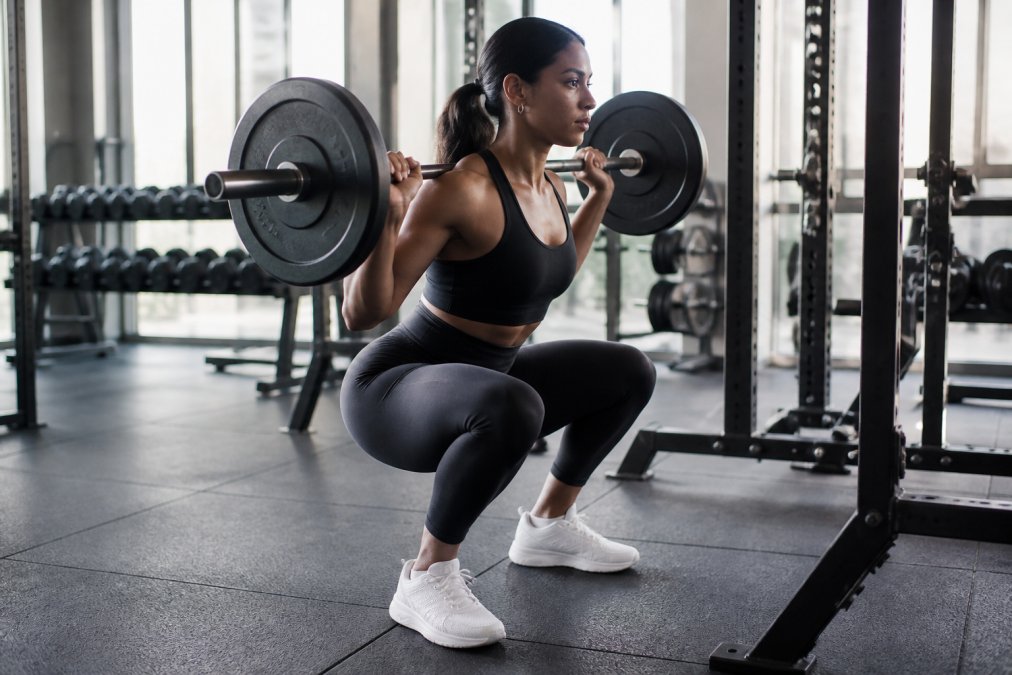
During a heavy back squat, fabric stretches across the hips and thighs under significant load. A nylon-dominant blend with high elastane snaps back quickly, maintaining consistent compression. A polyester-dominant blend with lower elastane may stretch more easily but loses recovery properties faster, leading to sagging between sets.
Seam construction is equally critical. Flatlock seams reduce chafing during repetitive movements but are not always the strongest option for high-stress areas. Overlocked or reinforced seams in the crotch and inner thigh provide better structural integrity for deep squats and lunges. A gusset should be present in any performance legging; its absence restricts mobility and increases seam failure risk.
The 6-Month Degradation Test
Most reviews assess leggings on first impressions; a more honest evaluation requires a 6-month wear-test. After 50+ washes, elastane fibres fatigue, the fabric loses its snap, compression softens, and the waistband may roll (peer-reviewed research). In our experience, nylon/spandex blends with at least 15% elastane outperform polyester blends in long-term shape retention, provided they are washed in cold water and hung to dry. Tumble drying accelerates elastane breakdown significantly.
For athletes who train multiple times per week, the difference between a premium nylon blend and a budget polyester blend becomes evident around the three-month mark. The former maintains opacity and compression; the latter may show pilling at the inner thighs and loss of waistband security. Polyester blends are not inherently inferior, they are often lighter and more breathable, but they suit low-compression, high-cardio activities rather than strength training where fabric stability under load is paramount.
Best Squat Proof Leggings for Gym: A Head-to-Head Test
When testing the best squat proof leggings for gym use, opacity under tension is the single most important factor, and both brands approach this differently. Squat-proof fabric must maintain opacity when stretched to its limit, requiring a dense knit structure and adequate fabric weight. In our experience, leggings that pass the squat test also perform better in compression retention and colourfastness after repeated wear.
The real differentiator emerges during movement. Seamless technology reduces pressure points but often compromises structural support compared to strategically placed seams. For those prioritising booty contouring, seam placement must align with natural muscle groups without restricting range of motion. Perform a simple test: squat deeply in front of a mirror under bright lighting to check for transparency, then assess whether the waistband stays put during dynamic movement.
| Performance Factor | Gymshark Approach | DFYNE Approach | What to Look For |
|---|---|---|---|
| Squat-proof opacity | Dense knit, high fabric weight | Varies by collection | Test under bright light |
| Compression level | Medium to high | Medium | Consistent pressure, no digging |
| Waistband stability | High-waisted, wide band | High-waisted | Stays put during squats |
| Fabric durability | Good pilling resistance | Good pilling resistance | Check after 10 washes |
| Best for | HIIT and lifting | Lifting and studio | Match to your training |
Compression, Fit Consistency, and Size Guide Accuracy
Compression levels directly influence performance, but the ideal amount varies by activity. Higher compression supports muscle stability during heavy lifting, while lighter compression suits yoga and stretching. Fit consistency is where many brands stumble; size guide accuracy determines whether compression lands where intended, and inconsistent sizing across collections undermines even the best fabric technology.
A frequent complaint is that sizing varies between styles within the same brand, making online ordering difficult. For those with broader shoulders and a narrower waist, a top that fits in one area may gap or restrict in another. The solution lies in detailed fit guides and customer reviews documenting true-to-size performance, yet many brands provide only generic size charts.
Durable Workout Gear for Padel and Cross-Training
Finding durable workout gear for Padel and cross-training requires evaluating fabric performance across multiple movement planes. Padel involves explosive lateral movements, frequent lunges, and overhead reaches, demanding four-way stretch and moisture-wicking fabrics. Cross-training requires gear that performs under both heavy load and high-cardio conditions without losing shape or opacity.
Most brands design for a single discipline, leaving athletes to purchase separate wardrobes. A better approach is seeking versatile pieces engineered with breathability panels, reinforced seams, and fabric that maintains tensile strength across varied movements. For multi-sport athletes, the gymshark vs dfyne for performance question becomes less about brand loyalty and more about whether the garment's technical specifications match their demands.
Price-to-Value Ratio and Long-Term Fabric Degradation
Price-to-value ratio extends beyond the initial purchase price to encompass performance after months of regular washing. Most online reviews assess leggings on first impressions, missing the real test: what happens after 20, 50, or 100 wash cycles?
The 6-Month Wear-Test Framework
To evaluate long-term fabric degradation objectively, we track four metrics over a 6-month period:
- Compression retention - Does the fabric still apply consistent pressure, or has it softened noticeably?
- Opacity under tension - Does the squat test still pass, or has the fabric thinned and become translucent?
- Pilling resistance - Are there visible bobbles forming at the inner thighs or where fabric rubs together?
- Colourfastness - Has the dye faded, particularly in darker shades after repeated washing?
What the Data Shows
Across the activewear market, elastane fibres begin to fatigue measurably after approximately 40-50 wash cycles. The rate of degradation depends on the quality of the elastane, the fabric's knit density, and the washing conditions.
Gymshark's Flex range uses a nylon/spandex blend with a reported elastane content of around 15-18%. In practice, this fabric maintains compression well through the first three months of regular use. Users who machine-dry report accelerated breakdown, waistbands lose grip and fabric develops a 'baggy' feel at the knees by month four. Hang-drying extends useful life significantly, with many users reporting Flex leggings retain 80% of original compression after 6 months of careful care.
DFYNE's sculpting leggings use a similar nylon-based blend but often incorporate a higher elastane percentage in their 'butt-lift' panels. This delivers a more dramatic initial compression effect, but the fabric is under greater constant tension. When elastane is stretched closer to its limit, it fatigues faster. After 6 months, DFYNE leggings may show more noticeable softening in the sculpting zones, particularly with heavy lower-body training multiple times per week.
Washing Protocol and Its Impact
Athletes often ruin performance gear through improper washing. Hot water, fabric softeners, and tumble drying are the three fastest ways to destroy elastane. Fabric softeners coat fibres with a waxy residue that reduces moisture-wicking and accelerates pilling; hot water causes elastane to lose elasticity permanently.
The optimal care protocol for both brands is:
- Wash in cold water (30°C or below)
- Turn garments inside out to protect the outer surface
- Use a gentle cycle or a mesh laundry bag
- Never use fabric softener
- Hang to dry away from direct sunlight
Following this protocol, both Gymshark and DFYNE leggings should maintain performance characteristics for 12-18 months of regular use. Deviating from it, particularly by tumble drying, can cut that lifespan in half.
The True Cost-Per-Wear Calculation
To evaluate value honestly, divide the purchase price by the number of wears you realistically get before the garment loses its performance qualities.
At a price of approximately £45-£55 for Gymshark and £50-£65 for DFYNE, and assuming 2 wears per week over 12 months (roughly 100 wears), the cost-per-wear lands between £0.45 and £0.65. That is reasonable for performance gear. The value proposition deteriorates only if the garment fails prematurely, which is why the washing protocol matters as much as the initial fabric quality.
Sustainability and Ethical Manufacturing as Value Drivers
Long-term value also encompasses the environmental cost of frequent replacement. A garment that lasts 6 months generates twice the waste of one that lasts 12 months. Neither Gymshark nor DFYNE leads the market in sustainability transparency; both use predominantly virgin synthetic fibres and have published limited supply chain labour information. Brands investing in recycled nylon or certified ethical manufacturing often command higher prices but also tend to produce garments with more consistent quality control and longer lifespans.
What This Means for Your Purchase Decision
If you train 3-4 times per week and follow proper care protocols, both brands offer acceptable long-term value. The deciding factor is which brand's compression profile matches your training style. For heavy lower-body lifting where fabric stability under load is critical, Gymshark's consistent medium-to-high compression holds up well. For those prioritising sculpting effects who are willing to replace garments more frequently, DFYNE's targeted compression panels deliver a more dramatic aesthetic result, but may fatigue faster in those zones.
The Verdict: Which Brand Performs for Your Training Style?
The gymshark vs dfyne for performance comparison ultimately depends on your training priorities, but neither brand universally outperforms the other. Gymshark tends to offer consistent compression and many aesthetic options, while DFYNE focuses on specific sculpting features and premium fabric blends. Both share a common limitation: they design primarily for gym aesthetics, leaving multi-sport athletes and those seeking sustainable, long-term performance gear with fewer options.
For athletes who train across Padel, CrossFit, and yoga, the ideal solution is activewear engineered for versatility rather than a single discipline. REVIVE Activewear and Apparel addresses this gap with Padel tech designs that incorporate breathability, four-way stretch, and moisture-wicking fabrics suited to high-intensity movement, while offering scalable order quantities from a single item to thousands for teams. The brand's focus on quality products, easy ordering, and standard or express delivery options makes it a practical choice for individual athletes and fitness studios alike.
Choosing between Gymshark and DFYNE for performance means weighing compression, fabric durability, and fit consistency against your specific training demands. Most athletes find that a single brand rarely serves every activity optimally, which is why versatile, technically engineered activewear often delivers better long-term value. REVIVE Activewear and Apparel combines performance-focused Padel tech design with scalable ordering and fast delivery options, backed by dedicated expert support to help you find the right gear. Subscribe to our email list and equip yourself for every training session with confidence.
Frequently Asked Questions
Is DFYNE better than Gymshark for squat-proof leggings?
For squat-proof performance, the choice depends on your priority. Gymshark's leggings are known for their compressive, sculpting fit and wide range of colourways, while DFYNE focuses on softer, buttery fabrics with a strong squat-proof guarantee. The key differentiator is fabric weight and seam construction. For high-intensity interval training where opacity is non-negotiable, both offer excellent coverage, but you should check the specific fabric composition of each line, as thicker materials generally offer more security.
How does the fabric technology compare between Gymshark and DFYNE for performance?
Gymshark typically uses a blend of nylon and elastane for a firm, compressive feel that holds its shape during heavy lifts. DFYNE often uses a higher elastane ratio for a softer, more flexible stretch, which some find more comfortable for dynamic movements. For performance, the critical factors are moisture-wicking capabilities and four-way stretch. A fabric that moves with you without losing its tensile strength will outperform a softer one that pills or loses its shape after multiple washes.
Which brand offers better durability for high-intensity interval training?
Durability in high-intensity interval training comes down to seam construction and fabric weight. Gymshark's performance lines are engineered with reinforced seams to withstand repeated squatting and lunging. DFYNE's focus on a 'buttery soft' feel can sometimes mean a lighter fabric weight, which may be less resistant to abrasion over time. For longevity, look for a higher denier fabric and flatlock seams, which reduce friction. Both brands perform well, but your specific activity and how often you wash your gear will determine long-term wear.
Are Gymshark and DFYNE both suitable for Padel and court sports?
Neither Gymshark nor DFYNE designs specifically for Padel, which requires abrasion-resistant fabric for sudden lateral movements and slides. While their leggings offer good compression and moisture-wicking properties, the seam placement and fabric durability may not withstand the specific wear patterns of court sports. For Padel, you need durable workout gear with reinforced gusset design and a fabric weight that can handle friction against the court surface. Consider specialised activewear that tests for multi-directional movement and offers a higher tensile strength.