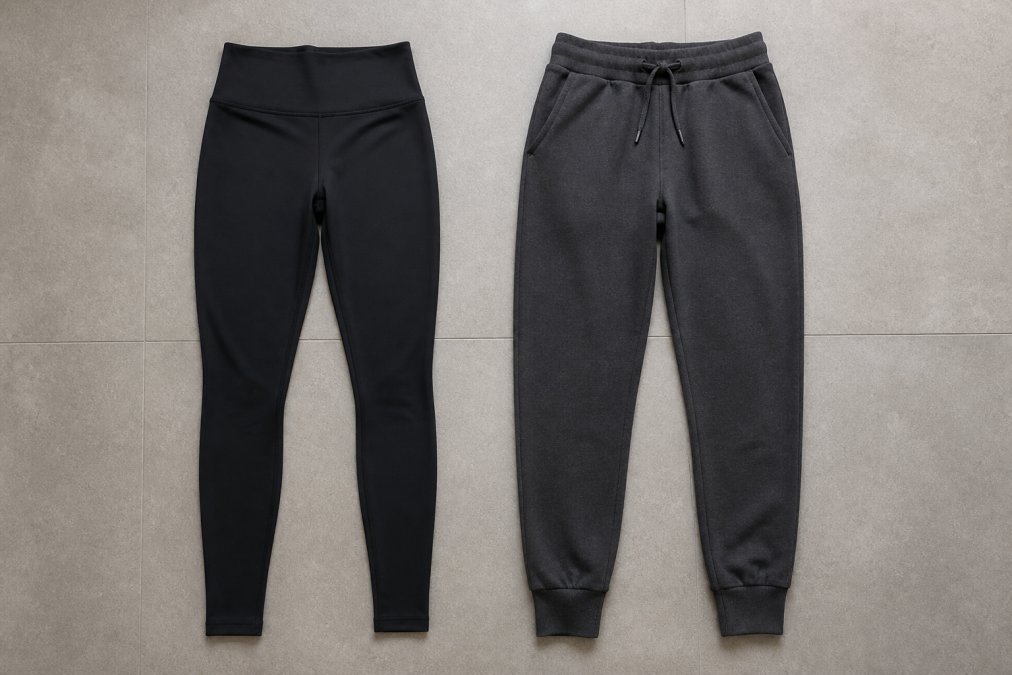
 comparison
Leggings vs Joggers for Gym Workouts
Table of Contents
- Leggings vs Joggers: Key Differences
- Best Gym Leggings for Squats and Heavy Lifting
- Moisture-Wicking Gym Wear Benefits
- Joggers for Warm-Ups, Recovery, and Low-Impact Work
- How to Choose Gym Clothes for Padel Tennis
- Leggings and Joggers: Workout Type Comparison
- Fit, Body Type, and Personal Preference
- Frequently Asked Questions
Last Updated: September 21, 2026
Leggings vs Joggers: Key Differences
The difference between leggings and joggers shapes how your body moves, how much you sweat, and whether you'll want to wear the gear again. Leggings vs joggers isn't just about style, it's about performance, support, and the specific demands your workout places on your body.
Leggings are tight-fitting, made from high-stretch synthetic blends for freedom of movement and muscle visibility. Joggers are looser, with a tapered leg and heavier fabric. Understanding these differences helps you pick the right gear for your training goals.
Defining leggings and joggers
Leggings are form-fitting bottoms made from four-way stretch fabrics, offering compression and full range of motion. Joggers are relaxed-fit trousers with a tapered hem, deeper pockets, and higher waistband, prioritising comfort over compression. The key difference is silhouette: leggings create a sleek outline; joggers create a relaxed, casual look.
Fabric and material construction
Leggings use nylon-spandex or polyester-spandex blends for four-way stretch, moisture-wicking, and durability. Joggers use heavier cotton-polyester or performance fabrics like Powervita, creating airflow and relaxed drape.
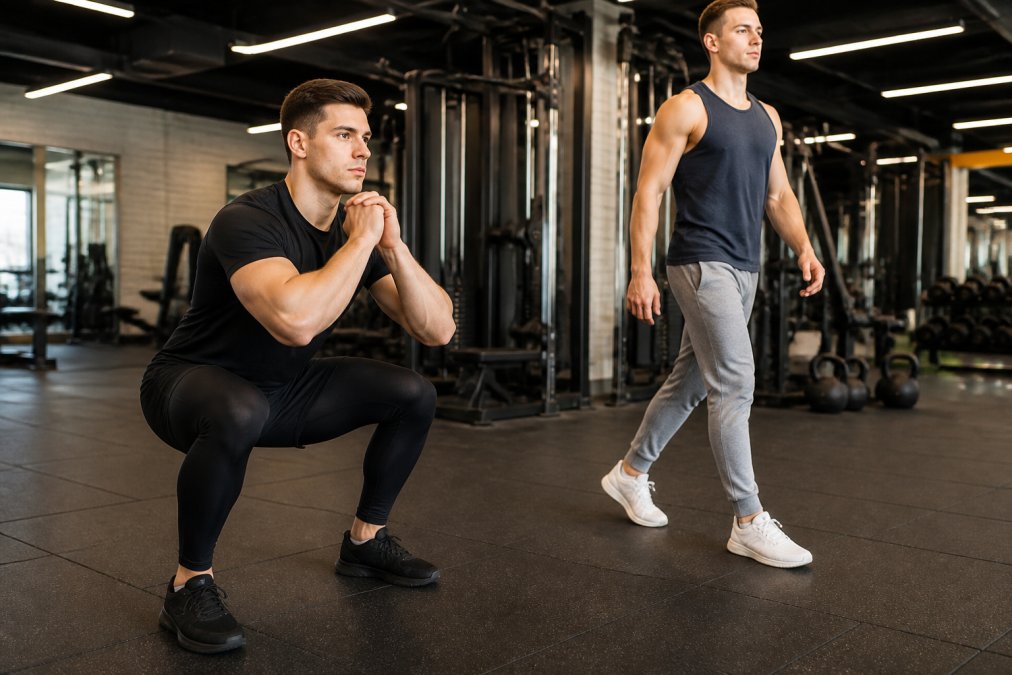
Best Gym Leggings for Squats and Heavy Lifting
Leggings designed for heavy lifting combine compression, opacity, and durability, engineered specifically for strength training demands.
Compression and muscle support
Compression stabilises muscles during explosive movements and aids blood flow for recovery. During heavy squats, compression keeps muscle fibres aligned, improving performance and reducing soreness. The trade-off: compression leggings feel snug and may feel restrictive during low-impact work like yoga.
Squat-proof opacity and durability
Squat-proof fabric maintains opacity when stretched. Quality leggings use reinforced seams and high-denier fabric that resists pilling and tearing.
Moisture-Wicking Gym Wear Benefits
Moisture-wicking fabrics pull sweat away from your body and disperse it across the fabric surface, where it evaporates faster.
Sweat management and breathability
Synthetic fibres like polyester and nylon have hydrophobic structures that repel water, spreading sweat across a larger surface area for faster evaporation. This keeps your skin drier and cooler during high-intensity training.
Thermal regulation during intense training
Thermal regulation is how your body maintains its core temperature. During intense exercise, your muscles generate heat. Moisture-wicking fabrics help your body shed that heat by moving sweat away from your skin where evaporation can occur. This prevents overheating and lets you maintain performance longer.
Breathability works alongside moisture-wicking. Fabrics with looser weaves allow air circulation, which accelerates evaporation. Joggers often have better breathability than compression leggings because the looser fit creates more air gaps.
Joggers for Warm-Ups, Recovery, and Low-Impact Work
Joggers aren't just casual wear, they're functional gym bottoms designed for specific training phases. They work best during warm-ups, recovery days, and low-impact cardio where compression and opacity matter less than comfort and movement freedom.
Tapered fit and freedom of movement
A tapered fit means the jogger leg narrows from hip to ankle, preventing excess fabric from dragging on the ground or getting caught during movement. This design balances comfort with functionality.
The looser fit through the hip and thigh gives you more range of motion than leggings. During warm-ups, this matters, you can move naturally without feeling constrained. Joggers also allow more air circulation, which keeps you cooler during low-intensity work where sweat management is less critical.
Gym-to-street versatility
Joggers transition easily from the gym to everyday wear. You can wear them to the gym, through your warm-up, and then grab coffee without changing. This versatility appeals to busy gym-goers who value efficiency.
Leggings, by contrast, signal "I'm working out" to everyone around you. Some people love this; others prefer the flexibility of joggers. If you're someone who values gym-to-street wear, joggers are the practical choice.
How to Choose Gym Clothes for Padel Tennis
Padel tennis demands lateral movement, explosive starts, and rapid direction changes. Your gym wear must support these movements without restricting you. This is where understanding fabric properties and fit becomes critical.
Range of motion and lateral movement
Padel requires constant side-to-side movement. Leggings with four-way stretch allow your legs to move in all directions, forward, backward, and side to side, without resistance. The elastane (spandex) content in quality leggings typically ranges from 15-25%, which provides that multi-directional stretch.
Joggers, with their looser fit, also allow lateral movement but with less compression support. For Padel, where you're making explosive cuts and quick pivots, compression leggings give you an edge. Your muscles feel supported during these rapid directional changes, which can improve performance and reduce injury risk.
REVIVE Activewear and Apparel has designed Padel-specific tech into their activewear, recognising that Padel players need gear engineered for court-specific demands. The focus on lateral movement and abrasion resistance reflects what Padel athletes actually experience on the court.
Durability and abrasion resistance
Padel courts have rough surfaces. Your gym wear will experience friction from diving, sliding, and repeated contact with the court. Abrasion-resistant fabric uses a tighter weave and higher denier count to withstand this friction without pilling or tearing.
Leggings with reinforced seams and high-quality synthetic construction hold up better during Padel than joggers. The tight fit also means less fabric flapping, which reduces the surface area exposed to abrasion. If you're playing Padel twice weekly, investing in durable, abrasion-resistant leggings makes financial sense.
Leggings and Joggers: Workout Type Comparison
Different workouts demand different gear. Understanding which bottom suits your training style helps you make a single purchase that actually works for your routine.
High-intensity interval training and CrossFit
HIIT and CrossFit combine explosive movements, heavy lifting, and rapid transitions. You need compression, opacity, and sweat management. Leggings are the clear choice here.
During burpees, box jumps, and kettlebell swings, leggings stay in place and support your muscles. Joggers, with their looser fit, can ride up or shift during explosive movements, which breaks your focus and risks exposure.
Cardio, running, and aerobic exercise
Steady-state cardio and running benefit from leggings' compression and moisture-wicking. During a 30-minute run, compression reduces muscle oscillation and fatigue. Moisture-wicking keeps sweat off your skin, preventing chafing.
However, some runners prefer the breathability of joggers for low-intensity aerobic work.
Yoga, Pilates, and flexibility work
Yoga and Pilates prioritise unrestricted movement and comfort. Leggings work well here, but softer, less compressive options are better.
Fit, Body Type, and Personal Preference
No single bottom works for everyone. Your body shape, personal comfort, and how you feel in tight versus loose clothing all influence the right choice.
Finding the right fit profile for your shape
Leggings come in different rise heights, low, mid, and high-rise. High-rise leggings sit at your natural waist and work well for people with longer torsos or who prefer full coverage. Mid-rise works for most body types. Low-rise leggings suit shorter torsos but offer less coverage during forward folds.
Elastic waistband and ergonomic design
A quality elastic waistband should stay in place without rolling or sliding. During squats, the waistband shouldn't dig into your stomach. During running, it shouldn't bounce or shift. Ergonomic design means the waistband is wide enough to distribute pressure across your waist rather than concentrating it in one spot.
| Workout Type | Best Choice | Why |
|---|---|---|
| Heavy lifting, squats, deadlifts | Leggings | Compression support and squat-proof opacity |
| HIIT and CrossFit | Leggings | Muscle support during explosive movements |
| Padel tennis | Leggings | Lateral movement and abrasion resistance |
| Yoga and Pilates | Leggings (soft) | Unrestricted movement and body visibility |
| Steady-state running | Leggings or joggers | Leggings for compression; joggers for breathability |
| Warm-ups and recovery | Joggers | Comfort and gym-to-street versatility |
| Casual cardio | Joggers | Airflow and relaxed fit |
Frequently Asked Questions
Should you wear joggers to the gym for high-intensity training?
Joggers work best for warm-ups, recovery sessions, and low-impact work. For high-intensity training like HIIT or heavy lifting, leggings offer better support, compression, and range of motion. Excess fabric on joggers can shift during explosive movements, and they lack the muscle support that compression provides. Choose joggers for cool-downs and gym-to-street transitions, but prioritise leggings when intensity matters.
What are the main performance differences between leggings and joggers?
Leggings provide compression, muscle support, and unrestricted range of motion, ideal for strength training and cardio. Joggers offer comfort, breathability, and a relaxed fit suited to warm-ups and recovery. Leggings typically feature four-way stretch and moisture-wicking synthetic fabrics, whilst joggers prioritise airflow with a tapered leg. Your choice depends on workout intensity: high-intensity work favours leggings; low-impact sessions favour joggers.
How do I know if leggings are suitable for my body type and workout style?
Look for high-rise waistbands if you prefer secure coverage, and check the fabric weight, heavier synthetics offer more support for squats and weightlifting. For Padel tennis and lateral movement, prioritise four-way stretch and breathability. If you have a narrow waist and broad shoulders, seek brands with detailed fit guides and customer reviews showing true-to-size results. Test the waistband fit first; it should stay in place without rolling or pinching during your specific movements.
Are moisture-wicking gym clothes really necessary, or is regular cotton fine?
Moisture-wicking synthetic fabrics actively pull sweat away from your skin, keeping you dry and regulating body temperature during intense exercise. Cotton absorbs sweat and holds moisture, leading to chafing, discomfort, and poor thermal control. For any sustained gym session, especially high-intensity training, moisture-wicking materials improve performance, reduce skin irritation, and enhance durability through repeated washing. They're not luxury; they're functional for serious training.