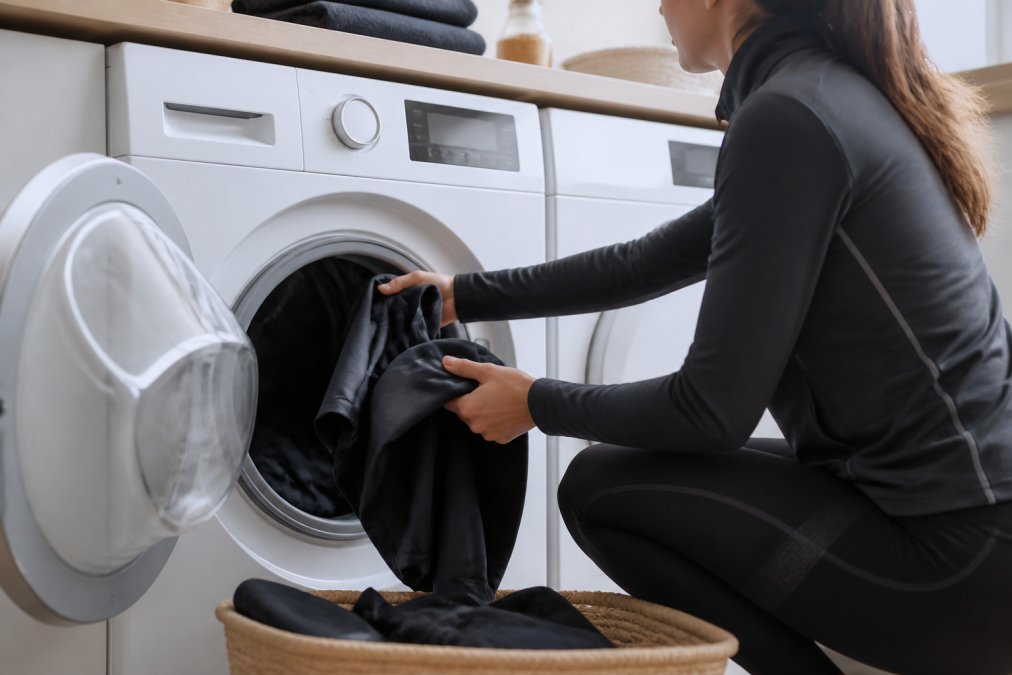
 ultimate-guide
Activewear That Lasts After Washing: 2026 Care Guide
Table of Contents
- Why Your Activewear Falls Apart in the Wash
- Best Durable Activewear Fabrics for Longevity
- Signs of Low Quality Activewear to Avoid
- How to Wash Gym Clothes to Keep Them New
- Chemical-Free Laundry Care for Sensitive Skin and Gear
- Repair and Mending Services to Extend Activewear Life
- Microplastic Filtration Solutions for Wash Day
- How REVIVE Activewear and Apparel Builds Gear That Lasts
- Frequently Asked Questions
Last Updated: September 13, 2026
Why Your Activewear Falls Apart in the Wash
Activewear that lasts after washing comes down to two things: what the fabric is made of and how you treat it once it leaves the gym bag. This guide from REVIVE Activewear and Apparel explains why so much kit degrades in the machine, which fabrics survive repeated wash cycles, and the exact routine that keeps gym clothes performing for years rather than months.
Most people blame the garment. In practice, the washing machine does more damage than the workout ever does. Heat breaks down elastane, harsh detergent strips away wicking finishes, and a tumbling drum grinds fibres against each other until they pill and thin.
The Hidden Damage of Heat and Detergent
Heat is the single biggest killer of stretch. Wash at 30°C or below. Hot cycles relax the elastane that gives activewear its shape recovery, and once that elasticity goes, the garment sags permanently.
Detergent matters just as much. Biological powders contain enzymes that break down protein-based stains, and they will happily chew through natural fibres too. Fabric softener is worse: it coats the wicking surface and blocks breathability. The Energy Saving Trust guidance on cooler laundry cycles confirms that lower-temperature washing is both kinder to fabrics and cheaper to run.
Best Durable Activewear Fabrics for Longevity
The best durable activewear fabrics are high-gauge recycled polyester blends, nylon-elastane knits and merino wool. What separates gear that survives fifty washes from gear that sags after five is not the fibre name on the label, it is the fibre construction, the elastane percentage and the knit structure.
What actually determines wash durability
Four variables do most of the work:
- Filament vs staple fibre. Continuous filament yarns (standard in performance polyester and nylon) have no short fibre ends, so they resist pilling and shedding far better than staple-spun yarns. Staple yarns feel softer but fray at the surface over time.
- Elastane percentage and denier. Most leggings sit between 12% and 25% elastane. Below roughly 10%, shape recovery after repeated stretching is limited. Above 25%, the garment feels compressive but the elastane, the weakest link in any blend, degrades faster under heat and chlorine. Finer denier elastane gives a lighter feel; heavier denier lasts longer under load.
- Knit structure. Interlock and double-knit constructions hold shape better than single jersey because they have two faces of yarn stabilising each other. Look for a dense, opaque hand-feel when held to light.
- Colouration method. Solution-dyed (dope-dyed) yarns carry pigment inside the fibre rather than on the surface, so colour survives repeated washing without the fading that afflicts piece-dyed fabric.
Natural vs synthetic: how each one fails
Natural and synthetic fibres fail in different ways, and the failure mode matters more than the fibre category.
Merino wool is soft, naturally odour-resistant and temperature-regulating, which means it can be worn several times between washes, fewer cycles, less mechanical wear. Its weakness is mechanical: agitation and heat cause felting and shrinkage, so it needs a wool cycle, a mesh bag and flat air drying. Fine-gauge merino (around 17-19 micron) feels best against skin but is more delicate than coarser grades.
Recycled polyester and nylon are tougher in the drum and dry quickly, but they shed microplastics with every wash and can pill when tumbled with rough fabrics like towels or denim. Nylon generally has better abrasion resistance than polyester and a cooler hand-feel, which is why it dominates high-intensity and compression garments.
Cotton-heavy knits feel pleasant but absorb sweat, dry slowly and lose shape quickly, fine for casual wear, poor for training.
The blend that works
For most people, the practical answer is a synthetic base with a meaningful elastane content and a dense knit. A recycled polyester or nylon interlock with 15-20% elastane, solution-dyed where possible, hits the durability sweet spot: it holds shape, resists pilling and keeps its wicking finish longer than a cheap cotton-heavy knit.
| Fabric | Wash durability | Best for | Watch out for |
|---|---|---|---|
| Recycled polyester (filament, interlock) | High | Gym, padel, running | Microplastic shedding |
| Nylon-elastane blend | High | High-intensity training, compression | Chlorine damage in pools |
| Merino wool (fine gauge) | Medium | Yoga, low-sweat training, travel | Shrinkage and felting if tumble dried |
| Cotton-heavy knit | Low | Casual wear only | Loses shape, slow drying |
A note on long-term wear testing
Most reviews you read are first impressions written within days of purchase. The information that actually matters, how a garment behaves at six months and one year, is rarely published. If you are building a durable activewear wardrobe, keep a simple log: note the date of purchase, the wash count and any changes in stretch, pilling or colour. After a year you will have a personal wear-test dataset that is more useful than any single review, and you will know exactly which brands and blends deserve a repeat purchase.
Signs of Low Quality Activewear to Avoid
Low quality activewear shows itself in the seams and the stretch. Run your hands along the stitching: loose, uneven seams will split under tension. Stretch the fabric gently and let go. Quality gear snaps back immediately; poor gear stays stretched.
Other red flags:
- Fabric that feels thin and see-through when held to light
- No elastane percentage listed on the care label
- Pilling along the inner thigh within the first few wears
- Wicking claims with no care instructions to protect the finish
- Seam integrity that fails at the crotch or underarm after one wash
A common mistake is judging activewear by feel alone in the shop. Squeeze the fabric, check the seams, and read the label. That tells you more than the price tag.
How to Wash Gym Clothes to Keep Them New
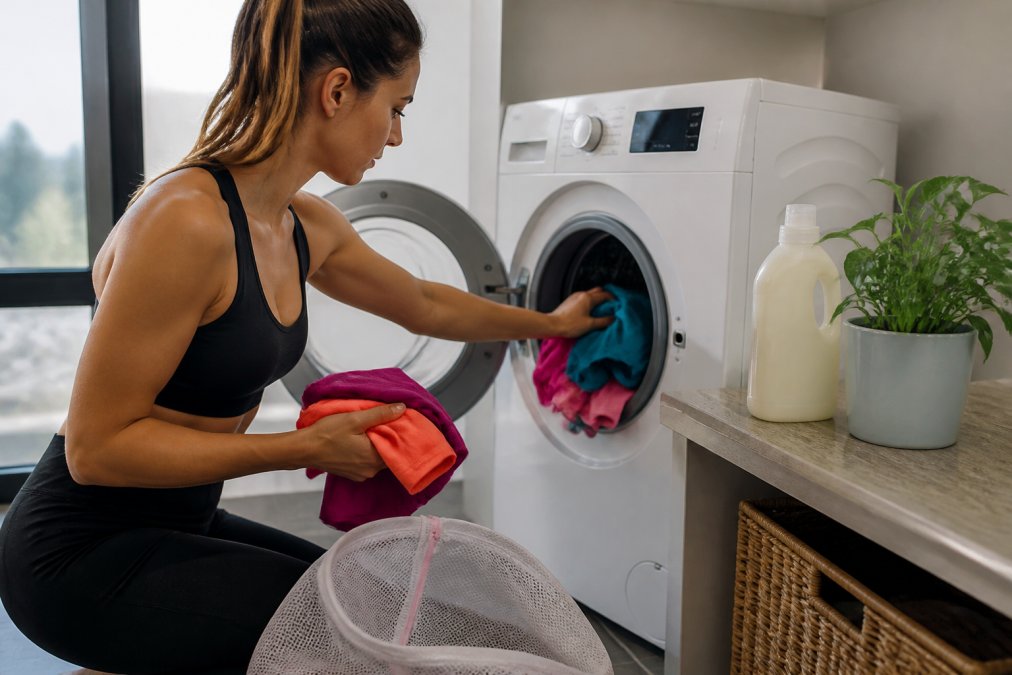
Wash gym clothes inside out, in cold water, on a gentle cycle, with a small amount of non-biological detergent. Skip the fabric softener, use a mesh laundry bag, and air dry wherever possible. This routine protects elasticity, wicking finishes and seam integrity all at once, but the details are where the difference between six months and six years actually lives.
Why each step matters
- Inside out reduces surface abrasion on the face of the fabric, which is where pilling and colour fading show first.
- Cold water (30°C or below) keeps elastane below the temperature at which it starts to relax and lose recovery. It also protects wicking finishes, which are surface treatments that heat can strip.
- Non-biological detergent avoids the proteolytic enzymes in biological powders. Those enzymes break down protein-based stains, but they also attack protein fibres like wool and silk, and they offer no benefit to synthetic performance fabrics.
- No fabric softener, no bleach. Softener leaves a waxy residue that coats the wicking surface and blocks breathability. Chlorine bleach degrades elastane and nylon.
- Mesh laundry bag cushions small items and anything with zips or hooks, preventing them from snagging other garments and from snagging themselves.
- Air drying avoids the heat of a tumble dryer, which is the single fastest way to set fibre fatigue into a garment.
Step-by-step washing routine
- Turn every garment inside out and empty the pockets.
- Place small items, sports bras and anything with zips or hooks into a mesh laundry bag.
- Sort by colour and fabric weight; never wash activewear with towels, denim or anything with a rough surface.
- Add a small dose of non-biological detergent, roughly half the manufacturer's recommended amount for a normal load. Excess detergent leaves residue that traps odour.
- Run a cold wash cycle at 30°C or below on a gentle or synthetic setting. A short cycle is usually enough; activewear is not heavily soiled.
- Hang or lay flat to air dry, away from direct heat and sunlight. Reshape garments while damp to help them hold their cut.
Wash activewear after two or three wears, not after every session, unless it is heavily soiled or visibly dirty. Fewer wash cycles means less fibre degradation, less microplastic shedding and a longer life for the garment. Air garments between wears to let them dry fully.
Microplastic filtration on wash day
Synthetic fibres shed microplastics with every wash, and textiles are recognised as a significant source of microplastic pollution in waterways. Two practical solutions reduce what leaves your machine:
- A dedicated wash bag such as a Guppyfriend-style bag traps the fibres that shed from the garments inside it. You empty the captured fibres into general waste after the cycle.
- An inline washing machine filter fitted to the drain hose captures a broader share of fibres from the whole load, not just the items in the bag. These are increasingly available as retrofits and are worth considering if you wash synthetics regularly.
Pair filtration with fewer, fuller, colder washes. A full drum cushions garments against friction, and less agitation means less shedding overall.
Drying methods that protect fibres
How you dry matters as much as how you wash. A tumble dryer on a high setting will undo the benefits of a careful cold wash within a few cycles.
- Air dry flat for knits and anything with elastane, so the garment does not stretch under its own weight.
- Hang dry structured items and anything with seams under tension, using a padded hanger to avoid shoulder distortion.
- Avoid direct heat, radiators, direct sunlight and tumble dryers all accelerate fibre fatigue.
- If you must tumble dry, use the lowest heat setting and remove garments while still slightly damp.
Chemical-free laundry care for sensitive skin and gear
Chemical-free laundry care means avoiding optical brighteners, synthetic fragrance and fabric softener. These additives leave residue on the fabric that irritates sensitive skin and blocks the breathability of performance apparel.
Look for fragrance-free, non-biological detergents, or use soap nuts and washing soda for a gentler clean. The NHS advice on skin-friendly laundry for sensitive skin recommends rinsing thoroughly and avoiding unnecessary additives. An extra rinse cycle helps remove any residue left behind.
This approach protects your skin and your gear at the same time. Residue buildup is one of the quiet reasons wicking fabric stops working, the finish is still there, but it is buried under detergent and softener film.
Chemical-Free Laundry Care for Sensitive Skin and Gear
Chemical-free laundry care means avoiding optical brighteners, synthetic fragrance, and fabric softener. These additives leave residue on the fabric that irritates sensitive skin and blocks the breathability of performance apparel.
Look for fragrance-free, non-biological detergents, or use soap nuts and washing soda for a gentler clean. The NHS advice on skin-friendly laundry for sensitive skin recommends rinsing thoroughly and avoiding unnecessary additives. An extra rinse cycle helps remove any residue left behind.
This approach protects your skin and your gear at the same time. Residue buildup is one of the quiet reasons wicking fabric stops working.
Repair and Mending Services to Extend Activewear Life
Repair and mending services can add months, sometimes years, to a garment's life. A split seam or a small hole does not mean the end of a good pair of leggings; it means a ten-minute fix.
Many brands and independent tailors now offer repair services, and some run take-back or mending programmes as part of circular fashion initiatives. If a seam is failing, a simple overlock repair restores seam integrity. If the waistband has stretched, a tailor can replace the elastic. Learning a basic running stitch yourself is worth the effort too.
The mindset shift matters here. Treat activewear as an investment to be maintained, not a disposable purchase. That single change in thinking prevents more waste than any recycling scheme.
Microplastic Filtration Solutions for Wash Day
Microplastic filtration solutions capture the synthetic fibres that shed during washing. A filter fitted to your washing machine, or a dedicated laundry bag, catches these particles before they reach waterways.
Synthetic fibres shed microplastics with every wash, and the UK government research on microplastics in the environment points to textiles as a significant source. A Guppyfriend-style wash bag or an inline washing machine filter traps much of this material.
Pair filtration with fewer, fuller, colder washes. Less agitation means less shedding, and a full drum cushions garments against friction.
How REVIVE Activewear and Apparel Builds Gear That Lasts
REVIVE Activewear and Apparel makes activewear designed to survive the wash cycle, not just the workout. The range covers gym, yoga, running, and Padel tennis, with a focus on Padel tech design and durable, moisture-wicking fabrics.
Ordering works for any quantity, from a single item to thousands for a team or studio, with standard or express delivery and dedicated expert support. If you have had kit fall apart after a few months of washing, the difference is in the fabric and the construction.
Frequently Asked Questions
What are the most durable gym clothes?
Look for fabrics with high stretch retention and tight knit construction. Recycled polyester blended with elastane holds shape better than cheap cotton-poly mixes. Merino wool resists odour and pilling naturally. Check seam integrity and avoid thin, see-through materials. Brands that publish wear-test data or offer repair services signal confidence in durability. In practice, garments with a denser knit and flatlock seams survive repeated cold washes far better than loose knits with standard stitching.
How often should I wash my activewear?
Wash after every one to two wears, depending on sweat intensity. High-intensity training sessions warrant a fresh wash each time to prevent bacteria buildup that degrades fibres. Yoga or light activity may allow a second wear if you air-dry the garment between uses. Overwashing accelerates fabric fatigue, so spot-clean when possible. A cold wash cycle with a gentle detergent keeps elasticity intact while removing sweat and oils that attract odour-causing bacteria.
Does fabric composition affect how long activewear lasts?
Yes, significantly. Synthetic fibers like polyester and nylon resist shrinking and stretching better than cotton, but they can pill if the knit is loose. Natural fibers such as merino wool offer breathability and anti-odor properties but need gentler care. Blends combining recycled polyester with elastane typically provide the best balance of stretch retention and durability. Check the care label: fabrics with a higher elastane percentage (15-20%) recover shape better after washing than those with 5% or less.
How can I prevent my gym clothes from losing elasticity?
Avoid hot water and tumble drying, which break down elastane fibres. Wash on a cold cycle (30°C or lower) and air dry flat or hang. Use a mesh laundry bag to reduce friction in the drum. Skip fabric softener because it coats fibres and reduces stretch recovery. Rotate your activewear so each piece gets rest between wears. If elasticity fades, a repair service can sometimes replace elastic bands or adjust seams to extend garment life.
What is the best way to wash high-performance sportswear?
Turn garments inside out, use a cold wash cycle, and choose a gentle, non-biological detergent free from fabric softeners. Place items in a mesh bag to protect seams and reduce microplastic shedding. Wash similar fabrics together and avoid overloading the machine. Air dry away from direct heat or sunlight. This routine preserves moisture-wicking properties, stretch retention, and anti-odor finishes far longer than standard warm washes with regular detergent.
Are sustainable activewear brands more durable?
Not automatically, but sustainable manufacturing often correlates with higher quality. Brands using recycled polyester or organic cotton tend to invest in ethical production and durability testing because their reputation depends on garment longevity. Look for transparency about fibre sourcing and care instructions. Circular fashion models that offer repair services or take-back schemes encourage longer wear. The key is checking construction details like seam integrity and fabric weight, not just the sustainability label.
What should I look for to spot low quality activewear before buying?
Check for thin, see-through fabric when held to light, loose threads, uneven stitching, and seams that pucker. Squeeze the fabric: if it stays stretched or feels flimsy, it will likely lose shape after washing. Low-quality pieces often lack care labels or use vague terms like 'premium blend' without specifying fibre content. Avoid garments with excessive pilling after a single wear. Durable activewear has tight knit construction, flatlock seams, and clear fabric composition details.
How do microplastic filtration solutions help activewear last longer?
Microplastic filters like Guppyfriend washing bags or external drum filters capture synthetic fibers shed during washing. By reducing fibre loss, they help maintain fabric integrity over time. Fewer microplastics in wastewater also means less environmental impact. Using a filter bag alongside a cold wash cycle protects both your garments and the planet. It is a simple addition to your laundry routine that extends the life of synthetic activewear.
Most activewear fails because of heat, harsh detergent, and rough drying, not because of the workout. Fix the wash routine, choose durable fabrics, and repair what you can. REVIVE Activewear and Apparel offers Padel tech design, scalable ordering from one item to thousands, and standard or express delivery backed by dedicated expert support. Get started with REVIVE Activewear and Apparel and subscribe to our email list for care tips that keep your gear performing.