 Ultimate guide
How to Use Compression Sleeves for Weightlifting Gains
Last Updated: November 19, 2026
Quick Summary
Compression sleeves apply graduated pressure to the limb, and the strongest evidence shows they mitigate the decline in muscle strength after exercise-induced fatigue. They may also reduce muscle oscillation, add warmth and improve perceived recovery, but they do not deliver a direct performance boost.
- A 2025 systematic review and meta-analysis found compression garments significantly mitigated strength decline after exercise-induced fatigue.
- Sleeves do not make you stronger at the start of a session; they may help you lose less strength as it wears on.
- A 2026 study reports greater material stiffness in high-density knee sleeves may enhance joint stability and force transmission.
- Start with a 5mm knee sleeve and move to 7mm only when your movement pattern is solid.
- Measure limb circumference at the widest point and match the brand's size chart exactly rather than sizing up.
Table of Contents
- What Compression Sleeves Actually Do During a Lift
- The Benefits of Compression Sleeves for Weightlifting
- Compression Arm Sleeves for Weightlifting: What They Add to Your Session
- Knee Sleeves for Lifting Benefits: Support, Warmth and Stability
- Compression Sleeves for Muscle Recovery After Training
- Knee Sleeves vs Knee Wraps: Which Belongs in Your Gym Bag?
- Fit, Sizing and When to Avoid Compression Sleeves
- Choosing Compression Sleeves That Fit Your Training
- Frequently Asked Questions
What Compression Sleeves Actually Do During a Lift
Compression sleeves are close-fitting fabric sleeves worn over the arms, elbows or knees to apply graduated pressure to the limb during training.
At REVIVE Activewear and Apparel, we get asked constantly whether sleeves are worth the money.
Below, we break down the benefits of compression sleeves for weightlifting, where the evidence is strong, where it is thin, and how to choose a pair that actually fits.
The Science of Pressure and Blood Flow
Compression works by applying external pressure to the limb, which narrows the blood vessels slightly and speeds up venous return, the flow of blood back towards the heart. The theory is that faster return means faster clearance of metabolic waste and better circulation during and after training.
A 2021 review, Putting the Squeeze on Compression Garments, describes compression garments as commonly worn to seek performance improvement, reduced fatigue and enhanced recovery, while noting the evidence base needs more rigour. Because the evidence for compression remains mixed, it makes sense to weigh sleeves alongside other active recovery strategies rather than treating them as a stand-alone route to better recovery.
For a deeper look at how pressure affects circulation day to day, our guide to compression socks for standing all day covers the same principles.
The Benefits of Compression Sleeves for Weightlifting
Compression sleeves for weightlifting offer four realistic benefits and one commonly claimed benefit the evidence does not support. The table below sets out what each means in a lifting session, how strong the backing is, and what a sensible expectation looks like.
| Benefit | What it means in practice | Evidence quality | Realistic expectation |
|---|---|---|---|
| Reduced strength decline from fatigue | Less drop-off in force output across high-volume sets | Moderate, supported by a 2025 systematic review and meta-analysis | You may hold rep quality for an extra set or two; you will not add kilos to a true max |
| Muscle support and reduced oscillation | Less vibration in the tissue during fast or heavy reps | Moderate, plausible mechanism, mixed study quality | Noticeable in high-rep and explosive work; subtle in slow grinds |
| Warmth and temperature regulation | A warm joint and muscle generally moves more comfortably | Consistent but largely experiential | Most lifters feel looser in the first working sets, especially in a cold gym |
| Faster perceived recovery | Soreness and stiffness after training feel reduced | Moderate for soreness; weaker for objective recovery markers | You may feel less stiff the next day; this is a comfort effect, not a repair effect |
| Direct performance boost | Claimed extra strength or power from the sleeve itself | Weak, not supported as a reliable effect | Treat any PR claim as marketing, not physiology |
Why the fatigue effect is the one to trust
The strongest finding is that compression garments mitigate the decline in muscle strength after exercise-induced fatigue. The sleeve does not make you stronger at the start of a session; the evidence suggests it may help you lose less strength as the session wears on. If your training relies on maintaining quality across multiple working sets, 5x5 squats, repeated bench sets, long pull-up blocks, that fatigue effect is what you are buying.
Where each benefit shows up by exercise
- Squats: warmth, a proprioceptive cue at the bottom, and mild rebound out of the hole with a thicker knee sleeve. The fatigue effect helps across volume sets.
- Bench press: elbow and arm sleeves add warmth and light compression during high-rep pressing; they do not stabilise the shoulder, so do not expect pressing power from them.
- Overhead press: arm sleeves keep the triceps and forearm warm between sets; the effect is comfort rather than performance.
- Deadlifts and cleans: arm sleeves mainly protect skin from knurling and keep the forearm warm; knee sleeves are usually unnecessary here and can interfere with setup.
- Accessory work: the fatigue effect is most relevant on high-rep isolation and machine work, where maintaining output across sets is the goal.
The benefit that gets oversold
A direct performance boost is the claim to treat with suspicion. Human Performance Resources by CHAMP, Do compression sleeves improve performance?, states that sleeves may help reduce muscle soreness and support strength recovery, but does not claim a performance boost. Sleeves are sometimes marketed as a performance upgrade, which the evidence does not support. Their measurable payoff is smaller fatigue drop-off and better perceived recovery, not extra force.
What the evidence does not settle
The field splits into two camps: studies showing small but real effects on fatigue and soreness, and studies finding no meaningful difference. Effect sizes are modest, and designs vary in sleeve type, pressure level and population, making pooling difficult. Buy sleeves for comfort and fatigue management, not as a performance upgrade. For a broader primer, read the benefits of wearing compression gear.
Compression Arm Sleeves for Weightlifting: What They Add to Your Session
Arm sleeves cover the forearm to the bicep and are the least discussed piece of compression kit, which is odd given how much pressing and pulling most lifters do.
Where they genuinely earn their place is in high-volume sessions: think 5x10 bench or a long pull-up block. If you want arm coverage that doubles as a training top, our printed gym vest pairs well with a sleeve without bulk at the shoulder.
Knee Sleeves for Lifting Benefits: Support, Warmth and Stability
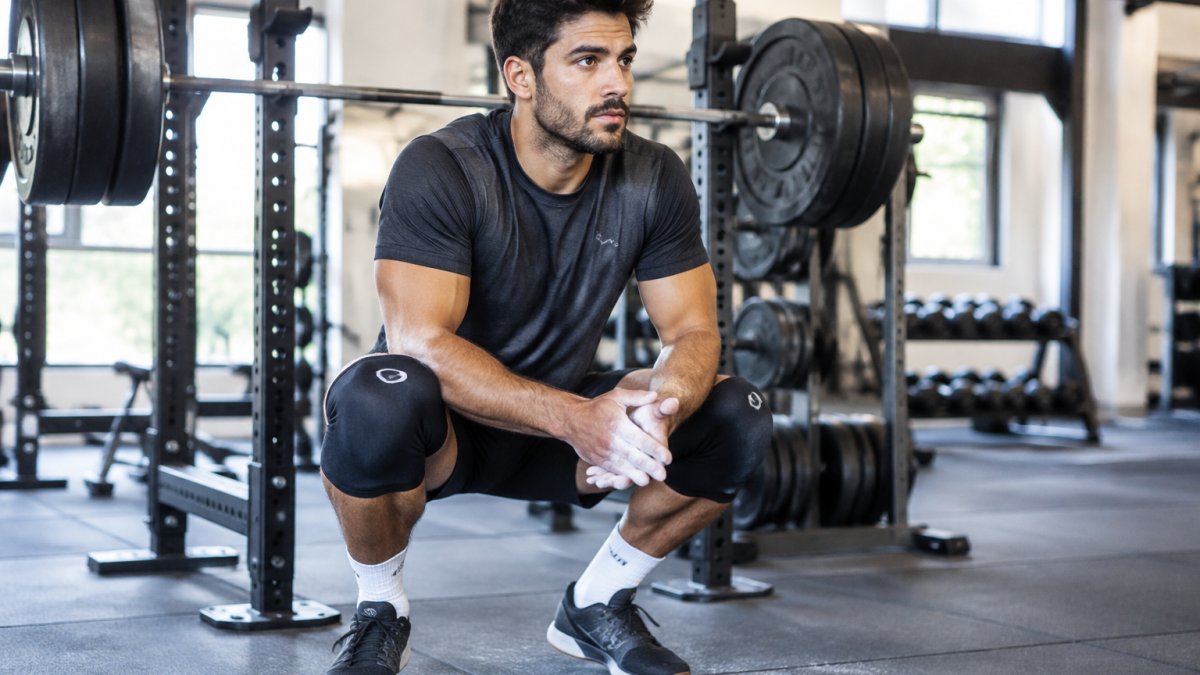
Knee sleeves are the most popular sleeve in strength sports, and for good reason: they deliver the most noticeable difference.
In practice, that means a 7mm neoprene sleeve gives you warmth, a proprioceptive cue at the bottom of the squat, and a small rebound out of the hole. It is support, not magic.
Choosing thickness: 5mm versus 7mm
The thickness decision is the one most lifters get wrong. A 5mm sleeve is flexible, allows full range of motion, and suits lifters who squat two or three times a week and want warmth without restriction. A 7mm sleeve is stiffer, giving more rebound and proprioceptive feedback for heavy squats and competition prep, but it can be uncomfortable for long sessions, harder to get on and off, and overkill for accessory work.
How to measure for a knee sleeve
Measure the circumference of your knee at the widest point, usually just above the kneecap, with the leg straight and relaxed. Match that number to the brand's size chart exactly rather than sizing up for comfort. A sleeve that rolls down or pinches behind the knee is the wrong size. Neoprene sleeves should feel snug when first put on and loosen slightly as they warm up; if you are between sizes, follow the chart, because too large will not give the stability you paid for.
When knee sleeves help and when they do not
- Squats: the clearest use case, warmth, a cue at depth, and mild rebound.
- Leg press and lunges: useful for warmth and comfort, though the rebound matters less.
- Deadlifts: usually unnecessary and can interfere with setup and bar clearance.
- Running and conditioning: a lighter sleeve may help with warmth, but a stiff 7mm sleeve is the wrong tool.
- Knee pain: a sleeve can improve comfort during training, but it is not a substitute for assessment if pain persists.
Sleeves versus wraps, braces and other support gear
Sleeves are not wraps or braces, and confusing them leads to poor purchases. Knee wraps are long elastic strips you wrap yourself; they store elastic energy and can add kilos to a max attempt, but are uncomfortable, require practice to wrap evenly, and are generally reserved for equipped lifting.
A sleeve that is too tight for a long session can restrict blood flow rather than support the joint. If you notice numbness, tingling or colour change, take it off and check the fit.
Compression Sleeves for Muscle Recovery After Training
The 2025 meta-analysis supports reduced strength decline post-fatigue, and the CHAMP guidance points to reduced soreness.
For a deeper dive, see our guide to compression leggings for recovery.
Knee Sleeves vs Knee Wraps: Which Belongs in Your Gym Bag?
The short answer: sleeves for raw lifting and volume, wraps for maximal attempts.
| Feature | Knee Sleeves | Knee Wraps |
|---|---|---|
| Pressure | Consistent, moderate | Adjustable, high |
| Best for | Squats, volume, daily training | Near-max singles, equipped lifting |
| Rebound | Mild | Significant |
| Skill needed | None | Wrapping technique matters |
| Legality | Raw divisions | Equipped divisions only |
Wraps are a tool for a specific job: they store elastic energy and can add kilos to a max attempt, but they are uncomfortable and require practice to wrap evenly. Sleeves are the everyday option, own them first, and only add wraps if you compete equipped.
Fit, Sizing and When to Avoid Compression Sleeves
Fit decides whether a sleeve helps or hurts. Measure your limb circumference at the widest point and match it to the brand's size chart exactly; a sleeve that rolls or pinches is too loose or too small, and neither is useful.
When to avoid compression sleeves:
- You have a diagnosed circulation condition, such as peripheral arterial disease
- You have broken or irritated skin on the limb
- You feel numbness, tingling or colour change while wearing them
- You are using them to mask an injury instead of getting it assessed
Watch out: wearing a sleeve that is too tight for a long session can restrict blood flow rather than support it. If your fingers or toes go cold and pale, take it off.
Choosing Compression Sleeves That Fit Your Training
Match the sleeve to the job, and check stitching and seam placement, since a seam under the kneecap can rub on every rep.
If you are still building your kit, our checklist of essential workout gear for home gym beginners covers what to buy first, and what can wait.
Compression sleeves are a small, sensible addition to a training setup, not a shortcut.
Frequently Asked Questions
Do compression sleeves help with weightlifting?
They can help, though the effect is modest. A 2025 systematic review and meta-analysis found compression garments significantly reduced the decline in muscle strength after exercise-induced fatigue. In practice, compression sleeves support blood flow, keep muscles warm and may ease soreness, but they are not a shortcut to bigger lifts. Treat them as supportive gear that helps you train consistently, not as a replacement for programming, technique or recovery.
How tight should compression sleeves be?
Firm but comfortable, with no pinching, numbness or restricted movement. You should be able to pull the sleeve on without a fight, and it should stay in place through a full squat or press without rolling down. If your fingers tingle, the sleeve leaves deep marks that last hours, or you feel throbbing, it is too tight. Check the brand's size chart against a measured arm or knee circumference rather than guessing from clothing size.
Are compression sleeves useful for weightlifting or just for warmth?
Warmth is part of the benefit, not a consolation prize. Compression sleeves raise tissue temperature around the joint, which many lifters find makes the first heavy sets feel smoother. Beyond warmth, the 2025 review found compression garments mitigated strength loss after fatigue, and the evidence points to reduced muscle oscillation and better circulation. Warmth and support work together, so a sleeve that only feels warm is still doing useful work.
What is the difference between knee sleeves and knee wraps for lifting?
Knee sleeves are sewn neoprene tubes that provide consistent, moderate compression and warmth throughout a session. Knee wraps are long strips of elastic material you wind tightly around the knee, and they can be cinched much harder for maximal squat attempts. Wraps offer more rebound and support but are harder to fit consistently and are usually reserved for heavy singles. Sleeves suit everyday training, higher reps and general joint comfort.