 ultimate-guide
Breathable Fabric for Padel: Why It Matters
Table of Contents
- Why Breathable Fabric Is Essential for Padel
- How Moisture-Wicking Padel Clothing Works
- Synthetic vs Cotton Sportswear: The Key Differences
- How to Choose Padel Apparel for Maximum Performance
- Temperature Regulation in Enclosed Courts
- Preventing Chafing and Skin Irritation
- Breathability vs Durability: Finding the Balance
- Conclusion
- Frequently Asked Questions
Last Updated: September 27, 2026
Why Breathable Fabric Is Essential for Padel
Enclosed padel courts trap heat and humidity, preventing natural sweat evaporation. A breathable fabric padel apparel is essential for performance, durability, and preventing skin damage from prolonged moisture exposure.
Cotton absorbs sweat and holds it against your skin. Technical fabrics move moisture away from your body, keeping you dry and cool. This difference directly impacts performance.
Padel's constant movement in confined spaces generates significant heat. Without proper moisture-wicking, clothing becomes heavy and restrictive, reducing performance and causing chafing, skin irritation, and fungal issues.
Breathable fabric padel apparel uses synthetic fibres to transport sweat away from your skin, where it evaporates. This regulates core temperature, maintains range of motion, and prevents skin breakdown.
How Moisture-Wicking Padel Clothing Works
Moisture-wicking padel clothing uses hydrophobic-hydrophilic design: the inner layer repels water while the outer layer disperses it, pulling sweat away from your skin and accelerating evaporation.
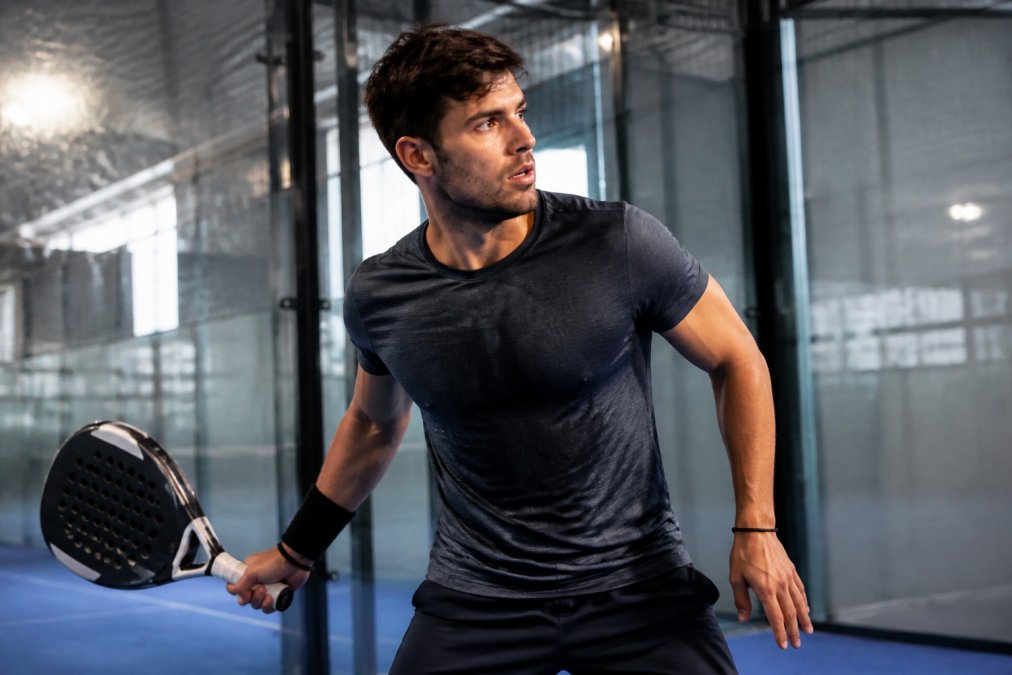
Evaporation and Moisture Transport
Synthetic fibres like polyester and microfibre create microscopic channels that actively push moisture outward, unlike cotton's dense structure that traps it.
Technical fabrics disperse sweat across their entire outer layer, increasing evaporation contact area. This is why moisture-wicking apparel feels dry even during heavy sweating.
Cotton absorbs water and swells, creating a wet, heavy layer that blocks air circulation and slows evaporation, a significant liability in enclosed courts with limited airflow.
Thermoregulation During High-Intensity Play
Your body regulates temperature through evaporative cooling. This works efficiently only when sweat evaporates rather than accumulates.
Technical fabrics create continuous cooling by moving moisture away from your skin, lowering core temperature and improving endurance. Players report feeling fresher in the third set.
Synthetic vs Cotton Sportswear: The Key Differences
The choice between synthetic and cotton fabrics determines how your body performs under the specific conditions of padel. This isn't about personal preference, it's about physics and physiology.
Why Cotton Fails in Enclosed Courts
Cotton absorbs water readily. In enclosed padel courts with trapped heat and limited ventilation, cotton stays wet throughout the match.
Wet cotton becomes heavy and restrictive, creating drag that interferes with range of motion and limits agility and precision.
Wet cotton creates conditions for chafing, skin irritation, and fungal growth. Players training in cotton report more frequent skin issues than those using technical apparel.
Polyester and Microfibre Advantages
Polyester is durable and affordable; microfibre offers superior moisture-wicking due to its high surface-area-to-weight ratio. Both are designed for moisture transport.
Both maintain structural integrity when wet, keeping range of motion consistent. They dry in hours rather than days, making them practical for frequent training.
Polyester and microfibre resist bacterial and fungal growth better than cotton, significantly reducing skin irritation and infection risk.
How to Choose Padel Apparel for Maximum Performance
Selecting the right moisture-wicking padel clothing requires understanding three key specifications: fabric density, breathability index, and elastane content. Each determines how the apparel will perform during high-intensity play.
Evaluating Fabric Density and Breathability Index
Fabric density (gsm) affects breathability and durability. Lower density (under 200 gsm) breathes well but wears faster; higher density (200-300 gsm) lasts longer but may feel heavier.
For padel, aim for 180-220 gsm with a breathability index of at least 100 cfm. This range provides excellent moisture transport and durability.
Check manufacturer specifications.
Elastane Content and Range of Motion
Elastane provides stretch and recovery essential for padel's explosive lateral movement and rapid directional changes.
Look for 5-8% elastane content. Below 5% feels restrictive; above 10% interferes with moisture-wicking and durability.
Quality padel apparel positions elastane strategically in side panels and underarms to maximise range of motion while maintaining moisture-wicking in high-sweat areas.
Temperature Regulation in Enclosed Courts
Enclosed padel courts prevent natural heat dissipation, raising ambient temperature and humidity. This pushes your body's cooling systems to their limits.
Technical fabrics maintain efficient evaporative cooling. Cotton impairs this process, causing core temperature to rise faster and endurance to suffer.
Lightweight technical apparel (180-200 gsm) is ideal for summer padel play. Layering systems with a lightweight base layer under a heavier outer layer further optimise temperature regulation.
Preventing Chafing and Skin Irritation
Chafing occurs from repeated fabric friction during padel's lateral movements. Wet fabric accelerates chafing by reducing glide across skin.
Technical fabrics prevent chafing by staying dry and providing superior glide across skin compared to wet cotton.
Proper fit, snug but not restrictive, minimises friction by keeping fabric in consistent contact without excess movement.
Breathability vs Durability: Finding the Balance
Finding the right balance between breathability and durability depends on your training frequency and care practices.
Ultra-lightweight fabrics (150-170 gsm) last 50-75 washes; standard fabrics (200-240 gsm) last 150-200 washes; heavy-duty fabrics (260+ gsm) last 300+ washes.
For twice-weekly training, standard performance fabrics (200-240 gsm) offer the best value, balancing breathability with durability.
Proper care extends durability: wash in cold water, avoid fabric softener, and air-dry to preserve performance properties throughout the garment's lifespan.
Conclusion
Breathable fabric is essential for padel because enclosed courts demand apparel that actively manages moisture and temperature. Technical fabrics outperform cotton across moisture transport, temperature regulation, range of motion, durability, and skin health.
Players wearing proper technical apparel perform better in the third set, experience fewer skin issues, and get more value from their investment.
REVIVE Activewear and Apparel designs padel-specific apparel with these principles built in. Our collection uses technical fabrics with strategic elastane positioning to maximise both performance and durability. Whether you're ordering a single set for yourself or outfitting your entire team, our expert support team can help you select apparel that matches your specific needs, and our standard and express delivery options mean you'll have it when you need it. Learn more about moisture-wicking technology in sports apparel to deepen your understanding of the science behind performance fabrics.
Get started with REVIVE Activewear and Apparel and experience how proper technical apparel transforms your padel game.
| Fabric Type | Moisture-Wicking | Durability | Best For | Temperature Regulation |
|---|---|---|---|---|
| Cotton | Poor | Moderate | Casual wear only | Poor |
| Polyester (200-220 gsm) | Excellent | Very Good | Padel training & matches | Excellent |
| Microfibre (180-200 gsm) | Superior | Good | High-intensity play | Superior |
| Cotton-Blend Synthetics | Moderate | Good | Casual fitness | Moderate |
| Specification | Ideal Range | Why It Matters |
|---|---|---|
| Fabric Density (gsm) | 180-220 | Balances breathability and durability |
| Elastane Content | 5-8% | Maintains range of motion without compromising moisture-wicking |
| Breathability Index (cfm) | 100+ | Ensures adequate air circulation through fabric |
| Washing Temperature | Cold water | Preserves elastane recovery and moisture-wicking properties |
Frequently Asked Questions
Why is cotton unsuitable for high-intensity padel matches?
Cotton absorbs sweat rather than wicking it away, leaving moisture trapped against your skin. In enclosed padel courts where heat and humidity build quickly, this creates a clammy environment that increases chafing risk and reduces your ability to regulate body temperature. Technical synthetic fabrics like polyester and microfibre pull sweat outward for faster evaporation, keeping you dry and comfortable throughout extended rallies.
What is the best breathable fabric for wearing in padel?
Polyester and microfibre blends with elastane are industry standards for padel apparel. Polyester offers excellent moisture-wicking and quick-dry properties, while microfibre provides superior softness and breathability. Elastane ensures the stretch and range of motion your game demands.
How does breathable clothing improve padel performance?
Breathable apparel enhances performance by managing sweat efficiently, preventing the weight gain and discomfort that dampness creates. When fabric wicks moisture away, your body's thermoregulation works optimally, reducing fatigue and maintaining focus during long matches. Better breathability also reduces skin irritation and chafing, allowing you to move freely without distraction. The result is improved agility, endurance, and confidence on court.
Does fabric choice affect body temperature regulation during a match?
Yes, significantly. Breathable synthetic fabrics enable ambient airflow and moisture evaporation, which are essential for thermoregulation in enclosed courts where heat builds rapidly. Cotton traps heat and moisture, causing your core temperature to rise and fatigue to set in faster. Technical fabrics with high breathability indices maintain optimal skin temperature throughout play, which is especially critical during summer play or intense training sessions.