 Ultimate guide
CrossFit Clothing Durability: The Complete Guide
Last Updated: November 2, 2026
Quick Summary
Crossfit clothing durability depends mainly on fabric weight, seam strength and how a garment recovers after washing, not on price. Nylon-rich blends resist abrasion, while elastane is the fibre most vulnerable to heat and chlorine. Track wear signs such as thinning and lost stretch rather than calendar dates.
- Price is not a reliable guide to T-shirt durability, and heavier-weight cotton was among the most durable characteristics tested by University of Leeds researchers.
- Nylon offers better abrasion resistance, while polyester usually handles moisture and fading better over time.
- Leggings from athletes training most days typically last roughly 9 to 18 months.
- Wash garments inside out on a cool setting, avoid fabric softener and air dry, because heat is the main enemy of elastane.
- Divide the price by the number of sessions a garment lasts to judge its cost-per-wear.
Table of Contents
- What Makes CrossFit Clothing Durable Under High-Intensity Training
- Best Fabric for CrossFit Clothes: Nylon, Polyester and Elastane Blends Compared
- Fit, Stretch and Range of Motion: Why Construction Matters as Much as Fabric
- How Long Do Workout Clothes Last? Lifespan Benchmarks by Garment and Movement
- Durable CrossFit Leggings: Seams, Reinforcement and Abrasion Resistance to Check
- CrossFit Clothing Care and Washing: Stopping Pilling, Thinning and Loss of Shape
- Choosing Your Next CrossFit Kit: Repair, Replacement and Cost-Per-Wear Decisions
- Frequently Asked Questions
What Makes CrossFit Clothing Durable Under High-Intensity Training
Durability in CrossFit clothing comes down to how a garment handles constant friction, sweat, and stretch, not just how expensive it is, because crossfit clothing durability depends on construction more than price. A higher price does not necessarily indicate a more durable garment (New research shows price is not a reliable guide to t-shirt durability | Faculty of Arts...). University of Leeds researchers found that price is not a reliable guide to T-shirt durability, and that heavier-weight cotton was among the characteristics of the most durable garments they tested (University of Leeds research on T-shirt durability).
Clothing takes a beating in a WOD. Barbell work abrades the thighs and hips, rope climbs grind fabric against skin and surfaces, and repeated squatting stresses the seams. A garment that looks fine on the rack can fail in the places it gets hit hardest.
We look at three things first: fabric weight and density, the strength of the stitching at high-load points, and how the garment recovers after repeated washing. Each one reveals more about lifespan than a brand name on the label.
Best Fabric for CrossFit Clothes: Nylon, Polyester and Elastane Blends Compared
Most performance training garments blend a synthetic base with a small amount of elastane, but the ratio and the way the fabric is knitted matter more than the fibre names on the care label. A useful way to compare fabrics is to look at four measurable properties: abrasion resistance, seam strength, stretch recovery and colourfastness.
Nylon tends to offer better abrasion resistance and a softer hand feel than polyester, which is why it appears frequently in leggings and shorts that meet barbells and rope climbs. Polyester usually handles moisture movement and fading better over time, so it suits tops that see more sweat than friction. Elastane provides the stretch that stops a legging bagging out during deep squats, but it is also the fibre most vulnerable to heat and chlorine, which is why elastic breakdown is a common failure mode.
Blend ratios give a rough guide. A legging with a high nylon share and roughly a fifth elastane will usually feel more compressive and recover better than a polyester-dominant legging with a lower elastane content, though the knit structure can override the headline percentages. Look for a fabric weight that feels substantial without being stiff; very light knits are comfortable but thin quickly at the seat and inner thigh.
Match the fabric to the movement. For heavy lifts and rope climbs, favour nylon-rich blends with a dense knit. For tops used mainly for sweat-heavy conditioning, polyester-rich blends with a wicking finish are usually the better value. For mobility work and running, prioritise four-way stretch and a smooth face to reduce chafing.
Watch out: a fabric described only as "moisture-wicking" tells you nothing about abrasion resistance, so ask what the garment is knitted from and where the reinforced panels sit before you buy.
University of Leeds research on T-shirt durability
Fit, Stretch and Range of Motion: Why Construction Matters as Much as Fabric
A durable fabric still fails if the cut forces it to work against your body. Tight seams under tension split sooner, and a garment that restricts your range of motion pushes you toward a size that is either too snug or too loose.
Look for four-way stretch, gusseted crotches, and flatlock seams in high-movement areas. These details reduce strain where it matters.
How Long Do Workout Clothes Last? Lifespan Benchmarks by Garment and Movement
Lifespan depends heavily on training frequency and workout type, so treat any single number as a starting point rather than a promise. A common pattern among regular athletes training three to five times a week is that tops and shorts outlast leggings, and leggings used for daily barbell sessions wear out faster than those reserved for conditioning. The ranges below are practical benchmarks, not guarantees, and should be adjusted for how often you train and how much friction your sessions involve.
- Tops and shirts: roughly 18 to 36 months of regular use before fading, pilling under the arms or loss of shape becomes noticeable. Polyester-rich tops usually hold colour longer; cotton-rich tops may thin at the shoulders and neckline sooner.
- Shorts: roughly 12 to 24 months. The crotch seam and the hem are the first places to fail, particularly with running and burpees.
- Leggings: roughly 9 to 18 months for athletes who train most days. Thinning at the seat and inner thigh, translucency under light and loss of stretch recovery are the usual end signals.
- Socks: roughly 6 to 12 months. Heel and toe abrasion from repeated jumping and running drives replacement more than washing.
- Sports bras: roughly 12 to 24 months. Elastic breakdown in the band and strap is the limiting factor, not fabric wear.
Map the movement to the wear pattern. Rope climbs grind the inner calf and thigh; barbell work abrades the hips and the front of the thighs; burpees and running stress the crotch seam and hem; mobility work stresses the waistband and gusset through repeated stretching. A garment used across several of these movements will usually sit at the lower end of its range.
Track wear signs rather than calendar dates. Thinning at the seat, visible pilling, seam grin and loss of stretch recovery all signal that a garment is nearing the end of its useful life. A useful rule is to retire any piece once it no longer springs back after stretching or shows translucency under light.
Watch out: a garment that fails early at a seam may be repairable, but once thinning appears across a high-friction panel the fabric is usually too compromised to mend reliably.
The table below summarises the typical lifespan of each garment type, based on the benchmarks in this section.
| Garment | Typical lifespan | Main end signal |
|---|---|---|
| Tops and shirts | 18 to 36 months | Fading, pilling, loss of shape |
| Shorts | 12 to 24 months | Crotch seam and hem failure |
| Leggings | 9 to 18 months | Thinning, translucency, lost stretch |
| Socks | 6 to 12 months | Heel and toe abrasion |
| Sports bras | 12 to 24 months | Elastic breakdown in band and strap |
Durable CrossFit Leggings: Seams, Reinforcement and Abrasion Resistance to Check
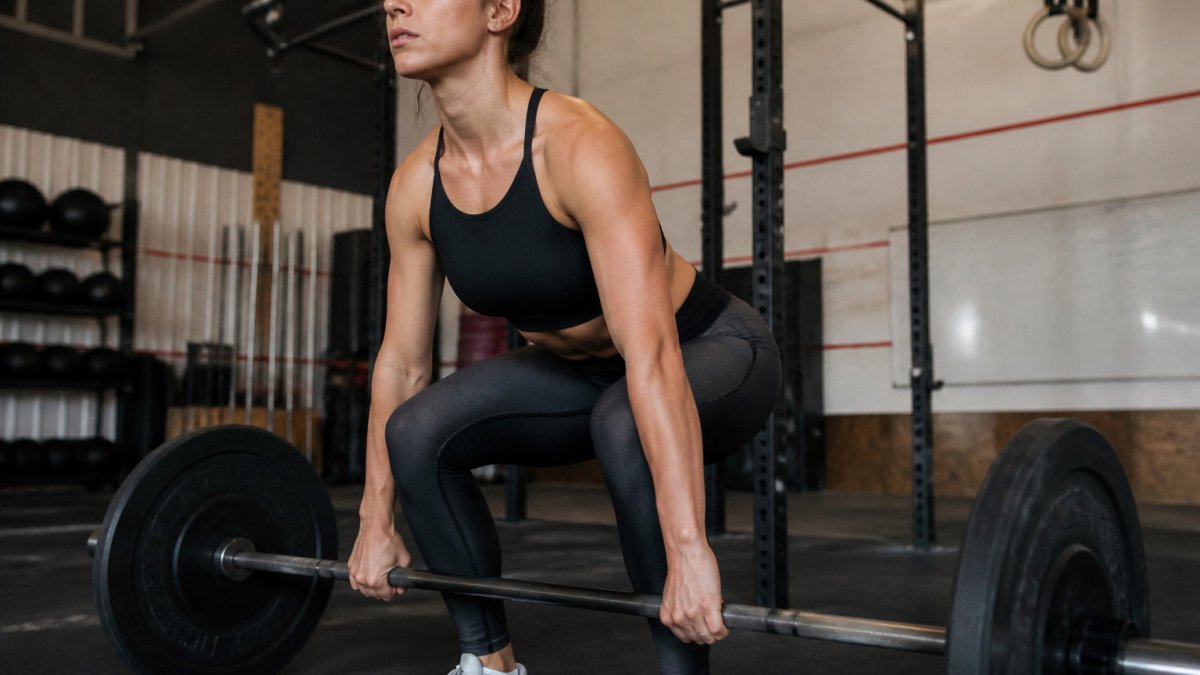
When you assess leggings, start with the seams. Flatlock stitching lies flat against the skin and reduces chafing. Reinforced panels at the knees and seat add abrasion protection, which matters for anyone who kneels or drags a barbell across the thighs. Check the waistband too, since it takes repeated stretching every time you pull the garment on and off.
CrossFit Clothing Care and Washing: Stopping Pilling, Thinning and Loss of Shape
Wash inside out on a cool setting, avoid fabric softener, which coats performance fibres and reduces moisture-wicking, and air dry rather than tumble drying. Heat is the main enemy of elastane.
Pilling usually appears where fabric rubs against itself, such as inner thighs. Turning garments inside out before washing slows it considerably.
Choosing Your Next CrossFit Kit: Repair, Replacement and Cost-Per-Wear Decisions
Repair small seam splits early, since they spread quickly under load. Replacement becomes the better option once thinning appears in high-friction areas or stretch no longer recovers.
Cost-per-wear is the most practical way to judge value. Divide the price by the number of sessions a garment lasts. A slightly pricier legging that survives three times as many sessions is the cheaper choice. Pricing depends on quantity, dates, and delivery, so check REVIVE Activewear and Apparel's website for current prices or a quote before buying.
Our team at REVIVE Activewear and Apparel built this guide to help you judge crossfit clothing durability before you buy.
Frequently Asked Questions
What fabrics are most durable for CrossFit clothing?
Nylon and polyester blends with a small proportion of elastane tend to offer the best balance of abrasion resistance, stretch and recovery for CrossFit. Nylon handles friction from barbells and rope climbs well, while polyester holds its shape and resists pilling. Check the fabric composition and construction rather than assuming a higher cost means longer wear. Always review the care label before washing.
How long should CrossFit clothes last?
Lifespan depends on how often you train, how the garment is washed and what movements it is used for. Signs that a garment is ending its life include thinning fabric, persistent pit stains, loss of elasticity and seams beginning to pull. Rotating two or three sets of training clothes spreads wear across more items and extends the useful life of each one.
Are reinforced seams important in CrossFit clothing?
Yes. Seams take significant load during squats, deadlifts and wall balls, and weak stitching is one of the most common reasons workout clothes fail. Look for flatlock or bartacked stitching at stress points such as the crotch, waistband and hem. Reinforced seams do not prevent abrasion from barbells or rope climbs, so pair them with a fabric that resists friction. Inspect new garments for double-stitched seams before buying.
How should I wash CrossFit clothes to make them last longer?
Wash workout clothes inside out on a gentle cycle in cool water, and avoid fabric softener, which can coat synthetic fibres and reduce moisture-wicking performance. Use a mild detergent and skip the tumble dryer where possible, as heat accelerates thinning and shrinkage. Air drying preserves elasticity. Washing after every session also prevents sweat and odour from setting into the fabric, which reduces the need for harsh cleaning later.
What causes gym clothes to lose their shape or stretch?
Repeated stretching during training breaks down elastane fibres over time, and heat from drying speeds up that process. Overloading the wash, using hot water and wringing garments by hand also contribute. Once elastane has lost recovery, the garment will sag at the knees and seat. Choosing blends with a quality elastane content and following the care label slows this down considerably.
Is polyester or nylon better for high-intensity training?
Both perform well, but they suit different needs. Nylon is typically stronger and more abrasion-resistant, which helps with barbell contact and rope climbs. Polyester is more resistant to stretching out, retains colour well and dries quickly. Many durable CrossFit garments use a blend of the two, combined with elastane for movement. Compare the fabric composition on each product to match your training demands.
Ready to build a kit that lasts? Subscribe to our email list for durability tips and new arrivals from REVIVE Activewear and Apparel.