 ultimate-guide
How to Choose Padel Apparel: A 2026 Player's Guide
Table of Contents
- Why Padel Apparel Matters More Than You Think
- Breathable Fabrics for Racket Sports: What to Look For
- Padel Dress Code Requirements at Clubs
- Step-by-Step: How to Choose Padel Apparel for Your Game
- Third Shot vs REVIVE Activewear: What Sets Them Apart
- Caring for Performance Fabrics So They Last
- Common Mistakes When Buying Padel Apparel
- Frequently Asked Questions
Last Updated: September 12, 2026
Why Padel Apparel Matters More Than You Think
Padel is played in short, explosive bursts: three steps to the side wall, a lunge, a recovery, then a smash. Standard gym kit was not cut for that. Learning how to choose padel apparel is really about matching your clothing to a game built on lateral movement, constant changes of direction and rapid sweat build-up, and this guide from REVIVE Activewear and Apparel breaks the decision down step by step.
Get it right and you move freely for three sets. Get it wrong and you will be tugging at a heavy, soaked shirt between points while your opponent waits.
The mistake most players make is treating padel kit as a fashion decision. It is a performance decision first. The right padel apparel manages sweat, allows a full range of motion and stays comfortable from the first serve to the last.
Breathable Fabrics for Racket Sports: What to Look For
Breathable fabrics for racket sports are lightweight, moisture-wicking materials that pull sweat away from your skin and let air circulate, so you stay dry and cool during play. Look for synthetic performance fabric blends rather than cotton.
Synthetic Fibres vs Cotton: The Practical Difference
Cotton soaks up sweat and holds it (the NHS). A wet cotton t-shirt becomes heavy, clings to your back and takes hours to dry. Synthetic fibres such as polyester and elastane blends wick moisture to the surface, where it evaporates quickly.
For a sport built on sweat management, that difference decides how comfortable your third set feels. Quick-dry sportswear also packs and washes far more easily.
Stretch, Elasticity and Range of Motion
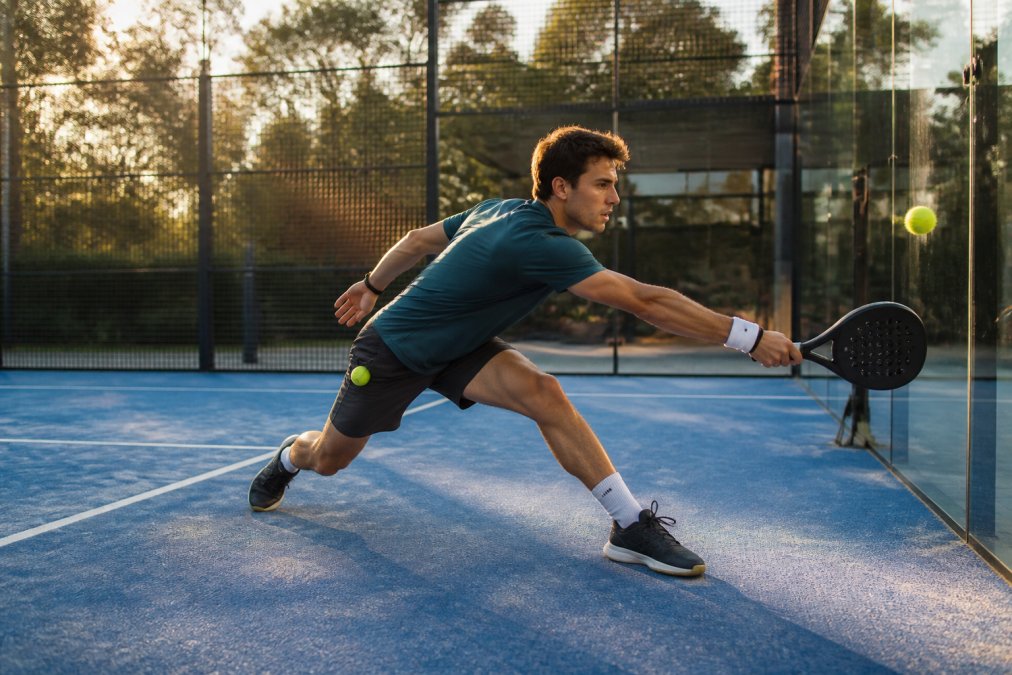
Padel demands a full range of motion: overhead smashes, low volleys, wide lunges. Fabric with elasticity, usually a small percentage of elastane woven into the blend, stretches with you and springs back into shape. Rigid fabric restricts your swing and wears out at the seams.
Aim for a fabric that stretches in four directions and feels light rather than stiff. Ventilation panels under the arms and across the back help further.
Padel Dress Code Requirements at Clubs
Most padel clubs do not enforce a strict dress code, but many have a few expectations: clean sportswear, non-marking indoor shoes and a neat appearance on court. Padel dress code requirements vary by venue, so check before you play.
The practical rules most clubs share:
- Wear proper sportswear, not jeans or casual street clothing
- Use non-marking soles on indoor courts to protect the surface (sportengland.org)
- Keep kit clean and presentable, especially at members' clubs
How Dress Codes Differ by Venue Type
The expectations shift depending on where you play, and knowing the pattern saves you an awkward conversation at reception.
Pay-and-play and council-run courts. These are the most relaxed. As long as you are in sportswear and non-marking shoes, you will not be turned away. Shorts, t-shirts, leggings and skirts are all fine. This is where most casual players start, and it is where you will see the widest range of kit.
Private members' clubs. These tend to be stricter. A handful still ask for predominantly white clothing, echoing the tradition of lawn tennis and squash clubs. Others simply expect a tidy, coordinated appearance and will quietly frown on football shirts or heavily branded casual wear. If you are joining as a member, ask for the club's kit policy in writing before you buy a season's worth of clothing.
Multi-sport and racquets centres. Where padel shares a building with tennis, squash or badminton, the house rules usually follow the strictest of the sports on site. That often means non-marking soles are mandatory and white or light-coloured tops are preferred on the show courts.
Coaching sessions and leagues. Coaches generally do not care what you wear as long as it does not restrict your movement, but league organisers sometimes ask for team colours or a minimum standard of kit for photographs and sponsorship obligations.
Court Etiquette That Goes With the Kit
Dress code is only half the picture. Padel has its own etiquette, and your clothing choices feed into it:
- Arrive changed. Most clubs have limited changing space and expect you to be ready to step on court at your booking time.
- Avoid hard zips, buckles and metal studs. These can scratch the glass panels and mark the turf. Soft waistbands and flat seams are safer.
- Keep your bag tidy at the side of the court. A bag spilling onto the playing area is both a trip hazard and a nuisance to your opponents.
- No outdoor shoes on indoor courts. This is the one rule that is enforced almost everywhere, because grit from outdoor soles destroys the playing surface.
- Shake hands at the end. It is a small thing, but it is expected at almost every club.
What to Do If You Are Unsure
A quick call or a look at the club's website saves awkwardness at reception. If you cannot find the information, ask when you book. The question is common enough that staff will have a ready answer, and it is far better to ask than to turn up in the wrong kit.
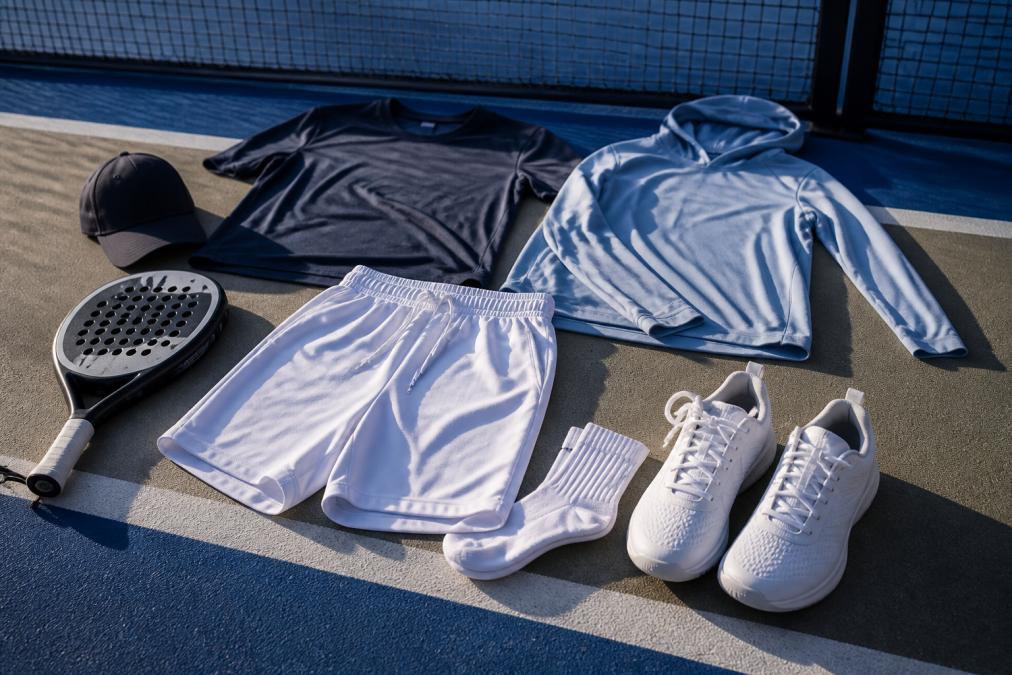
If you play at several venues, build a small capsule that satisfies the strictest one: a plain white or light-coloured top, dark shorts or leggings, and a pair of dedicated indoor court shoes. That combination will get you onto almost any court in the country without a second thought.
Step-by-Step: How to Choose Padel Apparel for Your Game
Choosing padel apparel comes down to three decisions: fit, function and climate. Work through them in order and you will build a kit that performs on court and lasts through the season.
Step 1: Match the Fit to Your Movement
Start with fit, because everything else depends on it. You want a close but not tight fit that follows your body without restricting your swing. Tops should stay in place when you reach overhead. Shorts should not ride up during a lunge.
If you have an athletic build with broad shoulders and a narrower waist, look for brands that publish a detailed size guide and offer stretch fabric, which adapts to different proportions far better than rigid cuts. High-waisted leggings and fitted tops work well for many players, while looser shorts suit those who prefer airflow.
Step 2: Check Pockets, Seams and Ball Storage
This is the detail most guides skip, and it is the one you notice mid-match. Padel players often carry a spare ball, and pockets designed for ball storage keep it secure without bouncing around.
Check the following before you buy:
- Side or waistband pockets deep enough to hold a ball securely
- Flatlock seams that sit smooth against the skin and reduce chafing
- Reinforced stitching at stress points such as the shoulders and crotch
Step 3: Plan for Indoor and Outdoor Courts
Indoor courts are sheltered but can get warm and still. Outdoor courts expose you to sun, wind and changing temperatures. Layering strategies differ for each.
For indoor play, a single breathable top and shorts or leggings is usually enough. For outdoor play, add a light, packable layer you can remove once you warm up, and choose lighter colours that reflect heat. In cooler months, a long-sleeve base layer under your top keeps muscles warm between points.
| Court Type | Base Layer | Outer Layer | Key Priority |
|---|---|---|---|
| Indoor | Breathable short-sleeve top | None needed | Ventilation |
| Outdoor, warm | Lightweight wicking top | Optional light layer | Sun and heat management |
| Outdoor, cool | Long-sleeve base layer | Removable mid-layer | Temperature regulation |
Third Shot vs REVIVE Activewear: What Sets Them Apart
When players weigh up third shot vs REVIVE Activewear, the real question is what you get for the difference. Both sit in the specialist padel space, but they solve the problem in different ways. REVIVE Activewear and Apparel builds its range around padel tech design alongside gym, yoga and running kit, so one wardrobe covers several sports.
That versatility matters if you play padel twice a week and also train in the gym. Instead of buying separate kit for each activity, you can build a set that works across all of them. REVIVE Activewear and Apparel also handles ordering for any quantity, from a single item to matching sets for a whole team, with standard or express delivery and a dedicated support team. If you run a studio or club and need 25 matching sets before a launch date, that ordering process is the deciding factor.
Caring for Performance Fabrics So They Last
Performance fabrics lose their wicking ability when they are washed badly. The fibres clog with fabric softener and detergent residue, and the stretch degrades in a hot dryer.
Follow these habits to protect your kit:
- Wash in cold or cool water on a gentle cycle
- Skip fabric softener entirely, as it coats the fibres (which.co.uk)
- Air-dry where possible, or tumble on low heat
- Turn garments inside out to reduce surface wear
- Wash immediately after play to prevent odour setting in
Anti-odor treatments and moisture-wicking finishes last far longer with this routine. A well-cared-for set can hold its shape and performance for years rather than months.
Common Mistakes When Buying Padel Apparel
The biggest mistake is buying heavy cotton because it feels comfortable in the shop. On court, it soaks through and drags.
Other common errors:
- Choosing style over fit, then finding the top rides up on every smash
- Ignoring pockets, then having nowhere to keep a spare ball
- Buying one set for all seasons instead of layering for indoor and outdoor play
- Overlooking care instructions and ruining wicking fabric in the first few washes
Sustainability is worth considering too. More brands now use recycled synthetic fibres and lower-impact production, so you can choose kit that performs well and aligns with how you shop. Ask about materials before you buy if this matters to you.
Frequently Asked Questions
Do I really need specialist clothing for padel?
You can play in general gym wear, but padel apparel is cut for repeated lateral movement and quick changes of direction. Breathable fabrics for racket sports move sweat away from your skin faster, and stretchy panels give you a fuller range of motion. Specialist padel clothing also tends to hold its shape after washing, so it keeps fitting properly over a full season of twice-weekly matches.
What are the padel dress code requirements at most clubs?
Most clubs keep things simple: sportswear and non-marking court shoes. Some private clubs ask for a collared shirt or ban football-style kit, and a few request predominantly white clothing. Check the club's own rules before your first visit, since padel dress code requirements vary more between venues than between countries. When in doubt, clean, plain activewear is almost always accepted.
How should padel shorts and skirts fit for maximum mobility?
Look for a fit that stays in place when you lunge but does not pinch at the waist or thigh. High-waisted cuts with a wide, flat waistband work well because they sit still during lateral movement. Test the range of motion before you buy: squat, twist and step sideways. If the hem rides up or the waistband rolls, size up or try a different cut.
How does REVIVE Activewear compare with other padel brands?
REVIVE Activewear and Apparel focuses on padel-specific tech design. The range covers men's and women's pieces with moisture-wicking, quick-dry fabrics, and you can order anything from a single item to bulk sets for a team or studio. Standard and express delivery are available, and the support team can help with sizing questions before you commit.
Padel rewards players who prepare, and your kit is part of that preparation. The right breathable, stretchy, court-specific clothing lets you focus on your game instead of your gear. REVIVE Activewear and Apparel designs padel tech apparel for exactly this, with moisture-wicking fabrics, functional pockets and a fit built for lateral movement, plus easy ordering for any quantity and fast delivery. Get started with REVIVE Activewear and Apparel and step onto court ready to play your best.