 how-to
How to Find Padel Court Gear for Cold Weather
Table of Contents
- Understanding Cold-Weather Padel Performance
- Step 1: Select Your Base Layer with Moisture-Wicking Fabrics
- Step 2: Build Your Layering System for Outdoor Padel
- Step 3: Choose Best Winter Padel Clothing That Maintains Mobility
- Step 4: Select Footwear with Proper Traction
- Step 5: Prepare Cold-Weather Equipment and Accessories
- REVIVE Activewear and Apparel: What Sets Cold-Weather Padel Apparel Apart
- Step 6: Warm Up Properly and Manage Post-Match Recovery
- Frequently Asked Questions
Last Updated: September 23, 2026
Understanding Cold-Weather Padel Performance
Playing padel in cold weather demands more than just adding layers. Temperature affects how the ball bounces, how your grip holds, and how your body moves on court. Understanding these challenges helps you learn how to find padel court gear for cold weather before you step onto the court.
Cold air is denser than warm air. This means the ball travels slower and doesn't bounce as high. A ball pressurised for summer play will feel sluggish in winter conditions. Court surfaces also change. Condensation builds up on outdoor courts, making grip difficult and increasing injury risk. Your muscles tighten in cold, reducing mobility and flexibility. The right padel court gear for cold weather addresses all three problems at once.
How temperature affects ball pressure and bounce
The air inside a padel ball contracts when temperature drops. A ball at normal pressure in summer becomes under-pressurised in winter. This affects aerodynamics and spin. The bounce becomes unpredictable. You'll notice the ball doesn't respond the way you expect.
Cold also affects how you feel the ball on your racket. Your hands lose sensitivity. Grip strength decreases. This is why overgrip management matters so much in winter play.
Court condensation and grip challenges
Outdoor courts sweat in cold weather. Moisture condenses on the playing surface, especially early morning or late evening. A slippery court is a dangerous court. Your footwear must have herringbone sole patterns that cut through moisture. Your grip must stay dry. Many players switch to fresh overgrip between games in winter.
Condensation also affects your vision. Low-angle shots become harder to read. The ball disappears against a grey sky. Proper warm-up routines help your eyes adjust. So does choosing the right apparel that doesn't obstruct your view.
Step 1: Select Your Base Layer with Moisture-Wicking Fabrics
Your base layer is your foundation. It sits against your skin and manages sweat. In cold weather, a wet base layer pulls heat away from your body. Moisture-wicking fabrics move sweat outward, keeping you dry and warm.
Cotton absorbs moisture and holds it. Synthetic fibres like polyester and nylon wick sweat away from skin. Merino wool blends offer natural temperature regulation. Choose technical fabrics over cotton every time. Technical fabrics dry faster and keep you warmer longer.
Technical fabrics versus cotton
Cotton feels soft, but it's the wrong choice for cold-weather padel. Once wet, cotton stays wet. Your body temperature drops. You get cold faster and recover slower.
Technical fabrics are engineered to move moisture outward. Polyester, nylon, and elastane blends pull sweat from your skin to the outer surface where it can evaporate. Your base layer stays dry. Your core temperature stays stable.
Look for base layers marked as moisture-wicking or technical. The label should mention polyester, nylon, or merino wool. Avoid anything that lists cotton as the primary fibre.
Compression garments for joint support
Compression garments serve two purposes in cold weather. They improve blood circulation to muscles and joints. They also provide support when your muscles are stiff from cold. Compression increases joint stability, reducing injury risk during explosive movements like lunges and direction changes.
Cold makes joints stiffer. Your knees, ankles, and shoulders lose flexibility. Compression sleeves and leggings help maintain mobility. They also speed up recovery after play. Many padel players wear compression tights under their main clothing in winter.
Step 2: Build Your Layering System for Outdoor Padel
Layering isn't just about adding more clothes. It's about creating an insulation system that traps warm air without restricting movement. A proper layering system has three parts: base layer, mid-layer, and outer layer. Each serves a specific purpose.
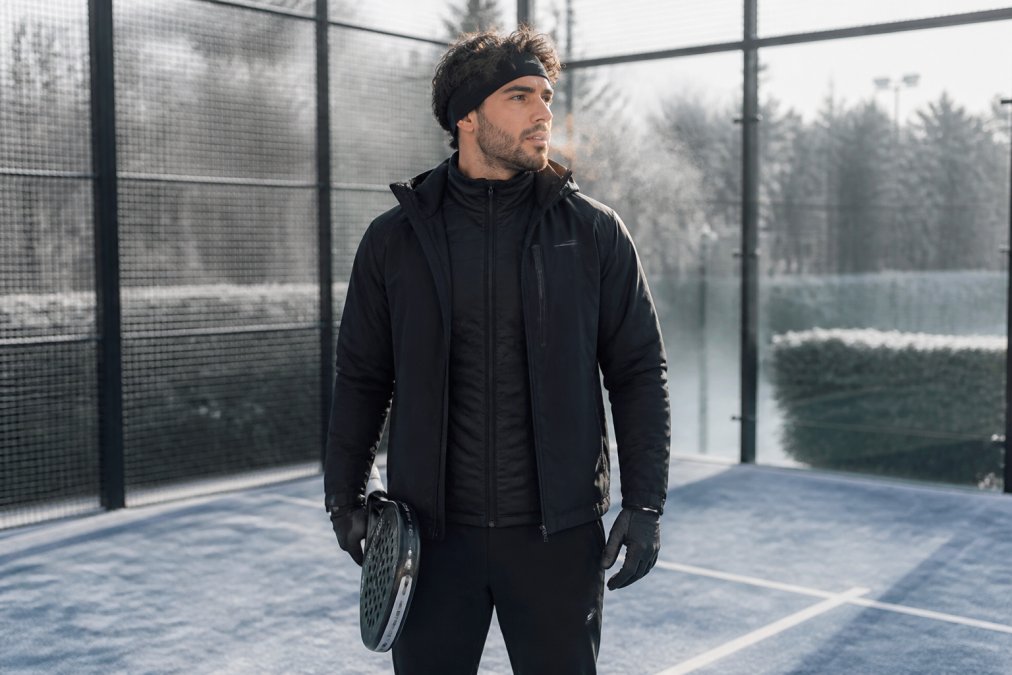
Your base layer wicks moisture. Your mid-layer traps warm air. Your outer layer blocks wind. Together, they keep you warm while letting you move freely. Don't overdress. Too many layers restrict mobility and cause overheating during intense rallies.
Mid-layer insulation without bulk
Mid-layers provide warmth without weight. Fleece and synthetic insulation work better than down in damp conditions. Down loses insulation value when wet. Synthetic materials retain warmth even if they absorb moisture.
Look for mid-layers designed for sports. They should be stretchy and lightweight. Avoid heavy winter coats. You need freedom to move your shoulders and arms. A fitted mid-layer jacket or fleece works best. It should allow full range of motion for serving and overhead shots.
Thickness matters less than material quality. A thin synthetic mid-layer outperforms a thick cotton sweatshirt. Choose technical fabrics marked as breathable. Your mid-layer should manage sweat while providing insulation.
Wind-resistant outer layers
Wind steals heat fast. Even a light breeze can make you feel much colder. A wind-resistant outer shell is essential for outdoor padel courts. This doesn't mean a heavy winter coat. It means a fitted, stretchy jacket designed for sports.
Your outer layer should block wind but allow breathability. Look for jackets with wind-resistant panels on the front and sides. The back can be more breathable since wind hits you from the front. The jacket should have a tapered fit so it doesn't flap around during play.
Many padel players choose lightweight running jackets or cycling windbreakers. These are designed for movement. They pack down small if you need to remove layers during intense rallies. Choose a bright colour so you're visible on court.
Step 3: Choose Best Winter Padel Clothing That Maintains Mobility
Winter padel clothing must balance warmth with freedom of movement. Tight clothing restricts your swing. Loose clothing creates wind resistance. The best winter padel clothing sits between these extremes.
Fitted but stretchy is the goal. Your clothing should move with your body. Seams should be flat to prevent chafing under multiple layers. Armholes should be large enough for a full overhead reach. Waistbands should sit securely without digging in.
Flexibility and breathability balance
Breathability matters even in cold weather. When you're playing hard, you generate heat. Your clothing needs to release that heat or you'll overheat and sweat. Sweat then cools you down rapidly when you stop moving. The solution is breathable technical fabrics that allow air circulation while blocking wind.
Look for clothing with stretch panels on the sides and back.
Step 4: Select Footwear with Proper Traction
Your feet are your foundation on a cold, damp court. The wrong footwear causes slips and injuries. The right footwear keeps you stable through explosive movements.
Herringbone sole patterns for court surfaces
Herringbone soles have angled ridges that create grip in multiple directions. The pattern is named for its resemblance to fish bones. These ridges bite into the court surface and channel away moisture. A good herringbone sole provides grip whether you're moving forward, backward, or sideways.
Step 5: Prepare Cold-Weather Equipment and Accessories
Equipment performs differently in cold. Your racket, ball, and grip all change. Small adjustments make a big difference.
Ball selection and pressure maintenance
Not all padel balls are suitable for cold weather. Standard balls lose pressure in cold air. Some manufacturers make winter-specific balls with higher initial pressure. These maintain playable pressure longer as temperature drops.
Grip and overgrip management
Cold makes your hands numb. Grip becomes more important and harder to maintain. Your racket handle needs good traction. Overgrip is essential in winter play.
REVIVE Activewear and Apparel: What Sets Cold-Weather Padel Apparel Apart
Finding the right cold-weather padel clothing is difficult. REVIVE Activewear and Apparel builds gear designed specifically for padel players.
Step 6: Warm Up Properly and Manage Post-Match Recovery
A proper warm-up in cold weather takes longer than in summer. Your muscles need more time to activate. Your joints need more time to warm up. A rushed warm-up increases injury risk.
Injury prevention through muscle activation
Cold stiffens muscles. Stiff muscles are injury-prone muscles. Proper muscle activation before play prevents injuries. Dynamic stretching activates muscles better than static stretching. Leg swings, arm circles, and torso rotations prepare your body for padel.
Recovery strategies in cold conditions
Recovery after cold-weather play is different from summer recovery. Your muscles cool down faster. Your body needs warmth and movement to recover properly.
Frequently Asked Questions
What should I wear to play padel in cold weather?
Start with a moisture-wicking base layer to keep sweat away from your skin, add a mid-layer for insulation (fleece or synthetic materials work well), and finish with a wind-resistant outer layer. Pair this with thermal socks, insulated padel shoes with good traction, and consider compression garments for joint support. Avoid cotton entirely, it traps moisture and loses insulating properties when wet. Your layering system should allow full mobility so you can move freely on court.
How do I maintain mobility while wearing layers on the padel court?
Choose technical fabrics designed for athletic movement rather than heavy, restrictive materials. Compression garments actually improve mobility by supporting joints and reducing muscle fatigue. Ensure your mid-layer isn't too bulky, opt for lightweight synthetic fibres that compress easily. Test your range of motion before playing, particularly your shoulder and hip flexibility. Avoid overstuffing with too many layers; three well-chosen layers (base, mid, outer) provide warmth without sacrificing flexibility.
Does cold weather affect the performance of my padel racket and ball?
Yes, significantly. Cold temperatures reduce ball pressure and bounce, making the ball play slower and heavier. Pressurised padel balls lose performance faster in cold conditions. Keep your ball in a warm bag until play starts, and consider using pressurised balls designed for cold weather. Your racket's grip also becomes slippery in cold and humidity, so maintain your overgrip regularly and consider a tacky overgrip for better control. Handle aerodynamics remain consistent, but the reduced ball speed means adjusting your timing and court positioning.
What are the best fabrics for winter padel activewear?
Technical synthetic fibres like polyester blends, merino wool, and specialised moisture-wicking materials outperform cotton in cold weather. Look for breathability ratings and wind-resistance certifications. Merino wool offers natural temperature regulation and odour resistance. Polyester-spandex blends provide stretch and durability. Avoid 100% cotton, it absorbs sweat, loses insulation when wet, and dries slowly. Check product specifications for moisture-wicking performance and thermal ratings to match your climate and activity level.