 How-to
How to Maintain Workout Clothes Longevity So Gear Lasts
Last Updated: November 21, 2026
Quick Summary
Workout clothes longevity comes down to washing cold on a gentle cycle with mild detergent, skipping fabric softener, and air-drying away from heat. These habits protect elastane stretch, prevent odour build-up and keep seams and shape intact far longer than months.
- Wash synthetics separately from cotton and towels to prevent lint cling and drum friction.
- Use a cold wash at 30°C or lower with a gentle cycle and low spin.
- Skip fabric softener because it coats moisture-wicking fibres and blocks sweat transfer.
- Air-dry kit away from radiators and sunlight, since heat and UV weaken fibres.
- Antimicrobial finishes lose effectiveness after roughly 30 to 50 washes.
Table of Contents
- Why Workout Clothes Longevity Starts With Daily Habits
- How to Wash Activewear Without Damaging Stretch
- How to Remove Odour from Gym Clothes and Stop the Build-Up
- How to Dry Workout Clothes to Protect Elasticity
- How Long Do Workout Clothes Last and When to Replace Them
- Do's and Don'ts for Workout Clothes Longevity
- Care by Fabric Type and Repairing Common Damage
- Build a Care Routine That Keeps Your REVIVE Gear Going
- Frequently Asked Questions
Why Workout Clothes Longevity Starts With Daily Habits
Workout clothes longevity is the practice of washing, drying and storing activewear so it keeps its stretch, shape and smell-free finish for years rather than months. According to Nottingham Trent University's 2016 clothing longevity research, the average garment stays in active use for around 3.3 years.
Gear commonly fails at the seams and holds onto smell long before the fabric wears through. The cause is rarely one bad wash. It is small habits repeated weekly.
Here is the good news. Most damage is preventable, and the fixes take minutes. Below, we break down washing, odour removal, drying and repair, so your kit earns its keep.
How to Wash Activewear Without Damaging Stretch
The best way to wash activewear is a cold, gentle cycle with a small amount of mild detergent, zipped and turned inside out. Heat and agitation are what kill elastane, not sweat.
Start by reading the care label. Every garment lists its limits, and ignoring them is the fastest route to baggy leggings.
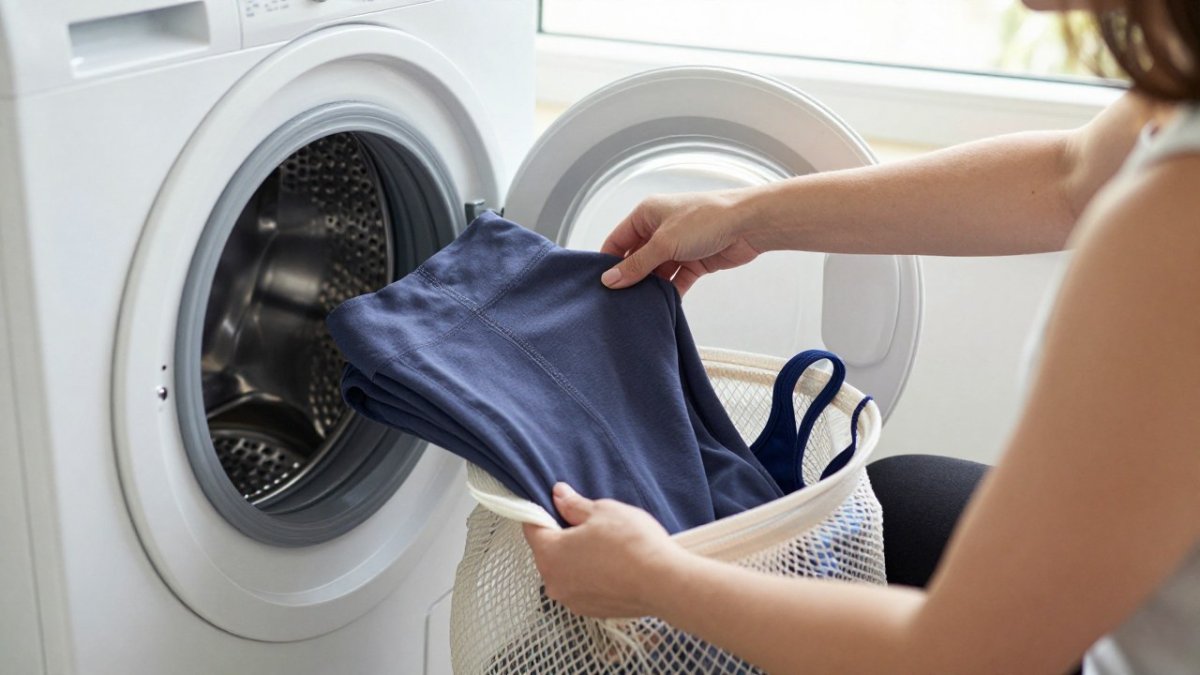
The woman is British.
Sort by fabric, not by colour
Colour sorting matters less than fibre sorting here. Separate synthetic fabrics such as polyester, nylon and elastane from cotton and towels. Cotton sheds lint that clings to stretch fabric, and heavy towels beat up delicate knits in the drum.
- Synthetics: leggings, shorts, compression wear, sports bras
- Cotton: t-shirts and hoodies, washed separately
- Towels and gym towels: their own load, always
The gentle cycle and cold water routine
Follow this order every time:
- Turn garments inside out to protect the outer surface.
- Zip zips and fasten hooks so they cannot snag fabric.
- Place bras and delicates in a mesh bag.
- Choose a cold wash at 30°C or lower.
- Select a gentle or hand-wash cycle with a low spin.
- Add a small dose of mild liquid detergent, never fabric softener.
- Skip the dryer and air-dry instead.
Watch out: fabric softener coats moisture-wicking fibres and blocks their ability to move sweat away from skin. Skip it entirely.
For fabric-specific washing detail on technical running gear, see our guide on how to care for technical running apparel.
How to Remove Odour from Gym Clothes and Stop the Build-Up
The way to remove odour from gym clothes is to kill the bacteria causing it, not to mask the smell. Synthetic fabrics trap body oils and sweat in their fibres, and bacteria feed on both. A 2022 review in PubMed Central on sports clothing and thermoregulation notes that loose-fitting clothing can improve heat dissipation during exercise. Less trapped heat means less sweat, and less sweat means less bacterial food.
Most persistent odour falls into one of three causes: bacteria that survived the wash, detergent residue that keeps trapping oils, or mildew from damp storage. Work out which one you have before you treat it, because the fixes are different and some common remedies can damage stretch fibres.
Troubleshooting stubborn sweat smells
If your kit still smells clean out of the wash, work through this checklist:
- Smell returns fast: bacteria survived the wash. Soak in a vinegar and water mix before your next cycle.
- Underarm and crotch odour only: these zones hold the most body oils. Pre-treat with a small amount of detergent.
- Smell after drying: the garment did not dry fully. Damp fabric breeds bacteria.
- Musty smell from the machine: run a hot maintenance wash on the empty drum.
- Smell in new gear: usually storage. Wash once before first wear.
Detergent buildup: the hidden cause of recurring odour
A common pattern is kit that smells fine when wet but turns sour within an hour of wear. That is usually detergent residue, not fresh bacteria. Too much detergent, or a cold gentle cycle with a low spin, leaves a film inside synthetic fibres.
Signs of buildup include stiff patches, a faint soapy smell when the garment is dry, and white streaks on dark leggings. To strip it, run a warm wash at 40°C with no detergent and a small amount of white vinegar, then rewash normally.
Watch out: vinegar is acidic and repeated soaking can weaken elastane and dull some dyes, so use it as an occasional treatment rather than a routine additive.
Mildew and damp-storage odour
Mildew smells earthy and musty, and it usually starts in a gym bag or a washing machine left closed. Treat it by washing at the highest temperature the care label allows with a mild detergent, then drying thoroughly in moving air. Do not tumble dry to fix mildew, because heat sets the smell into the fibres. If the musty smell survives one wash, the spores have reached the padding or seams and the garment is unlikely to recover.
For a deeper natural method, our guide on how to deodorize synthetic workout clothes naturally walks through soaking and airing in detail.
How to Dry Workout Clothes to Protect Elasticity
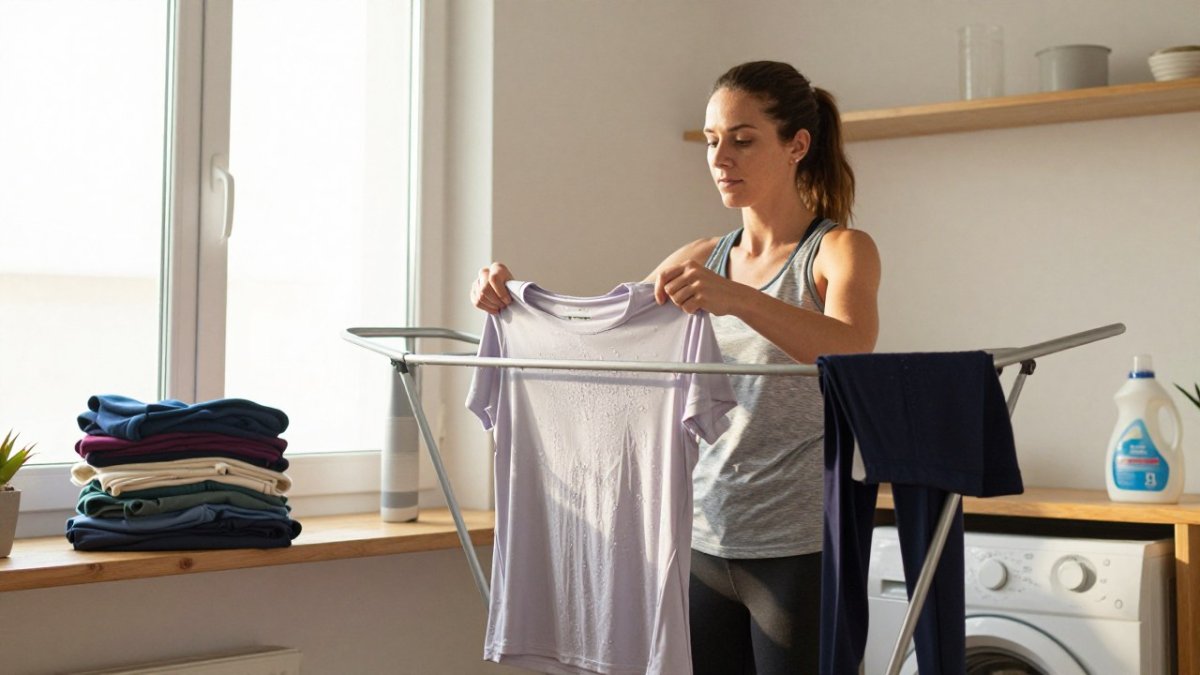
Air-drying is the single best thing you can do for elasticity. Heat from a tumble dryer breaks down elastane fibres, and that is what turns snug leggings into loose ones.
Hang or lay garments flat in a well-ventilated space. Reshape them while damp so seams dry straight. Keep kit away from direct sunlight, radiators and heaters, because strong heat and UV both weaken fibres.
- Air-dry indoors or in shade, never on a hot radiator
- Lay compression wear flat to avoid stretching under its own weight
- Make sure items are fully dry before they go in the drawer
- Never leave damp kit in a gym bag overnight
How Long Do Workout Clothes Last and When to Replace Them
How long workout clothes last depends on fabric quality and care. Lower-quality gym wear can lose shape more quickly than well-made kit.
The Nottingham Trent University research also flags a gap: there is limited evidence on the commercial case for clothing longevity, with most published work focused on fast fashion. That means you have to judge durability yourself.
A simple durability check before you buy
Use this scoring check on any garment before you commit:
- Fabric feels dense, not thin or see-through when stretched
- Seams are flat-locked, not single-stitched
- Elastane content is listed and the label gives clear care instructions
- Waistband recovers its shape after you stretch it
- Reviews mention fit holding up after repeated washes
If a garment fails two or more checks, expect a short life. For more on why budget kit loses shape, read why cheap gym wear loses shape.
Do's and Don'ts for Workout Clothes Longevity
Get these basics right and most of the work is done.
Do:
- Wash after every sweaty session
- Use cold water and a gentle cycle
- Turn garments inside out
- Air-dry away from heat
- Use a mesh bag for bras and delicates
Don't:
- Use fabric softener or bleach
- Tumble dry on high heat
- Wash synthetics with towels
- Leave damp kit in a bag
- Rewear unwashed sweaty gear
Care by Fabric Type and Repairing Common Damage
Different fibres need different handling, and a little repair work adds years to your kit. Treat each fabric on its own terms, and treat specialty features, compression, padding, bonded seams and prints, as their own category rather than assuming the standard cold-wash rule covers them.
Fabric-specific care at a glance
| Fabric | Wash temp | Watch out for | Dry how |
|---|---|---|---|
| Polyester | Cold, 30°C | Holds odour | Air-dry |
| Nylon | Cold, 30°C | Snags easily | Air-dry, shaded |
| Elastane blend | Cold, gentle | Heat kills stretch | Lay flat |
| Merino wool | Cool, 30°C, wool cycle | Shrinks with heat and agitation | Lay flat, reshape damp |
| Cotton | Cool, 30°C | Shrinks, sheds lint | Air-dry |
Merino wool is the exception that proves the rule: it resists odour naturally, so it needs washing less often than synthetics, but it felts if you agitate it warm. Use a wool-specific detergent and never wring it.
Compression wear, sports bras and bonded seams
Compression garments rely on graduated tension, so wash them on the gentlest cycle your machine offers and never wring them, because twisting stretches the fibres unevenly. Sports bras should go in a mesh bag and be air-dried flat, since hanging them by the straps distorts the band. Bonded seams and heat-pressed prints are the most fragile features on modern kit: turn those garments inside out, avoid fabric softener, and never iron directly over the bond or print.
Watch out: antimicrobial finishes lose effectiveness after roughly 30 to 50 washes, so do not rely on them as a substitute for washing after every sweaty session.
Fixing pilling, snags and stretched seams
Pilling comes from friction, so wash less aggressively and use a fabric shaver to tidy the surface. Trim snags with small scissors rather than pulling them. For stretched seams, a simple hand stitch with matching thread restores shape.
For a loose seam, turn the garment inside out and backstitch along the original seam line with polyester thread, which has more give than cotton thread and will not snap when the fabric stretches.
Our guides on how to prevent pilling on gym leggings and common flaws in modern fitness clothing cover the fixes step by step.
Build a Care Routine That Keeps Your REVIVE Gear Going
Good care is a habit, not a chore. Wash cold, dry smart, and repair small faults early, and your kit will outlast the season.
REVIVE Activewear and Apparel offers Padel tennis tech designs and everyday activewear for gym, yoga, running and Padel. Ordering is available for a single item or for larger team orders, with standard or express delivery options and dedicated expert support.
Get started with REVIVE Activewear and Apparel and build a kit that keeps up with every session.
Your gear should not give up before you do. Build a simple care routine, replace only when the durability checks fail, and let quality do the rest.
Frequently Asked Questions
Should you wash workout clothes after every wear?
Yes for anything that has absorbed real sweat. Frequent washing of synthetic fabrics is where most wear happens. Wash leggings, sports bras and tops after each sweaty session. A top worn for a light yoga class can be aired and reworn once, but never put damp or smelly gear back in the drawer. Turn items inside out, use cold water and a gentle cycle to limit fibre damage.
Can you put workout clothes in the tumble dryer?
Avoid it where you can. Heat breaks down elastane and spandex, which is what gives leggings and compression wear their stretch. If you must tumble dry, choose the lowest heat setting and remove items while slightly damp. Air-drying flat or on a hanger protects elasticity and extends workout clothes longevity far more effectively. Keep garments out of direct sunlight and away from heaters, which can also weaken fibres over time.
How do you stop gym clothes from smelling?
Odour comes from bacteria feeding on sweat and body oils trapped in synthetic fabrics. Wash promptly, use the right amount of detergent, and skip fabric softener, which coats fibres and traps smells. For stubborn cases, soak in a vinegar and water solution before washing. Always let gear dry fully before it goes in the laundry basket or wardrobe.
Does fabric softener damage activewear?
Yes. Fabric softener leaves a waxy residue that blocks moisture-wicking performance and traps odour-causing bacteria. It also reduces the stretch recovery of elastane and spandex over time. Skip it entirely for workout clothes and use a small amount of gentle detergent instead. If your gear already feels stiff or smells after washing, a vinegar rinse can strip the residue. This single change makes a measurable difference to how long do workout clothes last in regular use.