 How-to
7 Comfortable Athleisure Outfits for Long Flights
Quick Summary
Athleisure works well for long flights because soft, stretchy fabrics move with your body during hours of sitting, unlike rigid denim or structured trousers. Choose stretch and recovery, breathable knits, and flat seams with a wide covered waistband. Layer thin pieces so you can adjust to changing cabin temperatures.
- Denim doesn't stretch when you sit cross-legged or lean forward to reach under the seat.
- Test stretch fabric by holding a panel across the knee, then releasing it to check recovery.
- Choose a 4-6 cm soft waistband, which distributes pressure better than a thin elastic cord.
- Wear three thin layers rather than one thick one to handle changing cabin temperatures.
- Keep compression socks fitted to your calf size, and check with a GP or pharmacist first if you have a medical condition.
Table of Contents
- Why Athleisure Works for Long Flights
- What to Wear on a Long Flight: Choosing Fabrics That Breathe and Stretch
- Long-Haul Flight Outfit Ideas for Every Comfort Level
- Layering for Changing Cabin Temperatures
- What to Wear on an Overnight Flight to Sleep Better
- Footwear, Compression Socks and Circulation
- Packing a Flight Outfit Checklist and Booking Your Next Trip
- Frequently Asked Questions
Why Athleisure Works for Long Flights
Last Updated: November 18, 2026
Long-haul flights punish tight clothing. After six or seven hours in a seat, waistbands dig in, shoulders stiffen and the cabin feels colder than you expected. Athleisure, the category of stretchy, soft clothing designed to look at home both in the gym and in the airport lounge, handles that problem better than most travel outfits. Those qualities rest on fabric and fit rather than on looks alone.
Most travellers still reach for jeans or structured trousers before a long flight. That's the wrong instinct. Denim doesn't stretch when you sit cross-legged or lean forward to reach under the seat, and rigid waistbands become uncomfortable within the first hour. Athleisure moves with the body, which matters when you're stuck in one position for most of a day.
The outfit also has to work beyond the cabin. You'll likely need to walk through a busy terminal, queue at passport control and then spend hours at your destination. A well-chosen set does all of that without a change of clothes.
What to Wear on a Long Flight: Choosing Fabrics That Breathe and Stretch
Fabric decides most of how a flight outfit feels, but "soft" and "stretchy" are marketing words, not specifications. The useful question is how a garment behaves after four, eight or twelve hours of sitting, standing, queuing and shifting position. That comes down to four measurable properties: stretch, recovery, breathability and seam construction.
Stretch and recovery. Stretch lets the fabric move with you; recovery is what stops it bagging at the knee or seat after hours of compression. Readers weighing whether compression leggings are worth wearing for travel can see what compression leggings offer on a long flight.
Breathability. Cabin air is dry and recirculated, and body heat builds up when you are seated for hours. Fine-gauge knits, mesh panels at the back and underarms, and lightweight nylon or polyester blends can help move moisture away from the skin.
Seams and waistbands. Flatlock or bonded seams reduce pressure points against the seat and armrests. Waistbands should be wide, elasticated and covered rather than narrow and exposed; a 4-6 cm soft waistband distributes pressure better than a thin elastic cord. Check that pockets, zips and drawcords do not sit under the hip or lower back when you lean against a seat.
Here is a practical comparison of the fabric types most worth considering:
| Fabric | Stretch and recovery | Breathability | Best use on a flight | Watch out for |
|---|---|---|---|---|
| Polyester-elastane blend | Good stretch, reliable recovery | Moderate | Base layer or leggings | Can feel warm in a heated cabin |
| Nylon-elastane | Good stretch, smooth finish | Moderate to good | Leggings, joggers, wide-leg trousers | Less breathable in dense weights |
| Modal or cotton blend with elastane | Soft, moderate stretch | Good | Tops and relaxed trousers | Without elastane it stretches out at the knee |
| Brushed fleece with elastane | Moderate stretch | Low | Overnight mid layer | Bulky under a tight outer layer |
| Merino-blend knit | Moderate stretch, good recovery | Good | Base layer for long or overnight flights | Can be warmer than expected in a heated cabin |
Fit criteria for hours of sitting. A relaxed leg that clears the knee gives room to move comfortably. The rise should let you sit without the waistband cutting into the stomach; a high, wide, elasticated waistband stays put without digging in when you slump.
Durability and care. A fabric that feels soft in the shop can lose its stretch after repeated washing. Check that the care label recommends a gentle cycle and low heat.
Long-Haul Flight Outfit Ideas for Every Comfort Level
Different travellers need different levels of structure. A relaxed option suits a short-haul connection, while a more polished look works better for a long-haul flight where you'll walk straight into meetings or a hotel lobby on arrival.
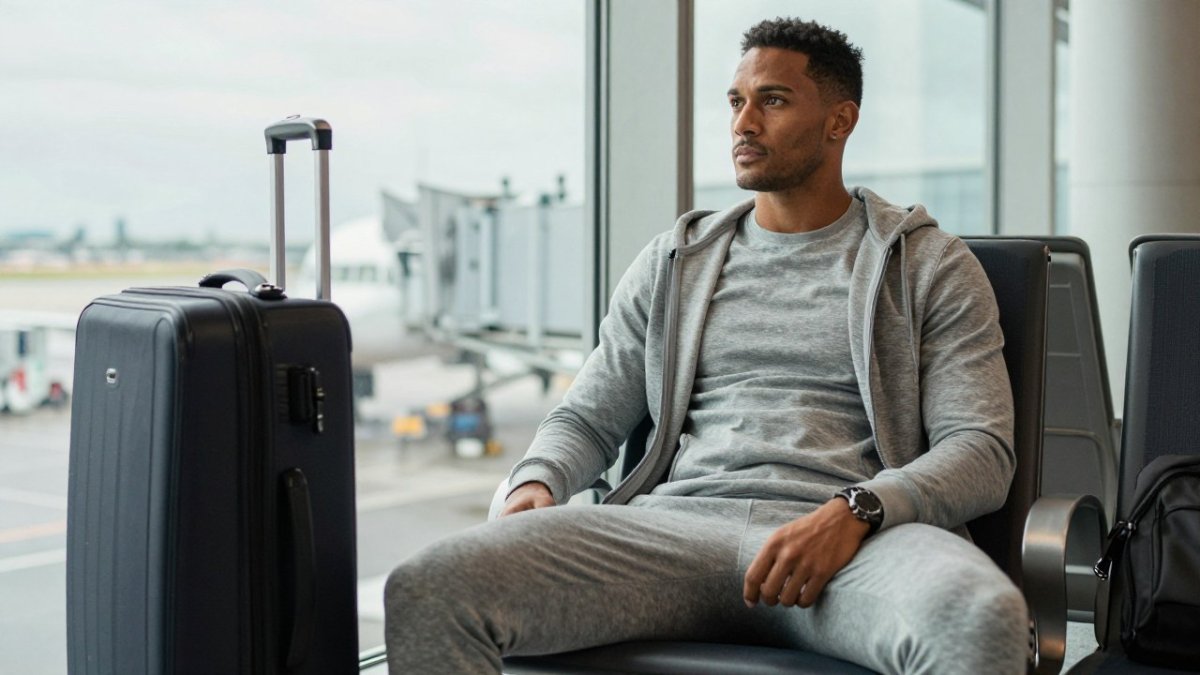
For maximum comfort, pair a seamless or lightly ribbed legging with an oversized sweatshirt and soft trainers. For a smarter look, choose wide-leg joggers with a roomy shirt and a zip hoodie you can remove once the cabin warms up. You can see how to make athleisure look polished rather than sloppy for travel. Both combinations look intentional without sacrificing ease of movement.
Our practical tip: keep the bottom half flexible and let the top layer do the styling. For an overview of lifestyle activewear and how it is styled, see our guide. A cashmere-blend wrap or a travel cardigan dresses up a simple set in seconds and doubles as a blanket on the plane.
Layering for Changing Cabin Temperatures
Cabin temperature rarely stays constant. Boarding can feel chilly, the middle of the flight often runs warm, and the air can turn cold again during the overnight hours. Layering handles all of this without carrying a bulky coat.
Start with a fitted base layer that wicks moisture, then add a mid layer such as a lightweight zip hoodie or knit cardigan. Keep an outer layer light enough to fold into your bag. Each piece should come off or go on without disturbing your seat or your neighbour.
A common mistake is wearing one thick layer. It traps heat when the cabin warms and leaves you underdressed when it cools. Three thin layers give you far more control. Our guide to essential athleisure pieces for every season helps you choose each layer.
What to Wear on an Overnight Flight to Sleep Better
Sleep on a plane depends on comfort and temperature control. Choose soft, loose clothing with no metal fastenings, which can press into your skin when you lean against the window. A relaxed jogger with an elastic waistband and a soft long-sleeve top works well.
Bring a layer you can pull over your head or wrap around your shoulders, since eye masks and neck pillows add warmth. Avoid anything with rough seams, as they become noticeable after a few hours of trying to doze.
Fabric breathability matters more overnight. A brushed fleece feels cosy, but if the cabin runs warm, switch to a lighter knit. You'll sleep better if you can adjust your layers without fully waking up.
Footwear, Compression Socks and Circulation
Footwear should be easy to slip on and off at security, yet supportive enough for long walks through terminals. Slip-on trainers with cushioned soles work well, and they let your feet swell slightly without pinching.
Some travellers choose compression socks for long flights. Anyone with a medical condition should speak to a GP or pharmacist before using them.
Choose a pair with a fit that matches your calf size, since a sock that's too tight can cause discomfort rather than relief. Our guide covers practical things to know about compression socks for long periods of sitting or standing. Take regular walks along the aisle whenever the seatbelt sign allows, whatever socks you wear (Travelling and Thrombosis risk).
Packing a Flight Outfit Checklist and Booking Your Next Trip
Most outfit advice treats every flight the same. In practice, a two-hour hop and a twelve-hour overnight flight need different layers, different spare items and different fabric weights. Use the checklist below, adapted to the length of your journey and the conditions you expect in the cabin.
Short flights (under four hours). One breathable base layer, one removable mid layer and slip-on supportive footwear are usually enough. A light scarf or wrap doubles as a layer if the cabin runs cool.
Medium flights (four to eight hours). Add a second layer you can remove without disturbing your seat, a pair of compression socks if you use them, and a spare set of socks. Choose trousers or leggings with a wide, covered waistband and flat seams. Keep a soft eye mask and earplugs in the same pouch as your socks so you are not searching overhead bins mid-flight.
Long-haul and overnight flights (eight hours or more). Build in three thin layers rather than one thick one: a moisture-wicking base, a mid layer such as a lightweight zip hoodie or knit cardigan, and a packable outer layer. Add a clean change of top and underwear in your carry-on, a pair of quick-drying socks, and a soft layer you can pull over your head or wrap around your shoulders for sleep.
Cabin conditions to plan for. Warm airports and cool cabins are the common pattern. Dress for the warmer terminal with layers you can add once seated, and keep the outermost layer light enough to fold into your bag. Overnight cabins often cool further, so a wrap or cardigan that doubles as a blanket is more useful than a bulky coat.
Hygiene and rewearing. For trips where you will rewear pieces, choose odour-resistant or quick-drying fabrics, pack a clean top and underwear for each long leg, and keep a small laundry bag for worn items. A spare set in your carry-on covers delays, lost luggage and unexpected temperature changes.
Use this checklist before you leave:
- Stretch fabric with a relaxed fit at the leg and waist, and a wide covered waistband
- One breathable base layer and one removable mid layer, plus a packable outer layer for long-haul
- Slip-on, supportive footwear that accommodates slight foot swelling
- Compression socks if you use them, fitted to your calf size, packed in your seat pocket (Travelling and Thrombosis risk)
- A soft layer for overnight sleep that doubles as a wrap or blanket
- A spare top, socks and underwear in your carry-on
- A small laundry bag for worn items on longer trips
If you want to build a flight wardrobe from pieces that already work together, explore the REVIVE Activewear and Apparel range on our website for current styles and sizing. Prices depend on the item and the quantity you order, so check the site for up-to-date figures. Subscribe to our email list to hear about new arrivals before your next trip.
Frequently Asked Questions
What is the most comfortable outfit to wear on a long flight?
For most long-haul trips, a soft, stretchy pair of joggers or leggings with a breathable top and a zip hoodie is the most comfortable combination. Choose a relaxed fit with an elastic or pull-on waistband so nothing digs in when you sit for hours. Pack a light layer you can add or remove as the cabin temperature changes. Athleisure pieces that move with you also make the walk through the airport and the arrival city far more comfortable than rigid denim or structured fabrics.
Is athleisure a good choice for long-haul flights?
Yes, athleisure suits long-haul travel well because it is designed for movement and extended wear. Stretch fabrics allow your legs and hips to shift during a long sit, and relaxed fits avoid pressure points. The same outfit can carry you from the airport to a hotel or a day of sightseeing, which means you need fewer bags. Check that the waistband and seams sit comfortably when seated, as a fit that feels fine standing can become restrictive after several hours.
What fabrics are best for a long flight?
Look for soft, breathable blends that stretch and recover, such as a cotton and elastane mix or a lightweight technical fabric with some give. Natural fibres like cotton help you stay comfortable in warm cabins, while synthetic blends tend to dry quickly and resist creasing. Avoid stiff, heavily structured materials, which restrict movement and trap heat. Test the fabric by sitting cross-legged; if the garment pulls or feels tight, it will likely be uncomfortable on a flight.
Should you wear leggings on a long flight?
Leggings are a practical option for a long flight, provided they have a comfortable, non-restrictive waistband and a fabric that breathes. Many travellers find them more forgiving than jeans during extended sitting. Pair them with a longer top or a cardigan so you feel covered and comfortable if the cabin is cool. If you plan to wear compression leggings, check how they feel after several hours, as some people find tight garments uncomfortable on long sits.