 how-to
How to Wear Athleisure Without Looking Sloppy
Table of Contents
- Why Proportions Matter in Athleisure Styling
- Choosing the Right Footwear for a Polished Look
- Mastering Layering Techniques for Elevated Athleisure
- Building a Capsule Wardrobe with Athleisure Essentials
- How to Style Leggings for Work and Beyond
- Accessorising for a Refined Finish
- How to Care for High-Quality Activewear
- Frequently Asked Questions
Last Updated: September 24, 2026
Why Proportions Matter in Athleisure Styling
The foundation of how to wear athleisure without looking sloppy comes down to one thing: balance. When your proportions are off, even the most expensive pieces look careless. Get them right, and basic items suddenly look intentional.
Think of your silhouette as a whole. If you wear oversized joggers with a baggy hoodie, you disappear into fabric. The opposite problem, fitted leggings with a tight crop top, can read as too casual for most settings. The sweet spot is mixing fitted and loose pieces strategically.
Here's the practical rule: if your bottoms are fitted, wear a top that has some structure or length. If your top is loose, keep your bottoms closer to your body. This creates a refined silhouette that reads as polished rather than lazy.
The key is avoiding the "all loose" or "all tight" trap. One fitted piece and one relaxed piece in the same outfit instantly elevates your look. This balance signals that you've thought about what you're wearing.
Choosing the Right Footwear for a Polished Look
Your shoes make or break an athleisure outfit. Clean, quality trainers are non-negotiable, but the right trainer depends on your silhouette, the proportions of your outfit, and where you're wearing it.
Footwear by Body Type and Silhouette
If you have a petite frame or shorter legs, avoid oversized chunky trainers, they overwhelm your proportions and shorten your visual line. Sleek, minimal trainers in white or neutral tones elongate your silhouette. Conversely, if you're taller or have a larger frame, chunky trainers with defined soles ground your proportions and prevent a top-heavy appearance.
For pear-shaped silhouettes (fuller hips and thighs), trainers with visual weight, like chunky soles or structured uppers, balance your lower half. Pair them with fitted leggings to avoid doubling down on volume. For apple-shaped silhouettes (fuller through the torso), minimalist trainers keep attention on your legs and away from the midsection.
Matching Trainers to Outfit Proportions
Chunky trainers work best with fitted bottoms and structured tops. Pairing oversized chunky trainers with loose joggers and an oversized hoodie creates visual heaviness that reads as sloppy. The same trainers with leggings or slim trousers look intentional and street-style inspired.
Slim or minimalist trainers pair beautifully with looser silhouettes. An oversized sweatshirt with loose joggers and minimal white trainers feels balanced rather than chaotic. This combination works because the shoes don't compete with the volume above.
Context-Specific Footwear Choices
For work or professional settings, avoid trainers that scream "gym." Technical running trainers with visible gel inserts, bright neon accents, or aggressive tread patterns undermine a polished athleisure look. Instead, choose sleek leather or performance-blend trainers in white, black, grey, or navy. Brands that blur the line between athletic and lifestyle footwear, trainers with clean lines, minimal branding, and refined finishes, read as intentional rather than casual.
For casual outings, you have more flexibility, but the principle remains: choose trainers that feel finished. A scuffed, worn-looking trainer signals carelessness regardless of context. Invest in one or two pairs of neutral trainers that work across multiple outfits rather than rotating through several worn pairs.
Maintenance Matters More Than Brand
A £60 trainer kept immaculate outperforms a £150 trainer that's scuffed and dirty. Clean your trainers weekly with a soft brush and mild soap. For leather trainers, use a leather cleaner to maintain the finish. For mesh or knit uppers, a gentle cloth and water work well. Dry them naturally, away from direct heat.
Keep your trainers' soles clean, this is where most people slip up. Dirty soles immediately signal neglect. A quick wipe with a damp cloth takes seconds and transforms how put-together you look. Replace worn insoles every 6-12 months; a fresh insole makes old trainers feel new and improves comfort, which shows in how you carry yourself.
Avoid novelty or overly technical trainers unless you're actually training. The goal is footwear that feels like a deliberate style choice, not gym equipment. Minimalist designs in neutral colours are your safest bet for a refined finish that works across contexts.
Mastering Layering Techniques for Elevated Athleisure
Layering is where athleisure transforms from gym wear into something genuinely stylish. The trick is using layers to create shape and visual interest without adding bulk.
Start with a fitted base, leggings or fitted joggers work well. Add a longer top that hits mid-thigh. Over that, add a structured piece like a denim jacket, blazer, or fitted bomber. This creates three distinct layers that define your silhouette rather than hiding it.
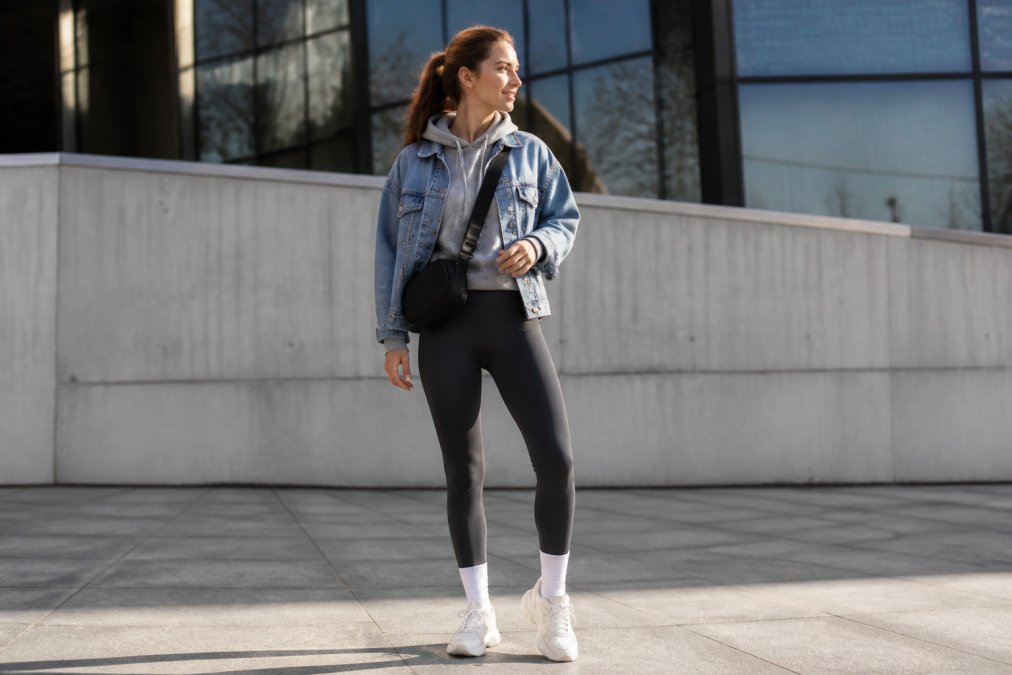
Technical fabrics matter here. A breathable, moisture-wicking base layer performs better than cotton and looks sleeker. Mid-weight tops in structured materials like ponte or performance blends hold their shape better than soft jersey.
Avoid layering pieces that are all the same weight. Pairing a heavy hoodie with thick joggers creates bulk. Mix a lightweight base with a structured mid-layer and a fitted outer layer instead.
Colour coordination in layers makes the difference between intentional and chaotic. Monochromatic layering, different shades of the same colour, creates a simplified look. Alternatively, use neutral bases with one accent colour in an outer layer.
Building a Capsule Wardrobe with Athleisure Essentials
A capsule wardrobe approach to athleisure means owning fewer pieces that work together seamlessly. This prevents the "nothing to wear" feeling while keeping your style cohesive.
Your foundation pieces should be neutral. Invest in:
- Black fitted leggings with a high waist for support and a smooth silhouette
- Grey or navy joggers in a structured fabric, not loose cotton
- White or grey fitted tops in breathable material
- A neutral tank or sports bra for layering underneath
These basics mix and match endlessly. Add one structured jacket, a denim jacket, blazer, or bomber, in black or a neutral tone. This single piece transforms casual bottoms into something polished.
Colour coordination becomes easier with a neutral foundation. You can add pops of colour through accessories rather than core pieces. This approach is more versatile and cost-effective long-term.
Quality matters in a capsule wardrobe. One excellent pair of leggings outperforms three cheap pairs.
How to Style Leggings for Work and Beyond
Leggings are versatile, but styling them for work requires intention. The biggest mistake is treating work leggings the same as gym leggings. Context changes everything.
For a work setting, choose leggings in a structured fabric with a higher waist. Black or navy reads more professional than bright colours or patterns. Pair them with a longer top that covers your hips, this is non-negotiable for a polished look.
Add a blazer or structured jacket over the top. This single addition transforms leggings from casual to business casual. A white shirt under the blazer adds formality. A fitted knit under the blazer keeps things approachable but put-together.
Footwear shifts the context dramatically. Trainers keep the look casual. Loafers or flat boots elevate it immediately. Even simple black flats change how professional the outfit reads.
For casual settings, leggings pair beautifully with oversized sweaters or longer tees. Keep the silhouette balanced, if your top is loose, ensure your leggings fit close to your body. If your top is fitted, slightly looser leggings work if they're still structured.
Avoid visible panty lines (VPL) by choosing high-waisted styles and wearing appropriate undergarments. This detail matters more than people admit. A smooth silhouette signals that you've paid attention to your appearance.
Accessorising for a Refined Finish
Accessories separate sloppy athleisure from elevated athleisure. The right bag, watch, or jewellery transforms how polished you look.
A structured crossbody bag or small backpack works beautifully with athleisure. Avoid oversized gym bags or drawstring sacks, they undermine your effort. A quality bag in leather or structured nylon elevates the entire outfit.
Jewellery should be minimal but intentional. A simple watch, small hoops, or delicate chain necklace adds sophistication without clashing with athletic pieces. Avoid chunky statement jewellery with athleisure, it creates visual conflict.
A lightweight scarf or bandana adds polish and versatility. Tie it around your neck, wear it as a headband, or drape it over your bag. This single piece changes how intentional your outfit feels.
Colour coordination through accessories matters.
How to Care for High-Quality Activewear
Quality activewear only stays quality if you care for it properly. Understanding why fabrics degrade helps you make smarter choices that keep your athleisure looking polished for years, not months.
Understanding Fabric Degradation and the "Sloppy" Look
Washing Protocols by Fabric Type
Drying: The Critical Step
Storage Practices That Preserve Shape
Regular Inspection and Repair
Investing in Longevity
Frequently Asked Questions
How do I know if my athleisure outfit looks polished rather than sloppy?
A polished athleisure look combines three elements: fitted proportions that balance your silhouette, high-quality technical fabrics that hold their shape, and intentional layering or accessories. Check that your leggings or joggers fit snugly without excess fabric bunching at the ankles, your top is either fitted or balanced with fitted bottoms, and your overall outfit has a cohesive colour palette. If you'd swap individual pieces into a gym bag without hesitation, it likely needs more refinement.
Can I actually wear athleisure to work, or is it only for casual settings?
Yes, but context matters. How to style leggings for work requires strategic choices: pair high-waisted, opaque leggings with a structured blazer or oversized jumper that covers the hip area, add a crossbody bag or structured handbag, and choose smart trainers or leather-look sneakers. Avoid visible compression lines (VPL) by selecting seamless styles, and stick to neutral or monochromatic colour schemes. This approach works for creative industries, hybrid working days, or casual office environments, not formal client-facing roles.
What fabrics should I prioritise when building a capsule wardrobe with athleisure essentials?
Invest in technical, breathable fabrics that maintain their shape: look for moisture-wicking blends, structured knits, and durable performance materials. Avoid thin, stretchy fabrics that lose elasticity quickly. Quality matters because a well-made piece transitions seamlessly between gym and street-style settings, lasting through multiple washes without pilling or fading. When building your capsule, prioritise versatile neutral pieces in black, navy, grey, and white that coordinate easily and work across seasons.
How do I care for high-quality activewear to keep it looking polished longer?
Wash inside-out in cold water on a gentle cycle to protect fabric finish and colours. Use a sports-specific detergent and skip fabric softener, which breaks down moisture-wicking properties. Air-dry flat or on a hanger rather than tumble-drying, as heat damages elastic and technical coatings. Store folded or hung to prevent stretching, and inspect seams and zips regularly. Proper care extends the lifespan significantly, keeping your pieces looking refined and maintaining their structured silhouette.