 Listicle
Benefits of Compression Leggings for Travel: What Works
Last Updated: October 23, 2026
Quick Summary
Compression leggings apply gentle, continuous pressure to your legs and are marketed for travel because that pressure may support circulation during long periods of sitting. Treat them as comfort clothing for extended sitting, not as medical protection, since the evidence for travel-specific claims is thin. They are not the same as medical compression stockings.
- A 2016 review found compression clothing may improve endurance variables like time to exhaustion, but that is a running result, not a travel result.
- Graduated compression means firmer pressure at the ankle and lighter pressure higher up the leg.
- Put compression garments on before you set off, while your legs are still fresh and swelling has not started.
- Sizing down for more compression causes discomfort and restricted movement, which defeats the purpose.
- Anyone with a clotting history or diagnosed circulatory condition should speak to a clinician before wearing compression garments for travel.
Table of Contents
- What Compression Leggings Actually Do on a Long Journey
- The Real Benefits of Compression Leggings for Travel
- Compression Leggings for Flying: What to Expect on a Long Flight
- Compression Leggings vs Compression Socks: Which to Pack
- How to Choose Compression Leggings That Fit and Work
- Who Should Seek Medical Advice Before Wearing Compression Garments
- Frequently Asked Questions
What Compression Leggings Actually Do on a Long Journey
Compression leggings are close-fitting garments that apply gentle, continuous pressure to your legs, and they are marketed for travel because that pressure may support circulation during long periods of sitting. The honest answer is more modest than most product pages suggest.
A 2016 review indexed in PubMed's review of compression clothing and endurance performance found that compression clothing may improve variables linked to endurance, including time to exhaustion. That is a running result, not a travel result. It tells you compression garments can influence how your legs feel under load. It does not tell you they prevent clots on a plane.
This distinction matters. Compression leggings are not the same as medical compression stockings, and the evidence base for travel-specific claims is thin. Below, we break down what the realistic benefits are, how to choose a pair that actually fits, and who should speak to a clinician first. If you want the wider science of compression gear, our guide on what the benefits of wearing compression gear are goes deeper.
The Real Benefits of Compression Leggings for Travel
Travel comfort is the realistic promise here, not medical protection. Compression garments are widely used to support how legs feel during extended sitting, and that is where the sensible expectations sit.
Reducing Leg Swelling and Fluid Retention
Leg swelling during long travel days is common, and gentle compression is a standard way people manage the sensation. Graduated compression, where pressure is firmer at the ankle and lighter higher up, is the principle behind most travel garments.
What most guides miss is that snug leggings are not automatically compression garments. A search summary of NHS advice for journeys over four hours recommends loose clothing, drinking water and moving around, and it draws a clear line between everyday snug leggings and medical compression. Treat swelling reduction as a comfort benefit, not a clinical one.
Muscle Support, Fatigue and Soreness
A 2016 review reported that compression garments reduced muscle soreness and swelling and improved muscle power and strength, according to The Conversation's summary of compression garment research. Again, that evidence comes from exercise settings.
In practice, this means a supportive fit may help your legs feel less heavy after a day of sitting and walking through terminals. It will not replace movement. For a closer look at the recovery angle, read our guide on compression leggings for recovery.
Circulation and Blood Flow
Compression clothing is used to support blood flow, and that is the mechanism most travel marketing leans on. The evidence quality is the weak point.
Compression Leggings for Flying: What to Expect on a Long Flight
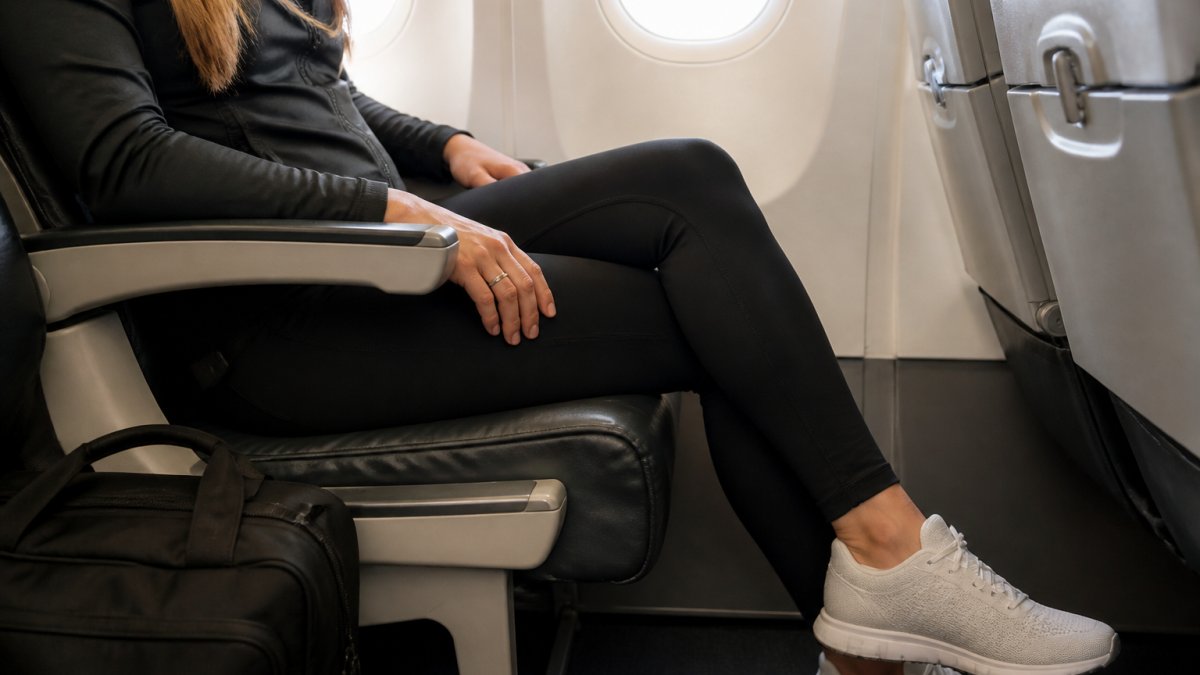
Compression leggings for flying are best treated as comfort clothing for extended sitting, not as protection. Expect a supportive fit, less of that heavy-leg feeling, and a garment that works with the rest of your travel clothing.
Three practical points shape the experience. Breathability and moisture-wicking fabric matter more than pressure on a warm cabin. A waistband that stays put stops you adjusting constantly. And freedom of movement lets you walk the aisle, which is the thing NHS-style guidance actually emphasises.
Compression Leggings vs Compression Socks: Which to Pack
Compression socks are the more established travel garment; compression leggings cover more of the leg and double as everyday wear.
The key mechanical difference is where the pressure sits. Graduated compression socks apply firm pressure at the ankle that eases progressively up the calf.
That difference shapes the practical trade-offs:
| Option | Coverage | Pressure profile | Best for | Watch out for |
|---|---|---|---|---|
| Compression socks | Ankle and calf | Firm at the ankle, easing up the calf | Targeted lower-leg support, easy to remove mid-journey | Visible with shorts or skirts, less versatile off the plane |
| Compression leggings | Full leg, waist to ankle | Gentle and often more uniform | Travel comfort plus all-day wear at the destination | Snug fit is not the same as medical compression |
| Both | Full leg plus focused ankle pressure | Layered | Long-haul journeys where you want coverage and targeted pressure | Can feel overkill on short trips, and layering can bunch |
A few travel-specific points are worth knowing before you decide.
When to put them on. Put compression socks on before you set off, while your legs are still fresh and swelling has not started.
Whether to wear them throughout. For a long-haul flight, many travellers wear them for the whole journey and take them off once they reach the hotel. For a shorter hop, wearing them for the flight and changing on arrival is fine.
Breaks and movement. Neither garment replaces getting up. Walk the aisle when it is safe to do so, flex your ankles and calves while seated, and drink water. Compression is a supporting measure, not a substitute for movement.
Removal. Socks are easier to take off in a cramped seat; leggings are easier to keep on through a day of travel and into the evening. If you are prone to feeling restricted, socks give you a quicker exit.
If you are weighing leggings against other legwear for the trip and the gym, our leggings vs joggers comparison is a useful next read. For most travellers, leggings win on versatility and socks win on targeted pressure.
How to Choose Compression Leggings That Fit and Work
Choosing well comes down to fit, fabric and compression level, in that order. Get the fit wrong and nothing else matters.
Work through this checklist before you buy:
- Measure your waist and hip, then check the brand's size chart rather than guessing
- Confirm the fabric is moisture-wicking and quick-drying for warm cabins
- Check the waistband sits flat and does not roll when you sit for hours
- Look for breathability and temperature regulation details
- Confirm the compression level is described honestly, not implied to be medical
- Check pockets if you want to carry a phone or locker keys
A common mistake is sizing down for "more compression". That produces discomfort and restricted movement, which defeats the purpose. Sizing and pricing vary by product and order quantity, so check the product page for current details.
Who Should Seek Medical Advice Before Wearing Compression Garments
Anyone with a diagnosed circulatory condition, a history of blood clots, varicose veins under treatment, or a long-term health condition should speak to a clinician before wearing compression garments for travel. This is not a reason to avoid them; it is a reason to get advice first.
The same applies if you are pregnant, recovering from surgery, or managing leg pain that has not been assessed. A garment cannot tell you whether pressure is appropriate for you.
It helps to be clear about what you are asking. Compression leggings sold as activewear are not medical devices, and they are not a substitute for medical-grade compression stockings, which are prescribed or fitted for a clinical purpose and come with a defined pressure rating. If a clinician has recommended medical compression, use that rather than a fashion pair.
Useful questions to raise with a clinician or pharmacist include:
- Is there any reason I should avoid compression on my legs?
- Do I need medical-grade compression, or is a supportive garment enough for my situation?
- How long should I wear it during a journey, and when should I take it off?
- Are there signs I should watch for that mean I should remove it?
- Does anything about my medication or health history change the advice?
Signs to remove the garment and seek advice include numbness or tingling in the toes or feet, skin that turns pale, blue or unusually cold, marked swelling that does not settle, a band of deep pressure marks that does not fade, and any new pain, redness or warmth in the calf.
Fit matters here too. Overly tight or poorly fitted leggings can dig in at the waist, bunch behind the knee, or restrict movement, which is uncomfortable and defeats the purpose. A garment that leaves deep marks or makes you reluctant to walk is the wrong garment, regardless of what the label says.
Frequently Asked Questions
Are compression leggings the same as medical compression garments?
No. Snug leggings should not be assumed to provide medical-grade compression. Medical compression garments are prescribed and fitted to specific pressure levels, usually measured in millimetres of mercury. Most retail compression leggings offer a supportive fit rather than clinical compression. If you have varicose veins, a history of blood clots, or a diagnosed circulation condition, speak to your GP or a pharmacist before relying on leggings for travel. For healthy travellers on long journeys, the NHS advises loose clothing, drinking water and moving around, so treat leggings as a comfort aid rather than a medical device.
Can compression leggings help with leg swelling during travel?
They can help reduce the feeling of heavy, swollen legs during extended sitting, which is why compression clothing is popular for long-haul flights and long travel days. Research on compression garments has linked them to reduced muscle soreness and swelling, though most of that evidence comes from exercise settings rather than air travel. The effect depends on fit: a pair that is too loose will not provide meaningful tissue support, and one that is too tight can restrict comfort. Pair leggings with regular movement and hydration for the best results on a long journey.
How tight should compression leggings feel for a flight?
They should feel firm and supportive without pinching, digging into the waistband, or leaving deep marks when you remove them. You should be able to slide a finger under the fabric at the ankle and waist. If your legs go numb, tingle, or the fabric bunches behind the knee, the fit is wrong. Look for a graduated compression design that is tighter at the ankle and looser toward the thigh, plus a wide, flat waistband for extended sitting. Always check the brand's size guide and measure yourself rather than guessing.
Should you wear compression leggings for a long car journey?
Yes, they can be useful for any journey over four hours, whether by car, coach, train or plane. Extended sitting is the issue, not the mode of transport. The NHS advises loose clothing, water and movement for journeys over four hours, and compression leggings can support comfort alongside those habits. Plan rest stops to walk around, avoid crossing your legs for long stretches, and remove the leggings if you notice numbness, tingling or increasing pain. If you have a circulation condition or are pregnant, check with a healthcare professional first.
Long travel days ask a lot of your legs, and the right pair of leggings makes the sitting, the walking and the waiting noticeably easier. REVIVE Activewear and Apparel builds functional activewear with a supportive fit, moisture-wicking fabric and details like mesh phone pockets, backed by easy ordering from a single item to team quantities and standard or express delivery. Get started with REVIVE Activewear and Apparel and pack gear that works as hard as you do.