 How-to
Essential Gear for Padel Beginners: What to Buy First
Quick Summary
Essential gear for padel beginners is four items: a racket, a can of balls, court-suitable shoes, and moisture-wicking clothing. Choose a round or teardrop racket with a balanced feel, and rent one first if you are unsure. Add accessories once you have played a few sessions.
- Beginner rackets are usually round or teardrop-shaped, mid-weight, and built for control.
- Check grip size by seeing whether your fingertips comfortably touch the base of your palm.
- Court shoes with good lateral support beat road running shoes for padel's side-to-side movement.
- Many venues rent rackets and supply balls, so ask before buying your own.
- Buy a performance racket and premium shoes only after playing regularly and knowing your needs.
Table of Contents
- Essential Gear for Padel Beginners: The Starter Checklist
- Choosing a Padel Racket for Beginners
- Padel Shoes for Beginners: Matching Footwear to the Court
- Balls, Clothing and Accessories to Pack for Your First Session
- A Starter Budget: Essential, Optional and Upgrade-Later Gear
- Booking Your First Session With the Right Kit
- Frequently Asked Questions
Essential Gear for Padel Beginners: The Starter Checklist
Last Updated: November 6, 2026
Padel is a fast-growing racket sport in the UK, and most new players arrive at their first session with a clear idea of what they want to do on court and no real plan for what to wear or carry, so a focused list of essential gear for padel beginners helps them prepare. Getting the basics right before you step on court saves money and makes the first few sessions far more comfortable. Most beginners need a racket, a can of balls, court-suitable shoes, and clothing that handles sweat well. Everything else can wait.
At REVIVE Activewear and Apparel, we design activewear with padel in mind, with a focus on innovative Padel tech designs. This guide walks through what to buy first, what to borrow, and what can wait until you know you'll keep playing.
Padel gear for beginners is simpler than most sports shops make it look. Start with four core items: a racket, balls, shoes and clothing. Add accessories once you have played a few sessions and know what you actually miss.
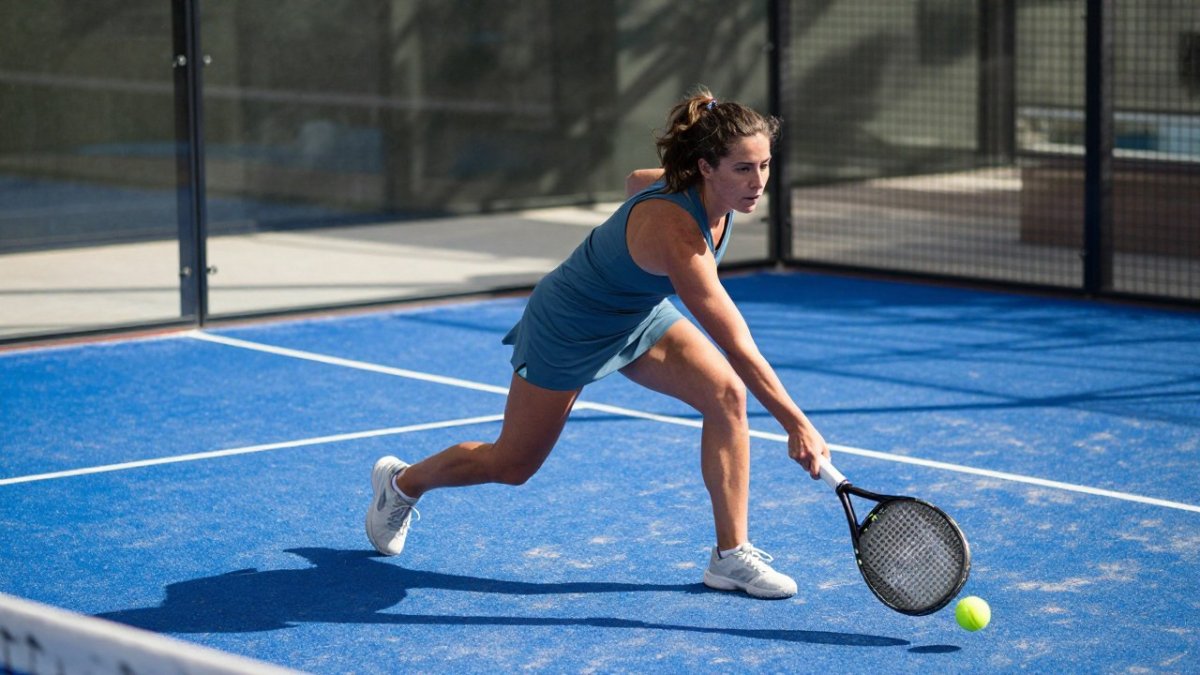
Padel involves lateral movement and sudden stops against the glass, so footwear with good lateral support is worth choosing.
Choosing a Padel Racket for Beginners
A padel racket is the single biggest purchase for a new player, and the choice matters more than most people expect. Beginner rackets tend to be round or teardrop-shaped, slightly heavier than performance models, and built for control rather than power. That combination gives you a larger sweet spot and more forgiveness on off-centre shots.
Avoid buying the most expensive racket on the shelf in your first month. Advanced players often choose lighter, stiffer frames that reward precise technique and punish mistakes, which is the opposite of what a beginner needs.
Weight, Shape and Balance Explained
Racket weight is the first spec to check. Lighter rackets are easier to swing for long rallies, while heavier ones add stability and power on smashes. For most beginners, a mid-weight racket offers the best balance of comfort and control.
Shape changes how the racket feels in play. Round frames give a large sweet spot and an easy, forgiving feel, while diamond or teardrop shapes provide more power at the expense of margin for error. Balance point also matters. A head-heavy racket adds power but tires the arm faster, so a balanced or slightly head-light frame is usually the better starting point.
Beginner Decision Rules for Weight, Balance and Grip
Rather than memorising specs, consider these general rules of thumb. A round or soft-teardrop frame with a balanced or slightly head-light balance is often a forgiving starting point. A lighter frame can help some players recover position, while a mid-weight frame can give more stability for others.
Grip size is the most overlooked fit issue. A simple check: hold the racket and see whether your fingertips comfortably touch the base of your palm. If there is a large gap, the grip is too small; if your fingers dig into the palm, it is too large. Comfort and hand size matter more than any single measurement.
Renting or Buying a Padel Racket
Many padel venues let you borrow or rent a racket for a session, so you can test a few models before committing. This is the cheapest way to learn what feels right. If you play once or twice a month, renting is often the sensible choice for your first few months.
Buy once you're playing regularly and know your preferred weight and shape. A racket you already like will suit you better than one chosen from a shop shelf on your first visit. Pricing varies by retailer and product, so check current prices with the seller before buying.
Watch out: a racket that is too heavy or too head-heavy for your arm can be tiring to play with.
The article points to a few key specs and a practical way to test a racket before buying one.
| Racket choice | Beginner-friendly option | Why it matters |
|---|---|---|
| Shape | Round or soft teardrop | Larger sweet spot, more forgiving |
| Balance | Balanced or slightly head-light | Less arm fatigue |
| Weight | Mid-weight | Comfort and control |
| Grip check | Fingertips touch palm base | Comfortable fit |
| Before buying | Rent or borrow at a venue | Test models cheaply first |
Padel Shoes for Beginners: Matching Footwear to the Court
Shoes are the most underrated piece of padel kit. Padel courts are enclosed by glass and walls, and players make frequent quick stops, pivots and side-steps. Shoes built for this movement give better grip and stability than road running shoes or generic trainers.
Look for shoes designed for padel or court sports, with good lateral support and enough cushioning for repeated jumps.
Watch out: wearing the same shoes you use for outdoor running can wear out quickly on court surfaces and leave you with less stability during lateral moves.
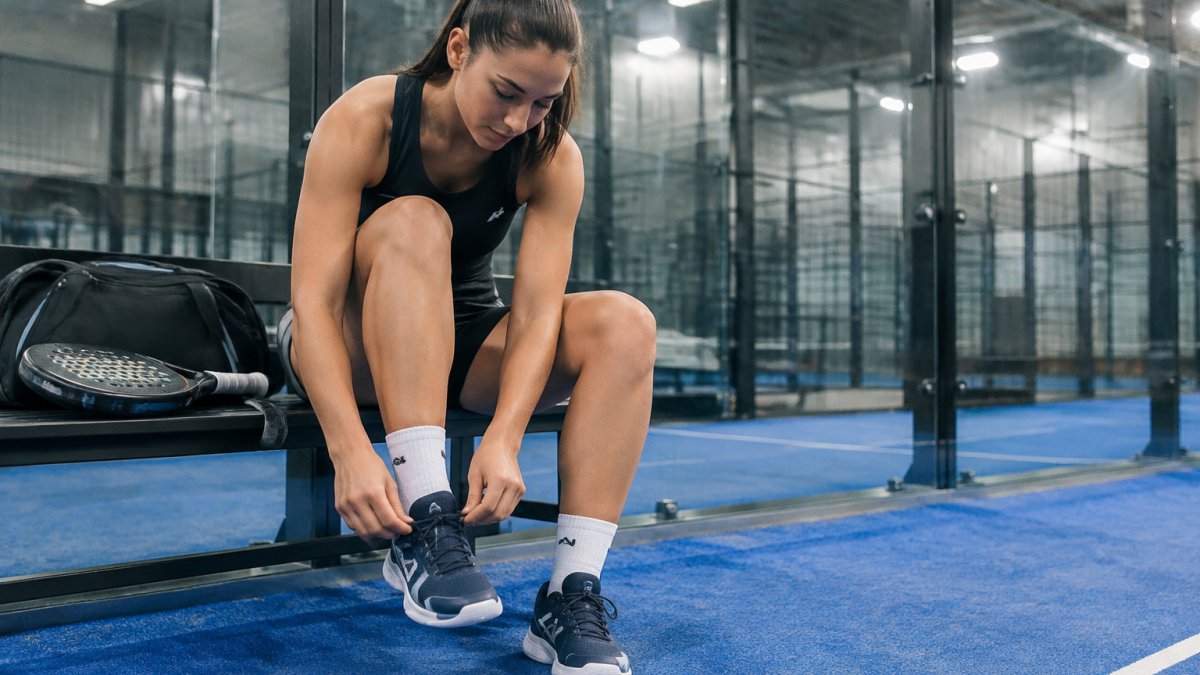
For apparel that suits court movement, you can explore our padel-focused activewear for a range of options.
Balls, Clothing and Accessories to Pack for Your First Session
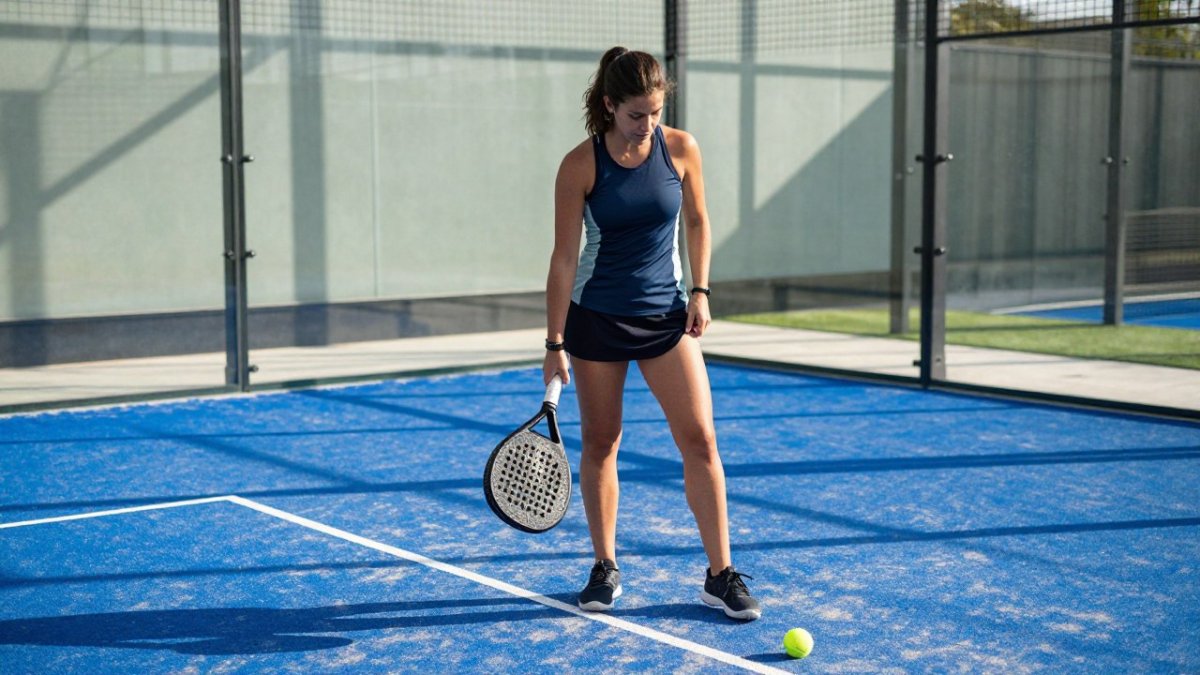
For your first session, pack what you need to play comfortably and nothing more. Padel balls are usually sold in pressurised tubes, and balls lose bounce over time. Many venues supply balls, so check before you buy.
Clothing should wick sweat away from the skin. Padel can be an intense game, and moisture-wicking tops and shorts or leggings can help keep you comfortable during long rallies. Layering helps in winter, since courts can be cold until you warm up.
Sun protection and sweat control also matter. A cap or visor keeps glare out of your eyes on outdoor courts, and a small towel helps with grip. A basic racket bag protects your racket and keeps your kit together.
Pack list for a first session: racket, one can of balls (if the venue doesn't provide them), court shoes, moisture-wicking top and bottoms, a towel, water, and a cap or visor.
- Racket and cover
- Court shoes
- Moisture-wicking clothing
- Towel and water bottle
- Cap or visor for outdoor courts
- Spare socks
A Starter Budget: Essential, Optional and Upgrade-Later Gear
Costs vary depending on the item, quantity and where you shop, so check current prices with the retailer before planning your budget.
Essential (first session): a beginner racket, a tube of balls, court shoes and suitable clothing. If you rent a racket for your first few sessions, you can defer the largest cost.
Optional (comfort and protection): a racket bag, overgrips, a towel, a cap or visor, and spare socks. These improve comfort and protect your kit but are not required to play.
Upgrade later: a performance racket, premium shoes, and specialist layers for colder conditions. Buy these only once you have played regularly and know what you need. It can pay to wait until your game and preferences have settled before investing in higher-end kit.
A first-session kit can cost less if you rent a racket and already own suitable sportswear. Check with your venue whether rackets and balls are included, as that single question can shift the budget significantly.
For current prices on our range, visit the REVIVE Activewear and Apparel website or request a quote. Prices depend on the item, quantity and delivery option you choose.
Booking Your First Session With the Right Kit
Once you have the essentials, booking your first session is simple. Choose a venue with beginner sessions or coaching if you can. Ask in advance whether rackets and balls are provided so you know what to bring.
Arrive a few minutes early to warm up and get used to the court. Wear your court shoes and moisture-wicking clothing, bring water, and keep your expectations realistic for the first hour.
If you want to keep playing, you can subscribe to our email list for updates on our new padel products and training tips.
Frequently Asked Questions
What equipment do you need to start playing padel?
To start playing padel you need a padel racket, a few padel balls, court shoes with good grip, and comfortable sportswear. Some venues may lend or rent rackets, so check before you buy. Protective glasses and a cap or visor are useful extras but not essential. Buy the racket and shoes first, since they affect comfort and safety most, and add the rest once you know you will keep playing.
Can you wear running shoes to play padel?
Running shoes are not ideal for padel. Padel involves lateral movement, quick stops and turns on a court surface that can grip more than a running track, which puts stress on the ankles and knees. Shoes designed for padel or tennis offer better sideways support and a sole suited to the court. If you are playing occasionally on a budget, a pair of cross-training shoes with a flat, grippy sole is a reasonable temporary option until you can buy proper court shoes.
Is it better to rent or buy a padel racket as a beginner?
For a first few sessions, renting or borrowing a racket is the sensible choice, because you have not yet decided what weight, shape or balance suits your game. Once you are playing regularly, buying a racket that feels comfortable in your hand is worthwhile. Pricing varies by retailer, so check current prices directly with the seller before deciding.
How many padel balls do you need to play?
For a standard doubles game you need one pair of balls per game, although most players bring a fresh can or tube of three balls for each session so there is always a spare. Balls lose their bounce over time, especially outdoors and in heat, so replace them when they feel flat. Some venues may provide balls for hire, so check before you buy.