 How-to
How to Deodorize Synthetic Workout Clothes Naturally
Last Updated: October 30, 2026
Quick Summary
Wash synthetic workout clothes promptly in cool water, skip fabric softener, and use a measured white vinegar soak of 30 to 60 minutes to deodorize synthetic workout gear naturally. Dry everything fully before storing it, because lingering dampness lets odour return.
- Wash sweaty kit as soon as possible, inside out, on a cool or warm cycle.
- Never add fabric softener, since it coats fibres and traps odour.
- Soak garments in a diluted vinegar solution for 30 to 60 minutes, not longer.
- Use weaker vinegar and soak elastane blends for no more than 30 minutes.
- Never mix vinegar with chlorine bleach, which releases harmful chlorine gas.
Table of Contents
- Why Synthetic Workout Clothes Hold On to Odour
- What You'll Need Before You Start
- Step 1: Wash Promptly and Avoid Fabric Softener
- Step 2: Use a Vinegar Soak for Gym Clothes
- Step 3: Add Bicarbonate of Soda for Laundry Odours
- Step 4: Refresh Between Washes with a Natural Fabric Spray
- Troubleshooting Odours That Return After Washing
- Booking Your Next Kit Refresh at REVIVE
- Frequently Asked Questions
Why Synthetic Workout Clothes Hold On to Odour
Synthetic workout clothes hold onto smells far longer than cotton. Compare which fabrics resist odour best before you choose or care for your kit. A study from Ghent University researchers examined the microbial odour profile of polyester and cotton clothing after wear, and it found that stronger body odour is associated with synthetic textiles than with natural ones (Microbial Odor Profile of Polyester and Cotton Clothes after a Fitness Session). That gap matters for anyone who trains hard.
The fabric itself is the problem. Polyester, nylon and elastane are built to wick sweat away from your skin, which is exactly why they feel good during a session. But the same fibres can trap the bacteria that cause smell, and they hang on to it through repeated wear.
Here is the good news. You can deodorize synthetic workout clothes without harsh chemicals. The steps below show you how. Read why synthetic fabrics suit repeated training if you are deciding whether your gear is worth saving.
How sweat and odour-causing bacteria build up in fabric
Sweat itself is mostly water and salt, and it barely smells. The odour comes from bacteria that feed on the sweat and release smelly by-products.
- Sweat soaks into the fabric during a session
- Bacteria multiply in the warm, damp fibres
- The smell sets in if the clothes sit wet in a bag
Watch out: leaving sweaty kit balled up in a gym bag is the fastest way to lock in odour. Air it out first.
What You'll Need Before You Start
Gather these basics before you wash. You likely have most of them already.
- Cool or lukewarm water
- Plain white vinegar
- Bicarbonate of soda (baking soda)
- A mild detergent, ideally one made for sportswear
- A basin or bucket for soaking
- A spray bottle for a fabric refresh
Check the care label first. Most synthetic activewear is fine with these steps, but some delicate pieces need gentler handling.
Step 1: Wash Promptly and Avoid Fabric Softener
Wash your kit as soon as possible after a workout. Waiting gives bacteria more time to settle in. Turn garments inside out so the sweaty side gets cleaned properly.
Skip fabric softener. It coats synthetic fibres with a waxy film. That film traps odour and reduces the fabric's ability to wick moisture.
- Wash on a cool or warm cycle
- Use a sportswear detergent where possible
- Never add fabric softener to activewear
- Dry completely before storing
Step 2: Use a Vinegar Soak for Gym Clothes
White vinegar is a weak acid, and that acidity does two useful things: it helps dissolve the alkaline residue left behind by sweat and detergent, and it creates conditions that many odour-causing bacteria tolerate less well. It does not sterilise fabric, and it will not remove odour that has already bonded deep into a fibre, so treat it as a residue stripper and a reset, not a cure.
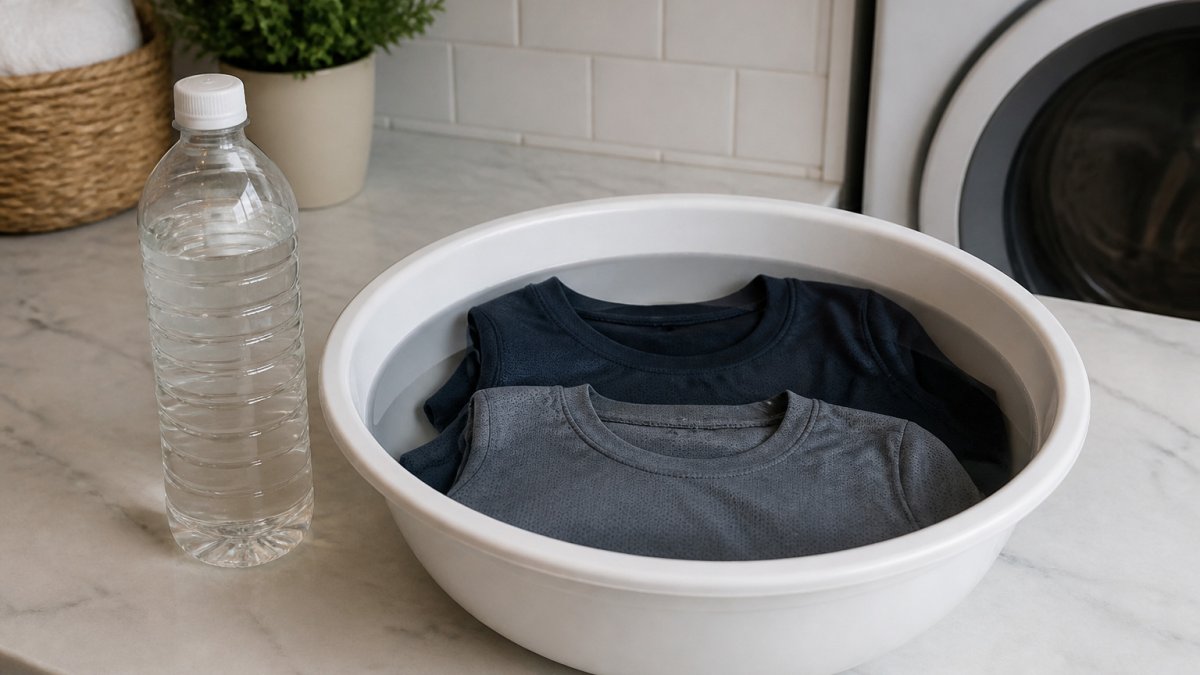
A measured soak recipe
Do not pour neat vinegar onto the garment; full-strength acid can dull elastane over repeated use and may affect some dye finishes.
- Fill the basin with cool water first, then add the vinegar, this avoids a concentrated patch sitting against the fabric.
- Submerge the garments fully and agitate gently for a minute so the solution penetrates the fibres.
- Soak for 30 to 60 minutes. Longer is not better: past about two hours the benefit plateaus and the risk to stretch fibres rises.
- Wring gently, then wash as normal on a cool cycle.
Which fibres tolerate it
- Polyester: generally fine at the 1:20 dilution. Polyester is the fibre most associated with retained odour, so this is where a vinegar soak earns its place.
- Nylon: also tolerant, but nylon dyes can be less colourfast, test a hidden seam first on dark or bright pieces.
- Elastane blends: use the weaker end of the range (around 150 ml per 5 litres) and soak for no more than 30 minutes. Elastane is the component most vulnerable to repeated acid exposure, and losing stretch is a bigger loss than a faint smell.
- Any garment with a water-repellent or wicking finish: check the care label. Some finishes are degraded by repeated acidic soaks, so use vinegar sparingly and rely on prompt washing instead.
What vinegar will not fix
If the smell survives a correct vinegar soak and a normal wash, the cause is usually not surface residue. It is more likely embedded odour in the fibre core, a dirty washing machine, or incomplete drying, the troubleshooting section below deals with each of those. Repeating stronger vinegar soaks on a garment that has already been soaked will wear the fabric without solving the problem.
The soak needs different dilutions and soak times depending on the fabric, so here is how the main cases compare.
| Fabric | Guidance | Key caution |
|---|---|---|
| Polyester | Generally fine at 1:20 dilution | Most associated with retained odour |
| Nylon | Tolerant | Dyes can be less colourfast |
| Elastane blends | Weaker end, around 150 ml per 5 litres | Soak no more than 30 minutes |
| Water-repellent or wicking finish | Use sparingly | Check care label first |
Step 3: Add Bicarbonate of Soda for Laundry Odours
Bicarbonate of soda absorbs smells rather than masking them. Add half a cup to your wash load alongside your usual detergent. For a stronger treatment, make a paste with a little water and rub it into stubborn patches before washing.
Keep the load size reasonable. Overstuffing the machine leaves clothes under-rinsed, and leftover residue can attract smell.
Step 4: Refresh Between Washes with a Natural Fabric Spray
Not every top needs a full wash after each use. A quick spray can freshen kit in between.
Mix equal parts water and white vinegar in a spray bottle. Mist lightly over the fabric, let it air-dry fully, and avoid soaking the material. Test a small hidden area first to make sure the colour holds.
Troubleshooting Odours That Return After Washing
Odour that comes back after washing is a diagnostic problem, not a cleaning problem. Find care habits that keep activewear performing wash after wash. Four different causes produce a similar smell, and each needs a different fix. Work through them in this order, it moves from the cheapest and most common cause to the most stubborn.
Step 1: Rule out incomplete drying
This is the most common cause and the easiest to miss. A garment that feels dry at the seams can still hold moisture in thicker panels, waistbands and gussets. If that residual dampness sits in a drawer or gym bag, bacteria restart within hours and the smell returns even though the wash was fine.
- Test: press a dry tissue firmly against the thickest part of the garment, then check whether the tissue feels cool or shows any dampness.
- Fix: dry synthetics fully, air-drying works well, but give it enough time and airflow rather than a quick hour on a radiator. Hang garments so air reaches both sides, and do not fold or store until completely dry.
Step 2: Check for residue build-up
If drying is not the cause, the next suspect is detergent or softener residue. Residue traps bacteria against the fibre and can also reduce wicking performance. Signs include stiffness, a faint perfumed-but-not-clean smell, and white streaks on dark fabric.
- Test: run a single garment through a rinse-only cycle with no detergent. If the water looks cloudy or soapy, residue is present.
- Fix: stop using fabric softener entirely, reduce your detergent dose to the lower end of the label guidance, and add an extra rinse to the cycle. A vinegar soak at the dilution in Step 2 above will strip existing residue.
Step 3: Inspect the washing machine
The machine can recontaminate clean laundry. Detergent drawers, door seals and the space between the drum and the outer tub accumulate a biofilm that transfers onto clothes. A common pattern is odour that appears on every load, not just activewear.
- Test: smell the inside of the drum and the door seal after a cycle. A musty or sour smell points to machine build-up.
- Fix: run an empty hot maintenance cycle with a machine cleaner or a cup of white vinegar, wipe the door seal and detergent drawer, and leave the door ajar between washes so the drum dries. Clean the filter if your machine has one.
Step 4: Treat deeply embedded odour
If the first three checks are clear and the smell persists, the odour has bonded into the fibre core. This is most common in polyester and in garments worn repeatedly without a full wash.
- Test: the smell is present immediately after a correct wash and does not vary between loads.
- Fix: a longer, measured soak, either the vinegar soak above or an enzyme-based sportswear detergent used as a presoak according to its label, followed by a cool wash and full drying. Repeat once. If a second correct treatment does not shift it, the fibre has likely reached the end of its useful life, and replacing the garment is the practical answer.
Booking Your Next Kit Refresh at REVIVE
Sometimes the smell is set in for good, and it is time to replace a favourite. Browse the embroidered Project Revive sweatshirt in white as a fresh option. REVIVE Activewear and Apparel designs men's and women's activewear for gym sessions, running, yoga and Padel tennis, with a Padel-specific tech range. Browse the current range and pick up a fresh top when your old kit is past saving.
Frequently Asked Questions
How do I get the smell out of my workout clothes?
Wash the clothes as soon as you finish training, turning them inside out and avoiding fabric softener. Air-dry them fully, as damp synthetic fabric encourages odour-causing bacteria to return.
How long should I soak gym clothes in vinegar?
Check the care label first, then rinse thoroughly and wash as normal. Never mix vinegar with bleach or other cleaning products, as the combination can release harmful fumes.
Can bicarbonate of soda remove odour from synthetic workout clothes?
Bicarbonate of soda can help absorb odours, and it works best as a supplement to prompt washing rather than a replacement for it.
Why do my Dri Fit shirts smell after washing?
Synthetic moisture-wicking fabrics such as polyester can trap body oils and bacteria within their fibres, and standard detergents may not fully remove them. Residue from fabric softener can also coat the fibres and hold odour in. Wash the shirts promptly, skip fabric softener, use an enzyme-based or sports detergent, and make sure they dry completely. If odour returns, check your washing machine and hamper for build-up, as these can reintroduce smell to clean clothes.