 ultimate-guide
Benefits of Moisture Wicking Padel Apparel
Table of Contents
- Why Moisture Wicking Padel Apparel Changes Your Game
- How Moisture-Wicking Fabric Works
- Breathable Fabric for Padel: Airflow and Temperature Regulation
- The Best Fabric for Padel Clothing: A Practical Comparison
- Moisture-Wicking vs Quick-Dry Clothing: What's the Difference?
- How to Wash Moisture-Wicking Sportswear Without Ruining It
- Fit, Seams and Movement: What Padel Demands From Your Kit
- Conclusion: Choosing Moisture Wicking Padel Apparel That Works
- Frequently Asked Questions
Last Updated: October 12, 2026
Why Moisture Wicking Padel Apparel Changes Your Game
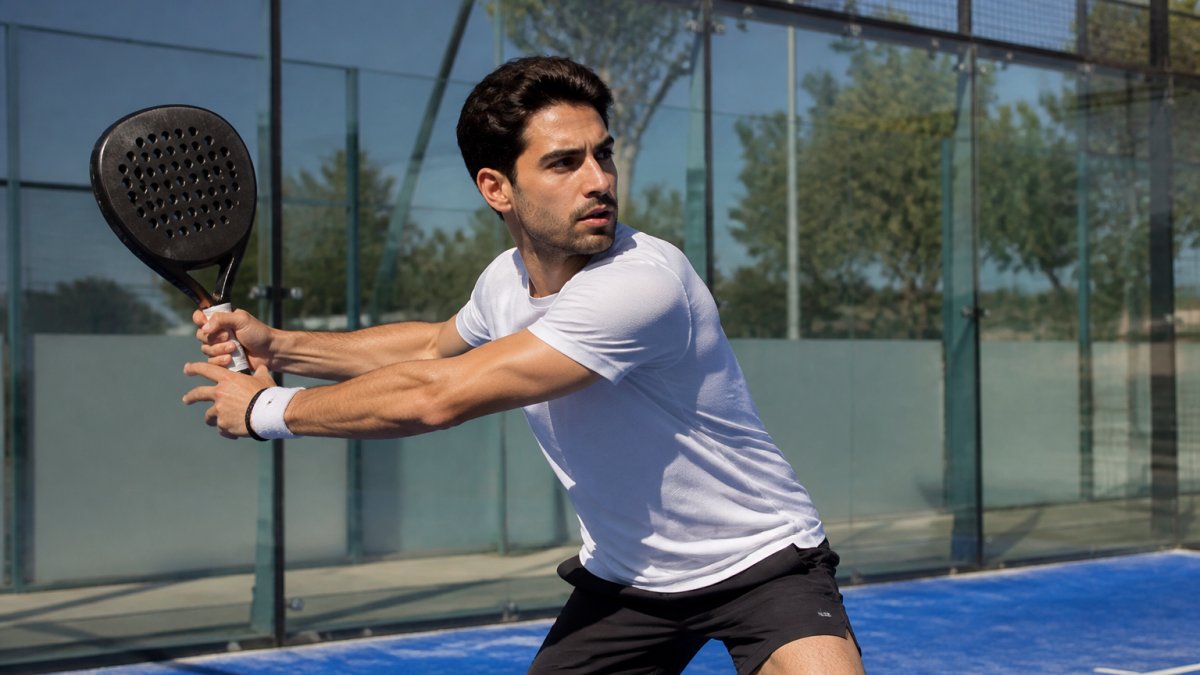
Moisture wicking padel apparel pulls liquid sweat away from your skin and spreads it across the fabric surface so it evaporates quickly, keeping you drier and cooler.
Wicking is a chain: absorb, transport, spread, evaporate. Break any link and the shirt turns into a wet towel against your back.
How Moisture-Wicking Fabric Works
Moisture-wicking fabric is a knit or weave of synthetic technical fibers that move liquid sweat from the inner surface to the outer surface by capillary action.
Two properties decide performance. Hydrophilicity is how readily the fiber attracts water; capillarity is how efficiently the structure moves it. Polyester scores poorly on the first and well on the second, which is why it works when engineered rather than plain.
From Liquid Sweat to Fast Evaporation
The journey happens in four stages:
- Absorption - the inner face of the fabric contacts liquid sweat on your skin
- Transport - capillary channels carry moisture through the yarn structure
- Spread - moisture fans out across a wide surface area on the outer face
- Evaporation - airflow and body heat convert that spread moisture into vapour
Step three is where cheap kit fails. If moisture pools instead of spreading, evaporation slows and you stay clammy. A wide spread also keeps the fabric from feeling saturated, which is why a good technical tee feels barely damp even when you sweat heavily.
Breathable Fabric for Padel: Airflow and Temperature Regulation
Breathable fabric for padel lets air and water vapour pass through it, a separate job from moving liquid sweat. Wicking handles the liquid; breathability handles the vapour and heat. You need both, and a garment can excel at one and fail at the other: a tightly woven polyester shell with no ventilation can wick beautifully and still leave you overheating.
Airflow does two things on court. This is why mesh panels sit under the arms and across the upper back on well-designed padel clothing. The Health and Safety Executive guidance on thermal comfort makes a useful general point that applies here: the body regulates temperature through a balance of heat production and heat loss, and clothing that blocks that loss forces the body to work harder.
Breathability, Ventilation and Quick-Drying Are Not the Same Thing
Players and even some retailers use these terms interchangeably. They describe three different mechanisms, and confusing them leads to buying the wrong kit.
- Breathability is the fabric's ability to let water vapour pass through the material itself. It is a property of the yarn and the knit density, not of any holes cut into the garment.
- Ventilation is airflow through deliberate openings: mesh panels, laser perforations, open-knit zones. It moves air and vapour physically rather than by diffusion.
- Quick-drying is how fast the fabric releases moisture it already holds, which matters most after you stop moving and your body heat drops.
A garment can be highly breathable but poorly ventilated (a dense knit with no mesh), or highly ventilated but slow-drying (mesh backed by a cotton-blend liner). The best padel tops combine all three: breathable knit, targeted ventilation in the heat zones, and a fast-drying fibre blend.
Why Padel Overheats You Differently From Other Racket Sports
Padel is played on a smaller court than tennis, so you take more short, explosive steps per point and recover less between them. Rallies last longer because the walls keep the ball in play, and the glass enclosure reduces airflow compared with an open court. The result is a higher sustained sweat rate over a shorter distance, making breathability and ventilation more important than in sports with longer rest periods.
| Property | What It Moves | Where It Matters Most |
|---|---|---|
| Moisture wicking | Liquid sweat | Back, chest, underarms |
| Breathability | Water vapour through the fabric | Whole garment, especially upper back |
| Ventilation | Air through mesh panels and perforations | Underarms, sides, back yoke |
| Quick-drying | Residual moisture after play | Collar, hem, seams |
The Best Fabric for Padel Clothing: A Practical Comparison
The best fabric for padel clothing is a polyester-dominant knit, usually blended with a small percentage of elastane for stretch, because polyester transports moisture well, dries fast, and holds its shape through repeated washing. Here is how the main options compare.
Polyester, Nylon, Elastane and Merino Compared
Polyester is the workhorse. It is hydrophobic by nature, so it releases moisture to evaporation quickly.
Nylon is stronger and softer against the skin than polyester, with better abrasion resistance.
Elastane is never the main fiber. Added at roughly 5-15%, it provides the four-way stretch that lets you lunge, twist, and recover without the garment pulling across the shoulders.
Merino wool is the outlier: it regulates temperature well, resists odour naturally, and feels comfortable across many conditions.
| Fabric | Moisture Transport | Drying Speed | Durability | Best For |
|---|---|---|---|---|
| Polyester | Excellent | Fast | High | Hot and humid courts |
| Nylon | Good | Moderate | Very high | Blends, abrasion resistance |
| Elastane (blend) | N/A (stretch only) | N/A | Moderate | Movement and fit |
| Merino wool | Moderate | Slow | Moderate | Cooler conditions, odour control |
Moisture-Wicking vs Quick-Dry Clothing: What's the Difference?
Moisture-wicking and quick-dry clothing are not the same thing, though they are frequently sold as if they were. Wicking describes how a fabric moves liquid sweat away from your skin; quick-dry describes how fast it releases moisture once it has it.
The difference shows up at the changeover. Strong wicking with poor drying leaves your top heavy and damp when you stop moving, because evaporation depends on airflow and body heat, and both drop when you sit down.
The Saturation Point: Why Even Good Fabric Stops Working
Every wicking fabric has a saturation point. Below it, moisture moves freely from skin to surface and evaporates. Above it, the capillary channels are full, transport slows, and the fabric holds water against your skin.
Saturation is driven by three things: how fast you sweat, how humid the air is, and how quickly the fabric evaporates what it has absorbed.
Layering: Where Wicking Quietly Fails
Wicking works because moisture can escape the outer surface of the fabric. Put a waterproof or windproof layer on top and that escape route closes: vapour builds up inside, the inner layer saturates, and you end up wetter than if you had worn nothing. If you play outdoors in cooler weather, choose a breathable outer layer with ventilation, or accept that the wicking layer will do less work than its label claims.
A Quick Way to Tell Them Apart in the Shop
- Wicking is about the inner face: does the fabric pull moisture off skin? Look for terms like 'moisture management', 'profiled fibre', or 'hydrophilic finish'.
- Quick-drying is about the outer face and the fibre: does it release moisture fast? Look for polyester-dominant blends and open knits.
- Breathability is about vapour passing through the fabric itself, which is a third property again.
A top that claims all three without naming the fibre blend is usually claiming none of them convincingly. The WRAP textile guidance on fibre composition is a useful reference if you want to understand how fibre blends affect performance and care.
How to Wash Moisture-Wicking Sportswear Without Ruining It
How you wash moisture-wicking sportswear decides how long it keeps working. The two fastest performance killers are fabric softener and high heat: softener coats fibers in a waxy film that blocks capillary channels, and heat damages elastane and can melt the fine filaments that do the transport work.
A Simple Washing Routine That Protects Performance
- Wash at 30°C or lower, on a gentle cycle
- Skip fabric softener entirely, every time
- Use a small amount of standard detergent, not a biological overload
- Turn garments inside out to protect the outer face
- Wash with similar fabrics, not heavy cottons or towels
- Air dry on a line or rack; avoid tumble drying
- Wash after every session; dried sweat salts clog fibers over time
That last point is the one people skip. Leaving sweat to dry in the fabric lets salts and oils settle into the yarn structure, and the shirt starts to smell within minutes of putting it on, even when clean. If that has already happened, a warm soak with a dedicated sportswash, or a diluted white vinegar rinse, usually resets it.
Fit, Seams and Movement: What Padel Demands From Your Kit
Padel demands more from a garment's construction than most players expect. The court is small, so you spend rallies in a low, wide stance, changing direction sharply and reaching for balls off the back glass, repeated deep lunges, overhead smashes, and heavy rotational movement through the torso.
A common mistake is sizing up for a looser feel. That usually makes things worse: an oversized top rides up on overheads and drags when you twist. Size to your chest and shoulder measurement, not your usual casual tee size, and check the fit guide before ordering.
Conclusion: Choosing Moisture Wicking Padel Apparel That Works
The market is full of tops that claim technical performance and deliver a printed label. Check the fibre blend, look for real mesh panelling in the heat zones, and treat care instructions as part of the product.
Choosing kit that actually performs on court is harder than it should be, and most players only find out after a summer of damp, heavy shirts.
Frequently Asked Questions
Is moisture-wicking clothing actually beneficial or bad for you?
For padel, moisture wicking padel apparel is beneficial because it moves liquid sweat away from your skin and spreads it across the fabric surface so it evaporates faster. That reduces prolonged moisture exposure, which is the main cause of chafing and skin irritation during long rallies. The main caveat is that wicking fabrics need regular washing, since oils and sweat residue clog the fibre structure over time and reduce how well they perform.
Do you really need specialist clothing for padel?
You can play in a cotton T-shirt, but cotton holds liquid sweat against your skin, becomes heavy and restricts movement. Padel involves repeated lunges, quick direction changes and high-intensity rallies, so a technical top and shorts that stretch and dry quickly make a noticeable difference to comfort. A moisture-wicking base layer plus flexible shorts is usually enough; you do not need a full separate wardrobe.
What's the difference between Dri-FIT and moisture-wicking?
Dri-FIT is a brand name for a fabric technology, while moisture-wicking describes what the fabric does. Any Dri-FIT garment is moisture-wicking, but plenty of moisture-wicking tops use different branded or unbranded technical fibres. When comparing, look at the fabric composition and weave rather than the label. A polyester and elastane blend with a knit structure designed for moisture transport will perform similarly regardless of the trademark on the tag.
How should you wash moisture-wicking sportswear to keep it working?
Wash at 30°C on a gentle cycle with a small amount of mild detergent, and avoid fabric softener because it coats the fibres and blocks moisture transport. Turn garments inside out, skip the tumble dryer or use a low heat setting, and air dry flat or on a line. Wash soon after playing rather than leaving sweaty kit in a bag, and use a sport-specific detergent occasionally to remove built-up oils and odour.