 How-to
How to Care for Technical Running Apparel
Last Updated: November 10, 2026
Quick Summary
Wash technical running apparel in cool or lukewarm water on a gentle cycle, inside out, with a mild liquid detergent and no fabric softener. Air-dry it away from direct sun, since heat weakens elastane and shortens stretch life.
- Wash in cool or lukewarm water on a gentle or delicate cycle.
- Turn garments inside out and close zips and Velcro before washing.
- Skip fabric softener, because it coats fibres and blocks moisture-wicking.
- Rinse sweaty kit soon after a session and let it dry fully before storing.
- Air-dry where possible, or use the lowest heat setting on a tumble dryer.
Table of Contents
- Why Technical Running Apparel Needs Different Care
- How to Wash Running Clothes Without Damaging the Fabric
- Removing Sweat Odour and Bacteria From Sportswear
- How to Dry Running Clothes Without Losing Performance
- Reading Care Labels and Caring for Different Fabrics
- Handling Sweaty Gear Between Runs and Washing Routines
- Planning Your Next Wash Routine for Longer-Lasting Kit
- Frequently Asked Questions
Technical running apparel is built from synthetic fibres, moisture-wicking finishes and stretch knits that behave differently from cotton. Wash it the wrong way and the fabric can lose its stretch, its breathability and its smell control within a few months. For most runners, the good news is that caring for it takes very little extra effort once you know what to avoid. This guide from REVIVE Activewear and Apparel walks through the washing, drying and storage habits that keep performance kit working for longer.
According to Nottingham Trent University research on clothing longevity, technical testing and design choices are critical for keeping garment performance over time. Care plays a big part in that. The steps below show how to put it into practice.
Why Technical Running Apparel Needs Different Care
Technical running kit is not the same as an old cotton T-shirt. Moisture-wicking polyester and nylon blends pull sweat away from the skin, and many pieces carry coatings or finishes that help them dry quickly. Those same features can suffer from heat, harsh detergents and fabric softener.
Think of it this way: the parts that make the gear perform are also the parts that get damaged most easily. A few simple habits protect them.
- Synthetic fibres hold odour and bacteria if they stay damp too long, and our guide on how to prevent pilling on gym leggings covers the fabric wear that comes with frequent washing.
- Heat can weaken elastic and stretch recovery
- Fabric softener coats fibres and reduces breathability
- Abrasive or harsh cleaners can wear down surface finishes
How to Wash Running Clothes Without Damaging the Fabric
Washing is where most damage happens, so it is worth getting this part right. The routine below works for most technical running gear.
Water temperature, cycles and turning garments inside out
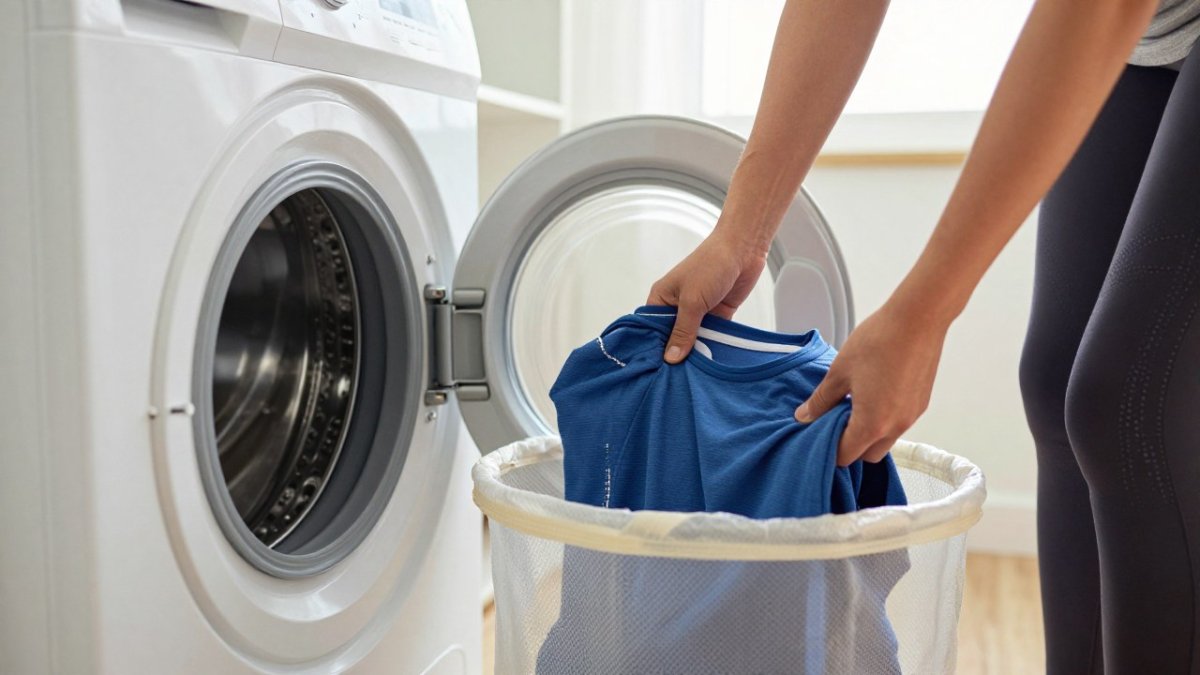
Wash in cool or lukewarm water, and choose a gentle or delicate cycle. Hot water can break down elastane and wear out finishes faster.
Turn leggings, tops and shorts inside out before the wash. This protects prints, reflective details and the outer surface from friction against the drum. Zips and Velcro should be closed so they do not snag other items.
Separate your load by colour and fabric type. Dark running kit can bleed onto lighter pieces, and heavy items like jackets can rub thin tops.
Watch out: Overloading the drum increases friction and can leave clothes under-rinsed, which lets sweat residue build up.
Choosing the best detergent for sportswear
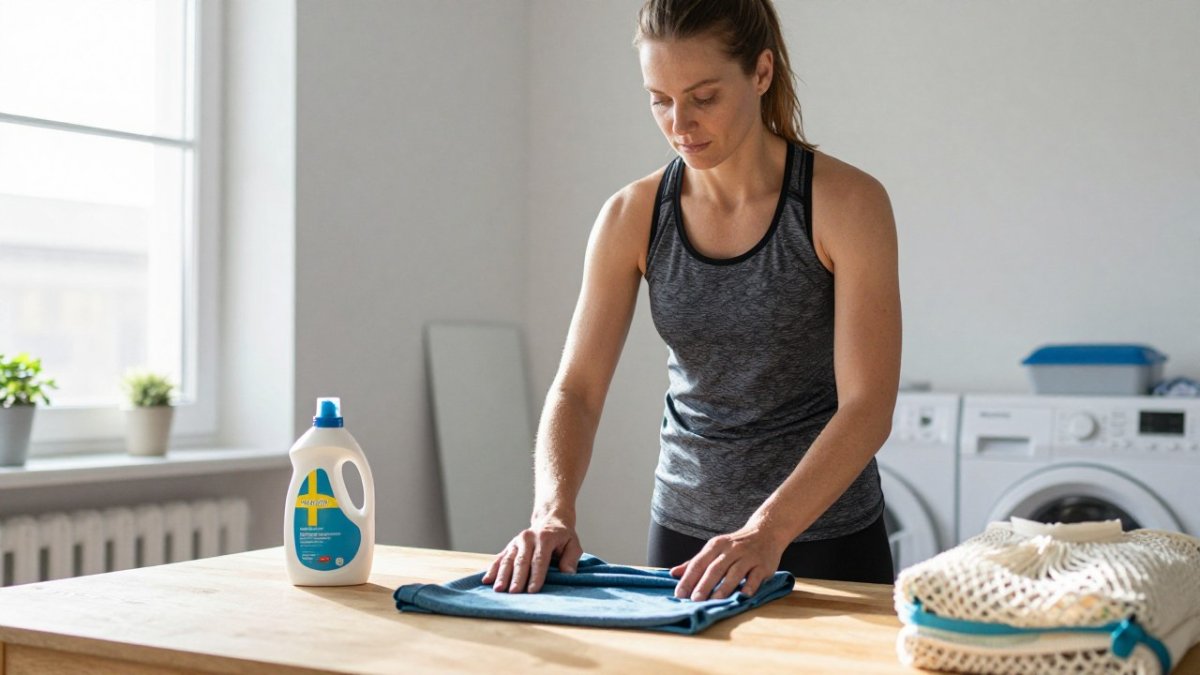
Pick a mild liquid detergent designed for activewear or sensitive skin. Liquid products dissolve more easily than granular powders, which can leave residue that clings to synthetic fibres.
Skip fabric softener altogether. It coats the fabric and blocks the moisture-wicking action you paid for. If you want a fresh smell, a small amount of white vinegar in the rinse does the job without the coating.
Removing Sweat Odour and Bacteria From Sportswear
Sweat itself is almost odourless, and the smell comes from bacteria that feed on the residue left once sweat is trapped in the fabric. Keeping kit dry between sessions limits that build-up.
For everyday prevention, rinse sweaty kit in cool water as soon as you can after a session, then wash it within a day or two. Let it dry fully before it goes into a drawer or bag, because trapped moisture restarts the bacterial cycle.
If a smell persists after a normal wash, work through these steps in order:
- Soak the garment in cool water with a small amount of enzyme-based or activewear detergent for 30 to 60 minutes. Enzyme detergents break down the proteins that bacteria cling to.
- Wash on a gentle cycle at 30 degrees, using a full rinse. Under-rinsing is a common reason odour returns.
- Air-dry completely in a ventilated spot. Check for any remaining smell before drying, because heat can lock in a smell that cold, damp fabric still gives off.
- If the smell remains, repeat the soak with a specialist technical-fabric cleaner rather than increasing the detergent amount.
Some additives can make the problem worse. Check the care label before using bleach of any kind, and avoid very strong fragrance boosters, which can coat fibres in the same way fabric softener does.
Watch out: Never mix a bleach-based cleaner with a vinegar rinse, because the combination can release harmful fumes and is not a useful deodoriser.
How to Dry Running Clothes Without Losing Performance
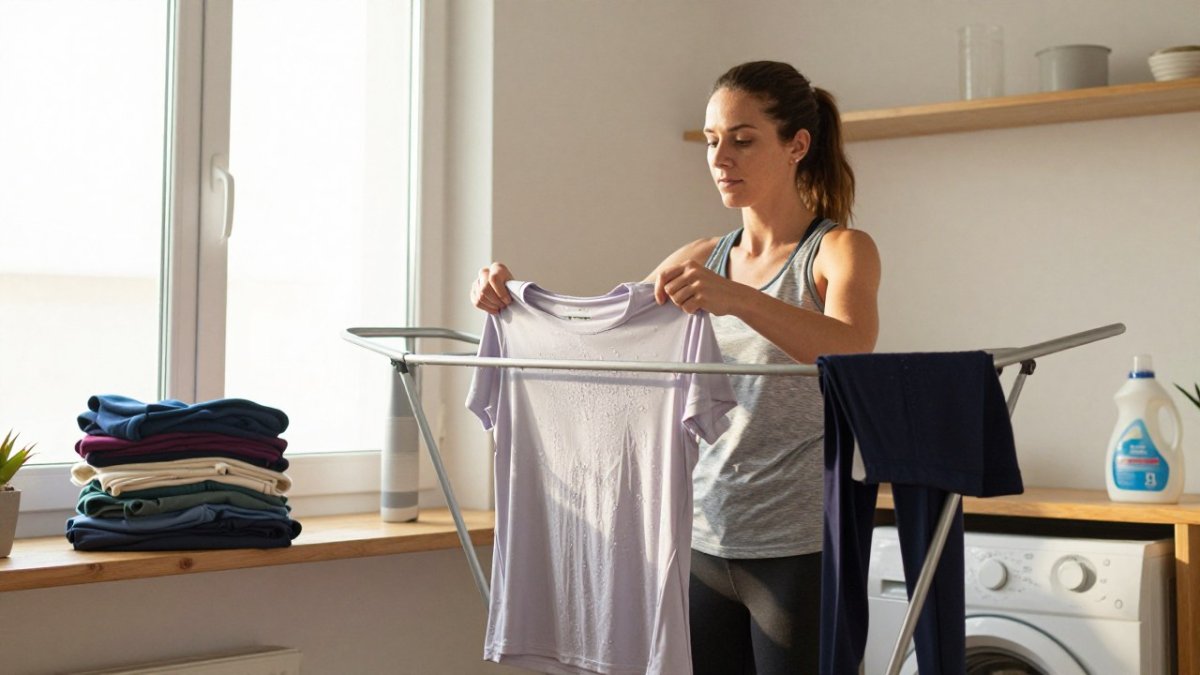
Air-drying is the safest option. Hang kit away from direct sun, which can fade colours and weaken fibres over time. Lay items flat if they are heavy or have structured panels, so they keep their shape.
If you use a tumble dryer, choose the lowest heat setting or an air-fluff cycle. Heat is the enemy of elastane, so high-temperature cycles shorten the life of stretch and recovery.
Make sure everything is fully dry before you store it. Trapped moisture is what brings odour back.
The drying method you choose affects how long your kit keeps its stretch and performance, so the main options compare as follows.
| Drying method | Best for | Key difference |
|---|---|---|
| Air-drying | Most technical kit | Safest option, away from direct sun |
| Tumble dryer, lowest heat | Garments that must be machine-dried | Use lowest heat or air-fluff setting |
| High-heat tumble drying | Not recommended | Heat weakens elastane and shortens stretch life |
Reading Care Labels and Caring for Different Fabrics
Care labels are the manufacturer's own instructions for the specific garment, so they should override general advice whenever the two conflict. Most technical running kit carries a label with five symbols: a washtub (temperature, with dots or a line indicating intensity), a triangle (bleach), a square (drying), an iron, and a circle inside a square (dry cleaning). A washtub with a hand inside means hand wash only, and a crossed-out version means do not wash at all. A crossed-out triangle means no bleach of any kind, and a square with a single circle means tumble dry on low.
When the label and this guide disagree, follow the label for that garment. Where a label is missing or worn, treat the item as a delicate synthetic and use cool water, a gentle cycle and air-drying.
Fabric construction changes how each piece should be handled, not just the fibre name:
- Merino wool blends: Natural wool felts when agitated in warm water. Use a wool-specific cycle or hand wash in cool water, avoid spinning at high speed, and dry flat away from radiators. It still needs washing once sweat and oils build up.
- Polyester and polyester-nylon blends: These are the most forgiving. They tolerate a standard gentle cycle at 30 degrees, but they still lose their wicking performance if heated repeatedly, so low-heat drying preserves the finish.
- Nylon-heavy and elastane-rich compression wear: Elastane loses recovery when exposed to heat and chlorine-type bleaches, so compression pieces should be washed inside out at 30 degrees or below, rinsed thoroughly, and laid flat to dry. Hanging stretched compression garments can permanently distort the fit.
- Waterproof shells and softshells: Standard detergents can leave residue that stops water beading on the outer face. Use a technical wash product designed for waterproof fabrics, rinse twice, and tumble dry on low to reactivate the durable water-repellent (DWR) coating. Fabric softener is particularly damaging to these finishes.
- Garments with bonded or taped seams: Heat and agitation can soften the adhesive tape over time. Wash inside out on a gentle cycle, avoid hot tumble drying, and keep the seams away from the drum wall where possible.
Watch out: Fabric softener and conditioner look harmless but coat fibres and block the moisture-wicking action, and on waterproof shells they can clog the surface that makes DWR work.
Handling Sweaty Gear Between Runs and Washing Routines
Between runs, give sweaty kit a chance to dry out rather than leaving it balled up in a bag. Hang it on a hook or lay it flat somewhere with airflow. A gym bag with damp clothes is the fastest route to a bad smell.
Keep a mesh laundry bag for smaller items like socks and sports bras. It protects delicate pieces and keeps them from tangling with other clothes in the machine.
Planning Your Next Wash Routine for Longer-Lasting Kit
A simple routine keeps your kit in good shape without thinking about it much. Wash after every one or two runs, use cool water and a gentle cycle, skip fabric softener, and air-dry. Rotate your kit so no single piece takes all the wear.
Over time, these habits help gear keep its fit and feel fresher for longer. For a closer look at how fabric care fits into the bigger picture, see our guide on how should you care for high-performance sports apparel?
Looking for running kit built to last? REVIVE Activewear and Apparel makes performance pieces designed for regular training, with easy ordering and expert support whenever you need it. Subscribe to our email list for care tips and new arrivals.
Frequently Asked Questions
How should you wash technical running clothes?
Wash technical running clothes inside out on a gentle or delicate cycle using cool or lukewarm water, ideally below 30 degrees. Use a mild liquid detergent rather than a heavy granular one, which can degrade specialised fibres and coatings. Fasten zips and hook-and-loop fastenings, and group similar colours together. Avoid fabric softener, which coats fibres and reduces moisture-wicking, and rinse thoroughly to remove detergent residue that can trap odour.
Can you use fabric softener on running apparel?
It is best to avoid fabric softener on running apparel. Softeners leave a waxy residue on synthetic fibres, which blocks the moisture-wicking and breathability the garment was designed for. Over time this makes the fabric feel clammy during a run. If you want softness, use a small amount of a sport-specific detergent instead, or simply rely on a thorough rinse cycle.
Can technical running apparel go in the tumble dryer?
Most technical running apparel should be air dried. High heat from a tumble dryer can weaken elastane, shrink seams and damage printed graphics, reflective details and water-repellent finishes. If you must use a dryer, choose the lowest heat setting and remove garments while they are still slightly damp. Check the care label first, as some manufacturers allow a low-heat tumble cycle for specific items.
How do you remove sweat odour from running clothes?
Start by washing the garment promptly after use, since sweat and bacteria build up quickly. Pre-treat stubborn odour with a small amount of mild detergent worked into the fabric, then soak briefly in cool water before a normal gentle wash. Avoid bleach on synthetic fibres, as it can damage fabric performance. Always let the item dry fully in a ventilated space, because lingering moisture encourages odour to return.